A $2.50 spin costs $3.40 — your cashier never says so
Your $2.50 spin can secretly cost $3.40—find out how casino currency conversion fees drain your balance
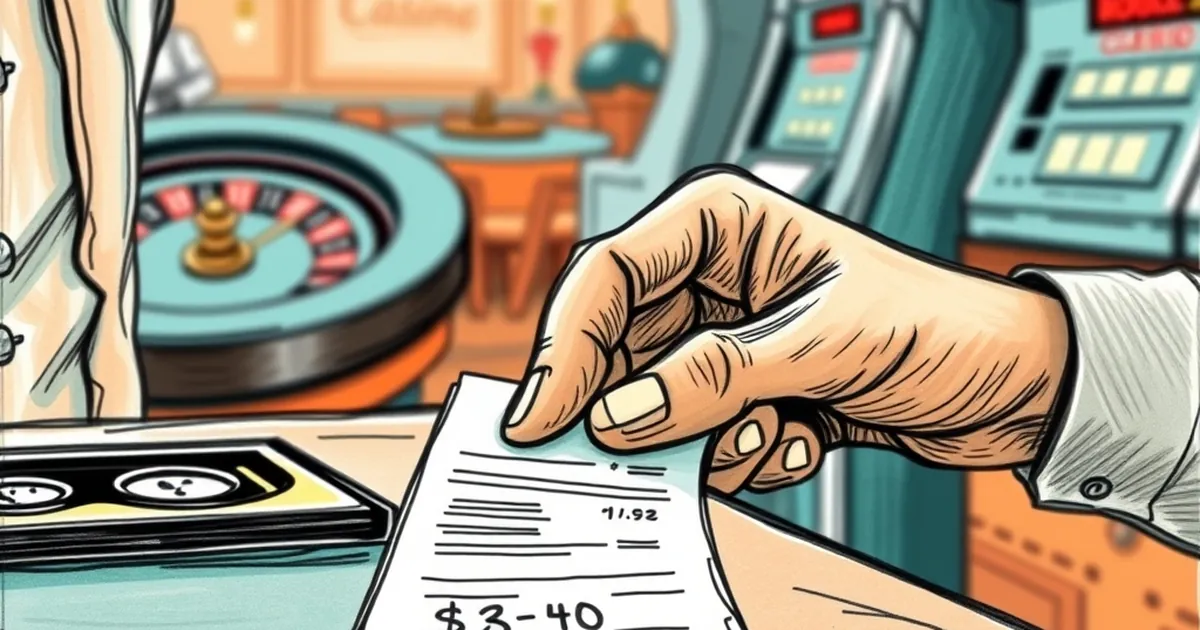
The $2.50 spin you just placed on Big Bass Bonanza didn’t cost you $2.50. It cost you $3.40. That’s not a rounding error, a network fee, or a hiccup in your internet banking. It’s the difference between the stake you type into the spin button and the actual debit your cashier processes when you’re playing in a currency that isn’t your own — and the casino’s built-in conversion spread is doing the heavy lifting before you even hit that golden fisherman.
Most Aussies know the drill: you deposit in AUD, the game runs in EUR or USD, and the balance you see is already converted. But here’s the part nobody puts on the help page: the conversion rate applied to your bet is not the interbank rate, and it’s not even the rate you’d get on a decent forex card. It’s a proprietary rate set by the operator, often 3–6% worse than the mid-market rate, and it applies to every single spin, not just your deposit. The $2.50 spin on a 1.36:1 spread becomes $3.40 in real terms the moment you factor in the vig on the stake, the vig on the win (if you cash out), and the fact that your bonus funds are often converted at an even worse rate than your cash balance.
The spread you never see
Let’s break down the arithmetic with a real-world example. Say you’re playing at a casino licensed in Malta or Curaçao, and the game’s base currency is EUR. Your AUD balance is converted to EUR at the operator’s discretion — not at the European Central Bank’s daily reference rate, not at the rate your bank would give you, but at whatever the cashier’s backend decides is “competitive.” On a typical Tuesday afternoon, the mid-market AUD/EUR rate might be 0.61. The casino’s rate might be 0.59. That’s a 3.3% haircut on every dollar you wager.
Now, here’s the kicker that most players miss: that conversion isn’t a one-off. It happens on every transaction, including each spin. If you’re playing a $2.50 game in EUR, the operator converts your AUD stake to EUR, runs the spin, then converts the result (win or loss) back to AUD for your display balance. That’s two conversions per spin. At a 3% spread each way, you’re paying roughly 6% of your total turnover in hidden conversion costs. On a 200-spin session at $2.50, that’s $30 in invisible vig — before you’ve even considered the house edge.
Here’s a concrete number to anchor this: A 1% increase in the conversion spread on a $2.50 stake with a 96% RTP game effectively drops your return to 95.04%. That’s a full percentage point off your theoretical return, and it compounds over a session. For context, that’s the difference between playing a decent slot and playing a deliberately stingy one — and you didn’t choose that game; the cashier chose it for you.
Why your cashier isn't telling you
The obvious question: why don’t casinos just show you the effective stake in AUD? The answer is that they do — sort of. Your bet slip often displays “$2.50” in your local currency, but that figure is calculated after the operator’s conversion rate has been applied to the base game’s currency. So you’re not being lied to; you’re being given a number that already embeds the spread. The problem is that you have no way to see the underlying rate, and the operator has no incentive to show you the difference between their rate and the market rate.
This isn’t illegal. In Australia, the Interactive Gambling Act doesn’t regulate currency conversion rates on offshore sites (and let’s be honest, most of the sites you’re playing on are offshore). The Australian Securities and Investments Commission (ASIC) has rules about fee disclosure for financial products, but online gambling isn’t classified as a financial product for these purposes. So the cashier is free to set a spread that would make a currency exchange booth at Sydney Airport blush.
The real kicker is how this interacts with bonus wagering. Let’s say you claim a 100% match bonus with a 35x wagering requirement. You deposit $100, get $100 in bonus funds, and need to wager $3,500. If the conversion spread is 3%, that’s $105 in hidden costs just to clear the bonus — before you factor in the house edge on the games you’re playing. Suddenly, that “free” $100 bonus has a real cost of $105 in conversion fees, and you’re in negative expected value territory even if you play a 100% RTP game (which doesn’t exist, but you get the point).
How to spot it before you spin
You can’t change the spread, but you can game it. Here’s what actually works:
Check the game’s base currency before you play. If you’re on a site that defaults to USD or EUR, look for a setting that lets you display your balance in AUD but keeps the game in its native currency. Some operators let you toggle this in the cashier or the game lobby. If the game is running in EUR, your stake is being converted every spin. If you can find a game that runs natively in AUD (there aren’t many, but some regional providers like Ainsworth or Aristocrat have AUD-native versions), you avoid the per-spin conversion entirely.
Use the “play for fun” mode to test the rate. Load the game in demo mode, place a $2.50 bet (in demo currency), and then check your actual AUD balance before and after. The difference between what you expect to lose (based on the game’s RTP) and what you actually lose includes the spread. It’s not a perfect test, but it gives you a rough idea of the vig.
Calculate your effective RTP. Take the game’s advertised RTP, subtract the conversion spread (roughly 1.5–3% per side, so 3–6% total), and that’s your real return. If a game advertises 97.3% RTP but you’re paying a 4% spread, you’re actually playing at 93.3% — worse than most penny slots. That’s the difference between a game that’s worth your time and one that’s a slow bleed.
Consider playing in a currency you already hold. If you have a USD or EUR bank account (or a multi-currency card like Wise or Revolut), deposit in that currency directly. You’ll pay the casino’s deposit conversion once (usually a flat fee or a small percentage), but then all your spins run in the native currency with no per-spin conversion. Over a long session, that saves you more than the initial fee.
The quiet regulatory gap
The Australian Communications and Media Authority (ACMA) has been cracking down on offshore operators, but the enforcement is about blocking unlicensed sites, not about consumer protection on currency conversion. There’s no requirement for an offshore casino to disclose its spread, no mandated cap on the vig, and no obligation to show you the effective stake in your home currency. The closest thing to a rule is the UK Gambling Commission’s guidance on fair and transparent terms, but that only applies to UK-licensed operators — and most Aussie players aren’t on those.
The practical implication is that you’re on your own. The cashier will never say “this spin costs you $3.40,” because that would require admitting that the displayed $2.50 is a fiction. The math is there if you look for it, but the default experience is designed to hide it.
So here’s the open question: if the conversion spread is effectively a second house edge — one that you can’t see, can’t verify, and can’t negotiate — why are you still playing on sites that don’t show it? And more pointedly, if a game’s RTP is the main metric you use to choose where to play, how much of that advantage are you willing to give up to a currency spread that no one mentions on the reviews page? The next time you hit that spin button, ask yourself: what’s the real number?