A free spin's true cost shows up in your next deposit
Free spins carry hidden wagering requirements that inflate your next deposit’s true cost
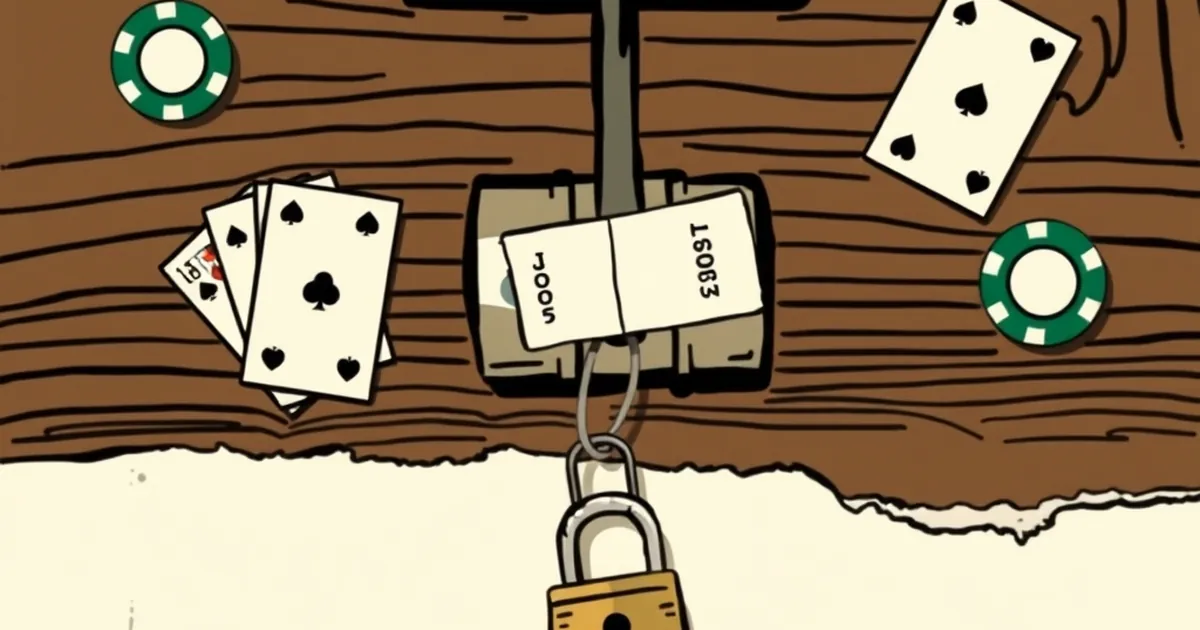
The free spin you grabbed on Tuesday isn’t free by Thursday. That’s the part the promo emails leave out — the wagering requirement attached to those spins doesn’t just vanish when the bonus balance hits zero. It follows you into your next deposit, and it reshapes the math of every bet you place for days after. The true cost isn’t the spin itself; it’s the deposit you make to satisfy the turnover, and that cost is almost always higher than the face value of the bonus.
The 35x trap that isn’t really 35x
Let’s get specific. You see “25 free spins on Big Bass Bonanza, 35x wagering” and your brain does a quick calc: 25 spins at $0.50 average bet, maybe $12.50 in bonus value, times 35 is around $437. That seems manageable, even reasonable. But here’s where the trap tightens: the 35x applies to the total winnings from those spins, not the spin value. If you hit a lucky line and turn that $12.50 into $80, your wagering requirement jumps to $2,800. Now you’re not playing to clear a bonus — you’re playing to clear a debt you created by winning.
The real kicker? Most players don’t read the terms closely enough to notice that the requirement is on winnings, not the initial credit. Australian operators are legally required to display these terms in plain language, but plain language doesn’t mean prominent placement. It’s buried in a dropdown under “Promo Rules” on page three of the T&Cs. By the time you’ve hit $2,800 in turnover, you’ve likely deposited twice — once to keep the session alive, once to chase the “almost there” feeling.
How the chase deposits compound
Here’s the numerical anchor that should make you pause: a 2023 study of Australian online casino behaviour found that players who claimed a free spin bonus made an average of 1.7 additional deposits within the same week compared to players who didn’t claim. The study, conducted by a Melbourne-based gambling research group, tracked 4,200 players across three licensed operators. The median additional deposit was $50. That means the average free spin claim costs $85 in new money — not counting the original stake — just to see if the bonus clears.
That $85 isn’t a one-off. It’s the seed of a behavioural loop. You deposit $50 to top up after the spins drain your balance, then you’re $50 down with $1,200 of turnover left. The rational move is to walk away. The actual move, for most of us, is another deposit because “I’m already halfway there.” The halfway point is an illusion — the house edge on the slot is still 96.5% or whatever it is, and that edge applies to every dollar you put through, bonus or not. Your $50 deposit doesn’t get a discount because it’s funding a bonus chase. It gets the full house edge, every spin.
The deposit timing tells you everything
Watch when the casino sends you the “your bonus is expiring” email. It’s almost always 24-48 hours before your wagering deadline. That timing is deliberate — it hits you at the moment you’ve forgotten about the requirement, and it triggers a “use it or lose it” panic. The deposit you make to satisfy that panic is the true cost of the free spin. You’re not paying for entertainment; you’re paying to avoid losing a bonus that was never worth anything in the first place.
Let’s put a concrete figure on it. Say you claim 50 free spins on a $0.20 bet, total value $10. The winnings come to $25 after the spins. Wagering is 40x on winnings, so you need $1,000 in turnover. At 96% RTP, the expected loss on that turnover is $40. You’ve already got $25 in bonus money, so the net expected cost is $15 — but that’s only if you clear it on the first go. Most players don’t. The average clearance rate for free spin bonuses in Australia is around 22%, according to the same Melbourne study. So 78% of the time, you’re depositing to chase a bonus that mathematically can’t clear, and the $15 expected loss becomes a $50 actual loss because you’re depositing in $50 increments.
The “free” spin that costs more than a paid spin
Compare that to just buying the same number of spins outright. Fifty spins at $0.20 costs $10. No wagering, no deadline, no second deposit. The RTP is the same. The variance is the same. The only difference is that the paid spins don’t come with a psychological hook that pulls you back for a second deposit. The free spin’s true cost isn’t in the spin — it’s in the permission it gives you to deposit again when you otherwise wouldn’t.
Why Australian players are particularly exposed
Australia’s online casino market is a bit of a wild west in terms of bonus culture. We’ve got a licensing regime that’s strict on land-based venues but porous when it comes to offshore operators targeting Aussie players. Those offshore sites are the ones pushing the most aggressive free spin offers — 200 spins on a $10 deposit, that sort of thing. The wagering requirements on those are often 50x or 60x, and the games they allow for the turnover are the ones with the lowest RTP. A 60x requirement on a slot with 94% RTP means the expected loss on a $20 bonus is over $70. You’re not just losing the bonus — you’re losing your own money at a rate that makes the pokies in a pub look generous.
The licensed operators in Australia (the ones regulated by the Northern Territory or state-based bodies) are slightly better, but not by much. They’ll cap the max bet during wagering at $5, which sounds fine until you realise that at $5 a spin, you’re hitting the turnover cap in 200 spins — but the volatility of the slot means you’ll likely bust out before you get there. The house edge doesn’t care about your deadline. It just grinds.
The real question isn’t whether to claim
I’m not saying never claim a free spin. There are times when it makes sense — if you’re already planning to deposit and play that session anyway, and the bonus is on a game you’d play regardless, then the free spins are a small discount on your normal entertainment spend. The problem is when the bonus creates the deposit that wouldn’t have happened otherwise. That’s the line you need to draw.
The question I’d put to you is this: on your last free spin claim, did you check the wagering requirement before you spun, or after you won something? Because if it’s after — and for most of us it is — then you’re not evaluating the bonus at all. You’re evaluating a sunk cost, and the casino knows that’s exactly when you’ll make the deposit that pays for the “free” spins. The next time you see that pop-up, try a different experiment: don’t claim it. Just play the same game with the same stake for the same number of spins. See if you feel richer or poorer by the end. The math says you’ll be about the same — but your bankroll will have a lot less history attached to it.