Bonus cashback pays weekly — the T&Cs date it to the 14th
Weekly casino cashback sounds simple until the terms anchor payouts to the 14th, leaving your first window anywhere from three days to four weeks
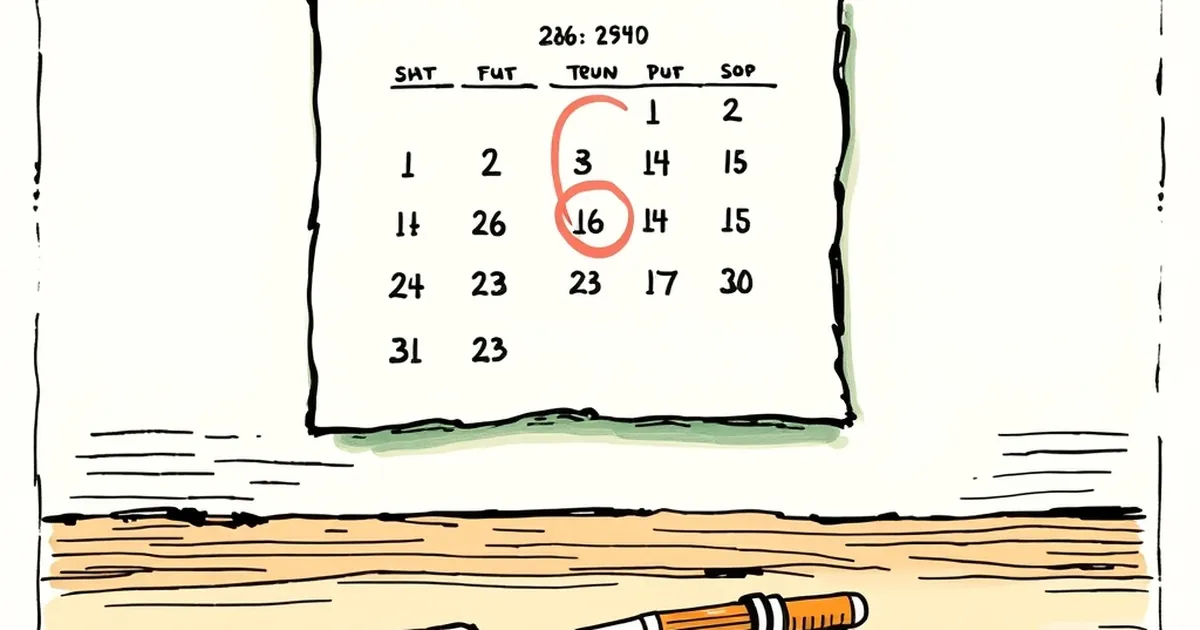
Weekly cashback is the offer most Australian casino players actually use, because it doesn't demand a deposit timing trick or a 40x rollover on a bonus you'll never clear. The pitch is simple: a percentage of your net losses comes back to you every seven days. The catch is in the calendar. On a lot of these promos, the terms and conditions quietly anchor the "weekly" cycle to the 14th of the month — which means your first payout window can be anywhere from three days to four weeks long, depending on when you signed up.
That single date does more work than any headline percentage. It decides when your week starts, when it ends, and whether the cashback you're owed lands on a Tuesday or sits in limbo until the middle of next month.
The 14th isn't arbitrary, and that's the problem
Cashback promos fall into two broad camps. The first runs a rolling seven-day cycle from your registration date: sign up on the 3rd, your weeks run 3rd–9th, 10th–16th, and so on. Clean, predictable, easy to track.
The second camp — the one the title is about — resets everyone onto a single calendar. The cycle closes on the 14th, pays within some stated window (often 24 to 72 hours), and then the next cycle opens. If you registered on the 12th, your first "week" is two days long. If you registered on the 16th, your first cycle runs 26 days before you see a cent.
Neither approach is dishonest on its own. A fixed cycle makes administration cheaper for the operator, and it means the payout date is the same for everyone, which is genuinely easier to remember. The issue is how it's communicated. The banner says "weekly." The terms say the 14th. Those two things are only the same thing if you happened to join at the right time of the month.
What to check before you count on it
Three lines in the T&Cs do most of the damage:
- Cycle definition. Look for "the promotional week runs from the 15th to the 14th" or similar. If there's a fixed date, your first period is almost certainly irregular.
- Minimum loss threshold. Cashback is calculated on net losses, not turnover. If you deposited $500, withdrew $400, and your net loss for the cycle is $100, a 10% cashback returns $10 — and only if you cleared the minimum, which is often set at $20 or $50. Fall under it and the cashback doesn't roll over; it evaporates.
- Payment method and expiry. Some operators credit cashback as bonus credit with a wagering requirement, not as withdrawable cash. Others give you 7 days to claim before it's void. A $30 credit with a 30x requirement is a very different object from $30 cash.
The maths that decides whether it's worth chasing
Take a realistic month. You play slots at a 96.2% RTP, turning over $8,000 across the cycle with an average bet of $1.50. Expected loss on that turnover is $8,000 × 3.8%, or $304. A 10% cashback on net losses returns $30.40.
That's not nothing, but it's roughly 10% of your expected loss, which means the promo shaves your effective house edge from 3.8% to about 3.4%. On a game with a 40x wagering requirement attached to the cashback credit, you'd need to turn over $1,200 to clear a $30 bonus — and at that same 3.8% edge, you'd expect to lose $45.60 doing it. The bonus is worth less than the cost of clearing it.
Where cashback earns its keep is on high-variance play. If you're grinding a slot with a 20,000x max win and long dead spells, a weekly rebate on losses softens the drawdown between features. It doesn't change the RTP, but it changes how long your bankroll survives, and survival is the whole game on volatile titles.
The date matters here too. If your cycle closes on the 14th and you do most of your play in the last week of the month, you're funding a payout that arrives after the next cycle has already started. Your bankroll is doing two jobs at once.
Why operators like the fixed date
A single monthly reset point is an accounting convenience. It batches payment processing, makes fraud detection simpler (one review window instead of a rolling one), and creates a predictable liability figure on the books. It also gives the marketing team a recurring event: the 14th becomes a date you're nudged to log in for.
There's a subtler effect. A fixed cycle encourages players to keep playing within the cycle rather than stopping once they've hit a loss they'd like rebated. If you know cashback is calculated on net losses for the period, and the period doesn't close for another 11 days, there's a soft incentive to keep the account active. That's not a conspiracy — it's just how a period-based rebate behaves. Rolling weekly cycles have the same property, only with a shorter leash.
The practical upshot for you: the cycle length is a design choice, and design choices favour the operator. Read it as one.
Doing the arithmetic on your own account
Before you treat any cashback offer as part of your expected value, pull three numbers from your account history:
- Your net loss for the last completed cycle. Not deposits, not turnover — net loss.
- The cashback percentage applied to that figure, and the minimum threshold.
- The value of the credit after wagering. If it's bonus credit at 30x, multiply the credit by roughly 0.03 to 0.05 to get a rough cash-equivalent — and check the max bet rule, which is often $5 or less while clearing.
If the cash-equivalent comes out under $10 for a month of play, you're not really getting a rebate. You're getting a retention prompt with a number attached.
Also check whether the cashback is capped. A 10% rate sounds generous until you find the cap is $50 per cycle, which kicks in at $500 of net losses. Above that, your effective rate falls the more you lose — the opposite of what a rebate is supposed to do for a player having a bad run.
And check the jurisdiction line. Australian players are in an odd position: the Interactive Gambling Act 2001 restricts online casino services, and many offshore operators offering these promos don't hold an Australian licence. That doesn't just affect whether you get paid — it affects whether the T&Cs are enforceable at all if a dispute arises over a cycle that closed on the wrong date.
Set your own limits regardless of what the promo calendar says. A cashback cycle is designed to keep you playing until the 14th; a deposit limit doesn't care what day it is.
The open question is whether fixed-date cycles survive scrutiny as more players learn to read them. If the marketing says "weekly" and the terms say "the 14th," the gap between those two statements is where the value quietly disappears — and it's a gap that only closes when players start asking which week, exactly, they're being paid for.