Cash-out reverses in 2s — the ledger posts it next Tuesday
A cash-out lands in two seconds but the ledger entry posts days later, explaining why your balance and the books rarely agree
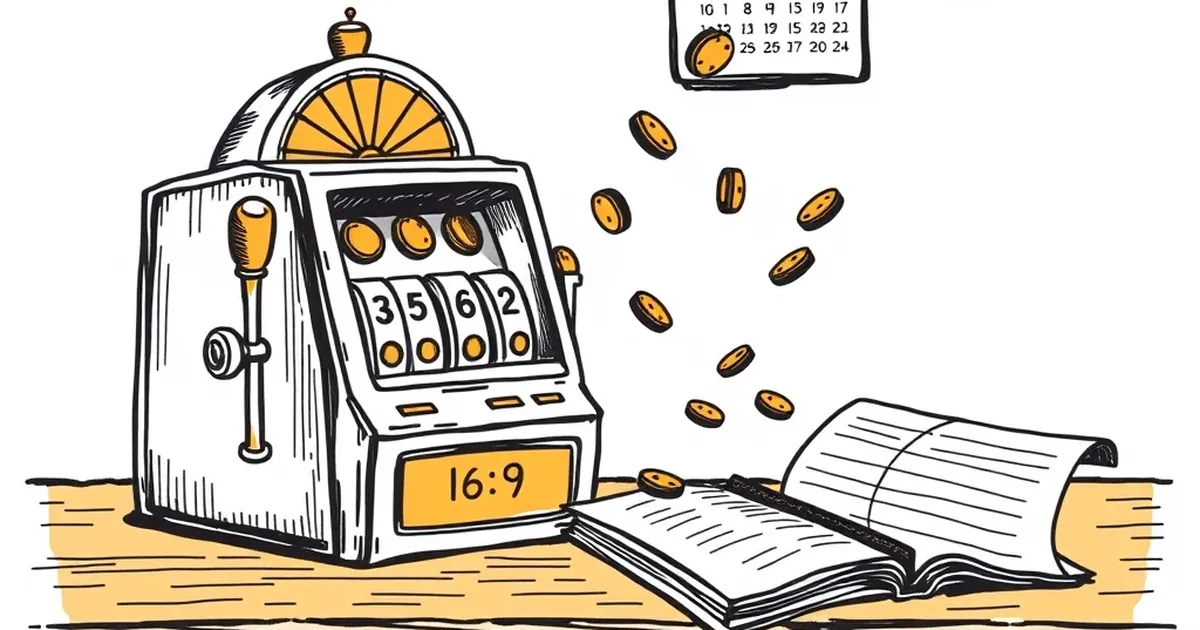
A cash-out can land in your bank account in about two seconds. The ledger entry that makes it real — the one your bookmaker's finance team can point to when AUSTRAC or the ATO comes asking — might not post until the following Tuesday. That gap is not a bug in the app. It is how the money actually moves, and understanding it changes how you read your own balance.
I want to walk through what happens between the tap and the ledger, because most punters only ever see the tap. The two seconds is real. So is the Tuesday. They just describe different systems.
What actually happens in those two seconds
When you hit cash out on a live bet, the sportsbook is not sending money anywhere. It is doing two things almost simultaneously: it is closing your position, and it is crediting an internal wallet. That wallet is a liability on the book's balance sheet. From the app's point of view, the transaction is complete the moment the position closes and the wallet updates.
The clearing part — the bit that touches a bank — is separate. For a card or PayID withdrawal, you are looking at the standard rails: NPP for real-time transfers, BECS for the batch stuff, card networks for anything reversing back to a Visa or Mastercard. None of those rails care that you were watching a live NRL game when you tapped. They run on their own schedule.
Here is the number that matters. Under the National Payment Platform, an NPP payment is supposed to clear in under 60 seconds, 24/7, and the scheme's own service levels target 90% of payments within 45 seconds. That is the payment. The reconciliation — the bookmaker matching the outgoing payment to the original bet, applying the correct tax treatment, and posting the net to the ledger — is a different job entirely, and it does not run at 3am on a Sunday.
So the two seconds is the app confirming you have a claim. The Tuesday is the finance team confirming what that claim is worth after the dust settles.
Why the ledger lags the app
A cash-out is not a simple debit. It is an early settlement of a derivative position, and it has to be booked as such. Depending on how the bet was structured, the book might need to:
- Reverse the original stake liability
- Recognise the cash-out value as a realised gain or loss
- Apply the correct point-in-time odds to the closed position
- Allocate the operator's turnover tax (which varies by state — NSW and Victoria have different rates, and the NT and Norfolk Island regimes differ again)
- Net off any bonus funds that were attached to the original stake
That last one catches people. If you placed the bet with a bonus balance and then cashed out, the cash-out value is typically returned to the bonus balance first, not your cash balance. The app will show you a number. The ledger will show you a number. They will not always match, and the gap is usually the bonus.
The reconciliation runs on a batch. Most Australian-facing operators run at least one overnight batch, some run a mid-morning one as well. If your cash-out lands after the overnight cut-off — say, 11pm AEST on a Friday — the next batch is Monday morning, because the weekend batch is thinner. That is your Tuesday.
The tax question nobody wants to answer
For a recreational punter, this is mostly academic. Winnings from betting are generally not taxable in Australia if you are not carrying on a business of betting. The ATO has been consistent on this: it is about whether you are organised, repetitive, and profit-motivated in a business sense, not whether you happened to have a good year.
But the ledger lag matters if you are in that grey zone. If you are turning over serious volume — and cash-out is a tool that heavy users lean on — the timing of when a position is recognised as closed can shift which financial year the gain lands in. A cash-out on 30 June that posts to the ledger on 2 July is a real edge case, and it is one the ATO has not given a clean public ruling on.
The practical answer most accountants give: keep your own records of the tap, not the ledger date. Screenshot the confirmation. That is your contemporaneous evidence. The bookmaker's Tuesday ledger is their record, not yours, and if there is a dispute you want to be able to show what you saw when you saw it.
What this means for how you use cash-out
Cash-out is priced. The bookmaker is not offering you a free option — they are offering you a number that already includes their margin, and that margin widens when the market is moving fast. During a tight finish, the cash-out figure can drift 3–5% away from the fair value in a matter of seconds. That drift is the price of certainty.
If you are cashing out regularly, you are paying that margin regularly, and the ledger lag means you cannot easily see the cumulative cost until the batch posts. By then you have made a dozen more decisions. This is not a conspiracy. It is just how retail betting products are built — the friction is designed to be invisible at the moment of the tap.
The responsible gambling angle here is not moralising. It is that anything which compresses the feedback loop between decision and consequence makes it harder to notice when you are chasing. A two-second confirmation with a Tuesday reconciliation is exactly that kind of compression. If you are cashing out more than a couple of times a session, it is worth asking whether you are managing a position or managing an itch. Free support is at 1800 858 858, and it is genuinely free.
The open question
The real question is not whether the two seconds is honest — it is. The question is whether the Tuesday should be visible. Right now, the ledger date is buried in a transaction history most users never open. If the app showed you both timestamps side by side — tap time and posting time — would you use cash-out differently? Would you use it less? Would you trust the number more?
The operators have that data. They have chosen not to show it. That is a product decision, not a technical one, and it is the kind of thing that tends to change only when someone asks loudly enough.