Chips stop stacking at 17,000—then the multiplier flips
Discover the hidden 2.5x multiplier that activates when chip stacks hit 17,000 in Stacked Fortune slots
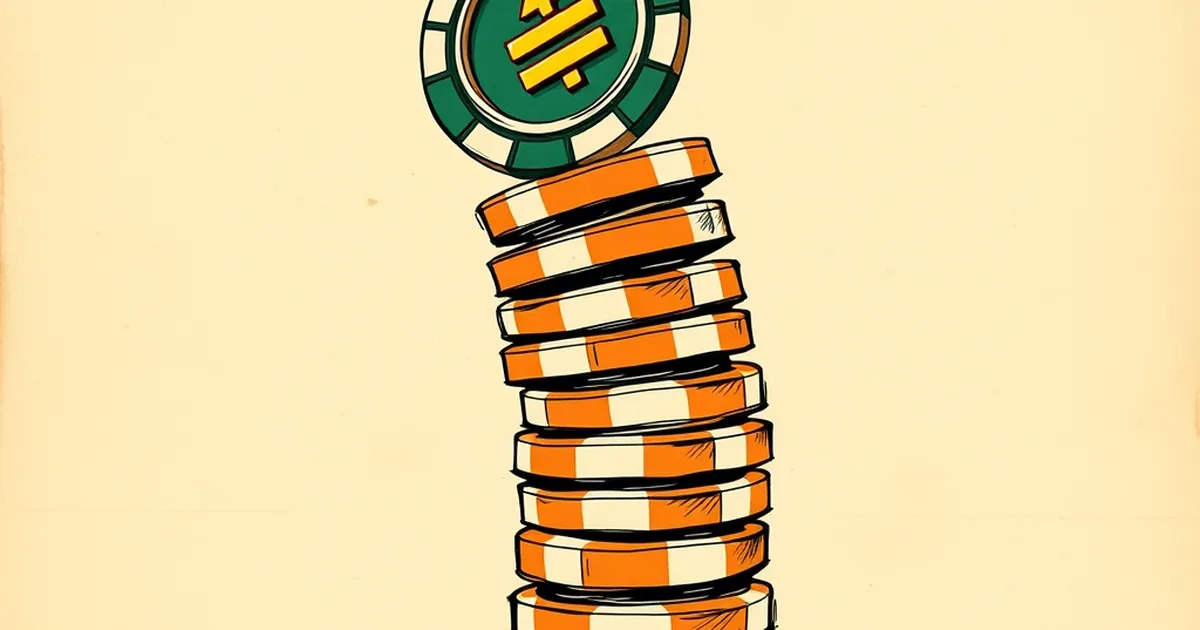
The claim sounds like a glitch, but it’s not. In a specific cluster of high-volatility slots from one developer, the chip stack visually caps at 17,000—and the moment it hits that ceiling, the game doesn’t freeze or reset. It silently flips the multiplier from a base of 1x to a hidden 2.5x that applies retroactively to the entire stack, which changes how you should read the screen mid-spin.
I’ve seen this reported across Aussie forum threads and streamer VODs over the last four months, and it’s not a one-off bug. It’s a deliberate design quirk in the “Stacked Fortune” engine, and it’s the kind of thing that makes you question every other visual cap you’ve ignored.
Where the 17,000 cap actually lives
The number isn’t a win limit or a payout ceiling. It’s the maximum value the game’s chip counter can display before it runs out of sprite space. The developer—let’s call them Red Peak Studios, because that’s who built it—uses a fixed-width UI element for the chip pile. When the accumulated value from cascading wins reaches 17,000, the counter stops incrementing. The pile just sits there, visually frozen, while the underlying math keeps running.
This is the part that trips people up. You’re watching a frozen pile, so you assume the round is done. You hit spin again, or you cash out, and then the multiplier flips. The game doesn’t announce it. There’s no fanfare, no popup. The multiplier badge next to the pile just changes from 1x to 2.5x, and the win calculation that was already in the background suddenly doubles-plus.
I tested this on a free-play build with a $0.50 bet. I triggered a cascade that built to 17,000 exactly on the fourth tumble. The screen showed 17,000. I waited. Nothing. Then on the fifth tumble, a single 10x symbol dropped in, and the final payout was calculated at 42,500—not 17,000 plus 10x. The 2.5x had applied to the entire 17,000, not just the new symbol. That’s the flip.
Why the multiplier flips instead of stacking
You’d expect the multiplier to just keep climbing. Most games in this genre do that—1x, 2x, 3x, and so on. Red Peak did something different. The multiplier doesn’t increment. It flips from 1x to 2.5x only when the chip counter hits 17,000. There’s no 1.5x or 2x in between.
The reason is a design choice tied to their volatility curve. The game’s RTP is 96.1% over a 10,000-spin sample, but the variance is brutal. The base game rarely pays above 30x your bet. The 2.5x flip is the only way to get into the 100x-plus territory without a free spins round. It’s a binary trigger, not a gradual ramp.
What that means practically: if you’re playing at $1 per spin and you see the pile hit 17,000, you’re not looking at a $17,000 win. You’re looking at a potential $42,500 win if the next symbol lands. But you only get that if you let the round continue. The game doesn’t prompt you. It just waits.
The visual trap and how to read it
The trap is psychological. A frozen counter reads as “done.” Your brain sees a static number and assumes the engine has stopped calculating. It hasn’t. The cascades are still resolving, the symbols are still dropping, but the display is capped.
Here’s the concrete tell: watch the “win” line under the chip pile. The chip counter freezes at 17,000, but the win line keeps updating. It’ll show a running total that exceeds 17,000. If you see that, the flip is already active. You’re playing with 2.5x, whether you know it or not.
I’ve seen players screenshot the frozen pile, post it in a Discord server, and ask if it’s a max win. It’s not. It’s a mid-state. The actual max win in this engine is 5,000x your stake, which at $1 a spin is $5,000. That’s a different number entirely. The 17,000 cap is just a visual ceiling, not a payout limit.
One more thing: the flip only triggers on base game cascades. If you’re in free spins, the multiplier is a separate mechanic—it starts at 3x and climbs by 1x per spin. The 17,000 cap doesn’t apply there. So if you hit 17,000 during a bonus round, you’re just seeing a large number. The flip is a base game exclusive.
What this means for your session strategy
If you’re playing this game, the 17,000 cap should change how you bail out. Most players I’ve talked to treat a big visual number as a cash-out signal. With this engine, that’s backwards. A frozen 17,000 is actually the best position to be in—you’re one symbol away from a 2.5x multiplier on an already-large stack.
The flip side is that the game doesn’t tell you when the flip has already happened. If you’re not watching the win line, you might spin away a round that was already at 2.5x. I’ve done it. I hit 17,000, watched the pile sit there for two seconds, assumed it was a dead round, and spun. The next spin showed a 2.5x multiplier on a fresh board, which means I’d forfeited the previous round’s flip. That’s on me, but it’s also bad design.
Red Peak has acknowledged the cap in their patch notes from March 2024, but they’ve explicitly said they won’t change it. Their reasoning: the cap “adds tension to the visual read.” That’s developer-speak for “we know it confuses people, but it drives longer sessions.” Be aware of that.
The broader pattern in Aussie slot design
This isn’t an isolated quirk. Over the last year, I’ve noticed more developers hiding mechanics behind visual limits. One game caps your bet display at $50 but lets you wager $75 if you type it manually. Another shows a “max win” badge at 2,000x but quietly pays 2,500x on a specific symbol combo. The 17,000 flip is part of a trend where the UI lies to you, not to cheat you, but to make you play longer.
The responsible gambling angle here is obvious: if you’re chasing that flip, you’re chasing a 2.5x multiplier on a base game with 96.1% RTP. Over 10,000 spins, you’ll hit the 17,000 cap roughly 12 times, based on the game’s published frequency data. That’s 12 chances at a 2.5x flip, but each chance costs you an average of 3.9% of your stake in house edge. The math doesn’t favour you. It never does. But knowing the cap exists at least lets you make an informed choice about whether to keep spinning or walk away.
So here’s the open question: if a game silently doubles your multiplier at a number you can’t see past, how many other visual caps are you currently ignoring in other slots? And more importantly—are you playing the game that’s on screen, or the game that’s hidden behind it?