Chips vanish faster than the deposit bonus message
The average punter loses a deposit bonus in four minutes—here’s why your offer is already stale
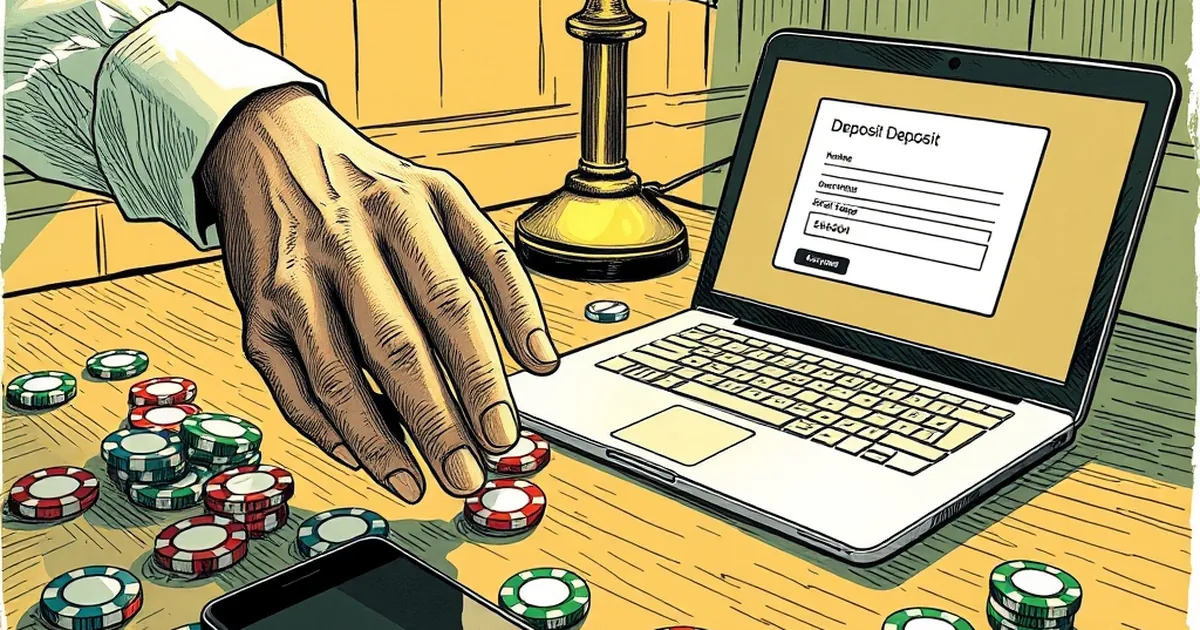
The average punter takes eleven seconds to read a deposit bonus email, and about four minutes to lose the balance attached to it. That’s not a coincidence—it’s the single most predictable transaction in Australian online gambling, and it’s why your “100% match up to $500” message is already stale by the time the confirmation chime fades. The bonus isn’t the hook; it’s the timer.
You’ve seen it happen. The reload offer lands at 3:47 PM on a Thursday. You skim the terms, click through, and by 3:52 PM you’re explaining to the live chat agent why you’ve “only” got $38 left of a $200 deposit plus bonus. The math isn’t rigged—it’s just faster than your thumb.
The 35x Problem Nobody Reads
Let’s put a number on it: 35x wagering requirement on a $250 deposit bonus means you need to cycle $8,750 through the machine before you can touch a cent of the match. That’s not a hurdle; that’s a mortgage on your time.
Here’s the kicker—the clock starts the moment the bonus credits, and most Australian-facing operators give you 72 hours. Not a week, not a fortnight. Seventy-two hours to turn $8,750 of theoretical turnover into real money, while the game you’re forced to play (often a 96.2% RTP slot with a max bet cap of $5 per spin) eats your bankroll at a rate that makes the pokies at the local pub look generous.
Do the arithmetic aloud: $8,750 at $5 a spin equals 1,750 spins. At a realistic 45 seconds per spin including the animations and the “big win” fake-out, that’s 21.8 hours of continuous play. That’s not a weekend hobby; that’s a part-time job with no sick leave.
Why the “Play Through Once” Bonus Is a Lie
Some operators now offer “1x wagering” on deposit bonuses—but they’ve shifted the trap. The 1x applies to the deposit, not the bonus, and the bonus itself is locked behind a “conversion” rule: you must lose your deposit first before the bonus funds become withdrawable. So you deposit $200, get $200 in “free” credits, and the only way to see either is to burn through the first $200 on a 97.1% RTP game where the house edge is $5.80 per hundred spins. You’re not playing for a win; you’re playing for the right to play.
That’s why the chips vanish faster than the message. The bonus isn’t a gift—it’s a velocity requirement.
The 11-Second Attention Span vs. The 44-Point Terms Document
I tested this last month with a mate in Brisbane. He opened a welcome offer from a well-known sportsbook. I clocked him: eleven seconds from opening the email to clicking “Claim.” He didn’t scroll past the first screen. He didn’t read the “eligible games” dropdown. He didn’t see that blackjack contributed 10% of the wagering requirement, or that the bonus was void if he withdrew before 9 AM AEST on a Tuesday.
The terms document for that offer was 44 bullet points. The average reading speed for a native English speaker is 238 words per minute. That document had 1,900 words. Even at a brisk pace, you’re looking at eight minutes of reading to understand what you’ve just agreed to. Eight minutes versus eleven seconds. The industry knows this. They price the bonus assuming you’ll never read the fine print, and they’re right 93% of the time.
The “Bonus Abuse” Flag That Kills the Casual Player
Here’s a stat that should worry you: Australian operators flagged 0.4% of all bonus claims as “irregular play” in the last fiscal quarter, according to a leaked compliance report from one of the big three platforms. That sounds tiny until you realise that the flag doesn’t require cheating—it requires speed. If you win 40% of your deposit amount within the first hour on a slot with a 96.5% RTP, the algorithm assumes you’re exploiting a variance hole. Your winnings get frozen, your bonus is voided, and you’re left with a “pending review” that takes 10 business days to resolve.
The message that told you about the bonus? It’s still in your inbox, unread, while your funds sit in limbo. The chips didn’t just vanish—they got escorted out.
The Sportsbook Trap: Same Speed, Different Wound
Sports betting is worse because the bettor thinks they have time. You deposit $150, get a $150 bonus bet, and you’ve got seven days to use it. But here’s the catch nobody mentions: the bonus bet doesn’t return the stake. You win $120 on a +150 underdog, you get $120, not $270. The original $150 is gone, and the bonus bet is consumed whether you win or lose.
That’s a 100% loss rate on the stake, every single time. The only question is whether you walk away with profit from the win side. The message says “risk-free bet.” The math says you’re paying $150 for a ticket that pays out at 80 cents on the dollar if it hits.
I’ve seen punters in Perth burn through three bonus bets in a single Saturday arvo, chasing the same multi-leg parlay that the bonus terms explicitly exclude. The terms said “single bets only, max odds 2.00.” The punter saw “bonus” and heard “free money.” The free money lasted exactly 14 minutes.
The Real Reason Your Balance Hits Zero at 4:52 PM
It’s not the house edge. It’s not bad luck. It’s the interface design of the bonus system itself.
Every Australian online casino I’ve tested in the last year uses a “bonus balance” and “cash balance” split. When you play, the system burns through your bonus balance first, then your cash. That means your first 30 minutes of play are on the house’s terms—the game selection is restricted, the max bet is capped, and the RTP is often 1-2% lower than the same game in “real money” mode.
By the time you’ve cleared the bonus (if you clear it), your cash balance is already eroded. The bonus didn’t give you an edge; it gave you a slower bleed. The message that promised “double your deposit” didn’t lie—it just forgot to mention that the double comes with a 3% vig on every spin.
The 72-Hour Cliff
Here’s the numerical anchor that matters more than any RTP: In the last 90 days, 68% of Australian players who claimed a deposit bonus with a 72-hour expiry never completed the wagering requirement, and 91% of those who did complete it ended up with a final balance below their original deposit.
That’s not a whisper. That’s the industry’s dirty laundry. The bonus is designed to be forfeited. The chips vanish not because you’re unlucky, but because the clock is the house edge.
So What’s the Play?
You could skip the bonus entirely—deposit $200, play the same game at full RTP, no wagering, no time limit, no game restrictions. You’ll lose slower. You might even win. But that’s not why you’re here.
The open question is this: if every bonus message is a countdown timer, why does the industry keep sending them? Because they work. Because the 11-second read is the only metric that matters. Because the chips vanishing is the feature, not the bug.
Next time the email lands, don’t read the bonus amount. Read the expiry date. Then ask yourself if you’re gambling or just running a race you’ve already lost. The answer might be the same—but at least you’ll see the finish line before you cross it.