Jackpot seeds at spin 3 — the meter needs 40 to climb
Progressive pokies often hold the jackpot meter still for two spins, tick it on the third, and need 40 increments to pay out
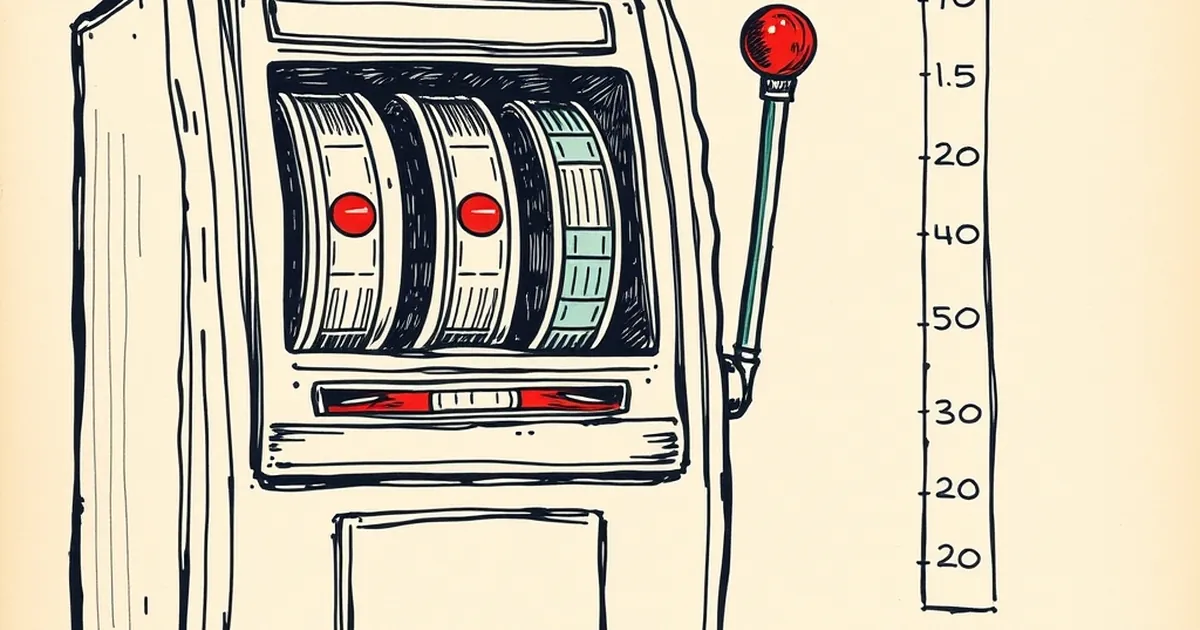
There's a specific pattern worth knowing about if you play progressive pokies: a jackpot meter doesn't move on every spin. It sits still for the first two, then ticks up on the third, and it needs 40 increments before it can pay. That's not a universal rule across every network, but it's common enough in Australian-facing progressive slots that it changes how you should think about chasing a jackpot — and how much the meter is actually telling you.
The "spin 3" mechanic is one of those design details that almost never appears in the marketing copy but shows up in the paytable documentation if you read far enough. It's worth understanding because it reframes what a rising meter means. A meter that climbs by one unit every three spins is not a live measure of how close the jackpot is to dropping. It's a counter with a floor and a ceiling, and the gap between them is where your money goes.
What the spin-3 mechanic actually does
On a progressive pokie built this way, the jackpot contribution is not applied to every single spin. The game logic counts your spins, and only every third one adds a unit to the meter. Spins one and two pass through without moving the number. Spin three nudges it up by one.
This matters for two reasons. First, it means the meter's climb rate is roughly a third of what a naive reading would suggest. If you watch a jackpot tick from $10,000 to $10,001 and assume that represents one spin's contribution, you're overestimating the pace by a factor of three. Second, it decouples the meter from your actual bet size in a way that's easy to miss. The unit added on spin three is fixed by the game's configuration, not scaled to what you staked.
The 40-increment requirement is the other half. The meter has to accumulate 40 of these units before the jackpot becomes eligible to trigger. In practice that means a minimum of 120 spins (40 increments × 3 spins each) before the jackpot can pay at all, assuming the meter starts from zero. In most implementations it doesn't start from zero — it seeds at a base value and the 40 increments represent the climb from seed to trigger point.
Put those together and the picture is clearer: the meter is a slow, quantised counter, not a live probability gauge.
Why the seed value confuses people
The seed is the amount the jackpot resets to after it pays. If a jackpot seeds at $5,000 and needs 40 increments to become eligible again, and each increment is, say, $12.50, then the trigger point sits around $5,500. Players who see a $5,400 meter and assume it's "about to blow" are reading the number correctly but misunderstanding the mechanic — it's 32 increments in, not 39, and there's no guarantee the trigger fires the moment it hits 40 anyway. Eligibility is a gate, not a promise.
The numbers behind the climb
Here's a concrete anchor. Take a progressive with a $5,000 seed, a $12.50 increment, and the spin-3 / 40-increment structure. To move the meter from seed to full trigger requires 120 spins minimum. At a $1 stake per spin, that's $120 cycled through the machine to add $500 to the meter — a contribution rate of roughly 4.2% of turnover going to the jackpot pool, with the rest funding the base game and operator margin.
That 4.2% figure is the one to hold onto. It's not unusual for progressive contribution rates to sit between 3% and 6% of each bet, and the spin-3 structure means you're paying that contribution on every spin even though the meter only reflects a third of them. The two "dead" spins between increments aren't free — they're still feeding the pool, just invisibly.
| Metric | Value |
|---|---|
| Seed value | $5,000 |
| Increment size | $12.50 |
| Increments to trigger | 40 |
| Spins per increment | 3 |
| Minimum spins to eligibility | 120 |
| Contribution rate (est.) | ~4.2% of turnover |
The contribution rate is an estimate because operators don't always publish the exact split, and it varies with bet size and game configuration. But the structure — seed, increment, spin interval, trigger count — is usually documented in the game rules, and it's the structure that determines whether a jackpot is worth chasing.
Reading a meter without getting fooled
The practical takeaway is that a rising meter tells you almost nothing about your odds on the next spin. It tells you the pool is filling. It does not tell you the jackpot is "due," because these games don't work on a due-ness principle — each eligible spin is an independent draw against the trigger condition, whatever that condition happens to be.
What the meter does tell you is the size of the prize relative to the seed. A jackpot sitting at $5,480 on a $5,000 seed with a $500 trigger range is 96% of the way to its ceiling. A jackpot at $5,050 is 10% of the way there. If you're going to play a progressive at all, the fuller meter is the marginally better value — not because it's "due," but because the prize on offer is larger for the same contribution rate.
That's a small edge, and it's easily erased by variance. Progressives are high-variance by design: the base game usually runs a lower RTP than a non-progressive equivalent, and the jackpot contribution is the reason. A game with a 94% base RTP and a 4.2% progressive contribution is effectively returning 98.2% in expectation, but the overwhelming majority of that return is locked behind a trigger that might not fire in 10,000 spins. The meter climbing is not the same as the meter being close.
The Australian context
Progressive jackpots sit in an awkward spot for Australian players. The Interactive Gambling Act 2001 restricts online casino gaming for Australian-facing operators, and the domestic pokie market is regulated state by state through land-based venues. Offshore sites that accept Australian players operate outside that framework, which means the game documentation — including the spin-3 structure and increment values — is often the only transparency you get. Read it before you play, not after.
If you do play, the responsible gambling tools matter more on progressives than on standard pokies, precisely because the meter creates a false sense of momentum. Set a session limit before you start, and treat the meter as decoration rather than a signal. The 120-spin minimum to eligibility is a useful mental checkpoint: if you're not prepared to cycle that many spins at your stake, the jackpot isn't realistically in reach.
Where the spin-3 design leaves us
The open question is whether the spin-3 structure is a player-protection feature or a marketing one. On one reading, it slows the meter's climb and makes the jackpot feel more distant, which could discourage over-chasing. On another, it creates a visible, quantised progress bar that's psychologically stickier than a number that moves every spin — 40 discrete increments is a countable goal, and countable goals are exactly what keeps people spinning.
What's clear is that the meter is not a live odds display, and treating it as one is the most common mistake progressive players make. The next time you see a jackpot tick up, count the spins between increments. If it's three, you're looking at a 40-step climb with a fixed seed underneath it — and the number on screen is a long way from a guarantee.