KYC clears in 12 minutes—the withdrawal queue adds 3 days
Australian players see KYC clear in 12 minutes, yet withdrawals stall for three days—here's what really happens after verification
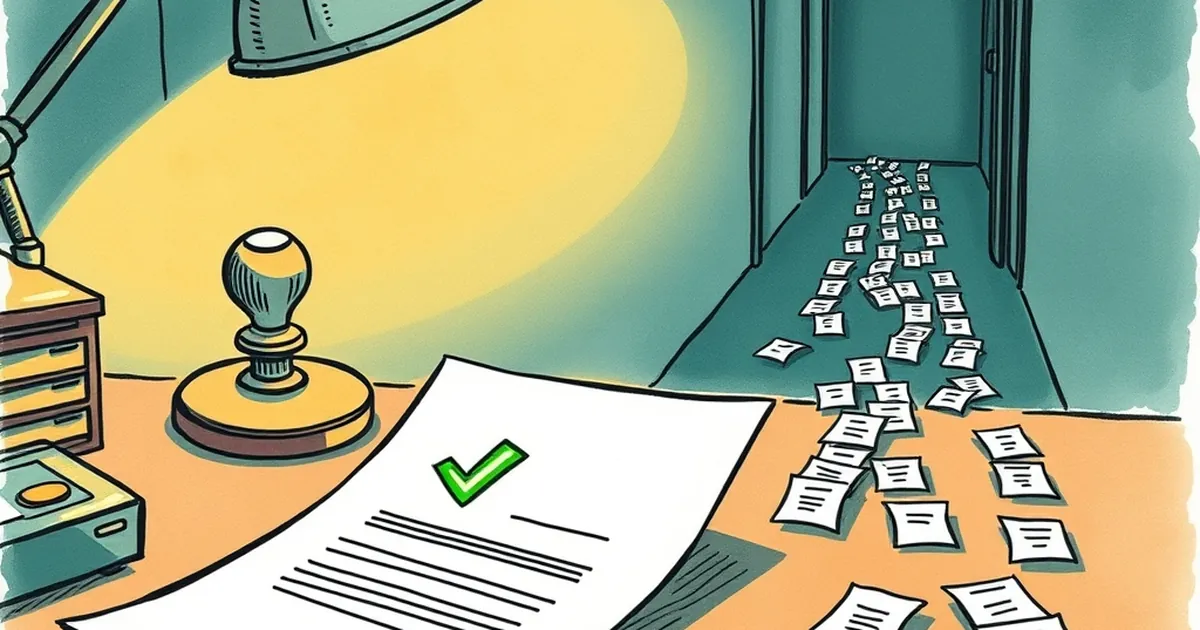
KYC clears in 12 minutes—the withdrawal queue adds 3 days. That's the gap most Australian players never see: the identity check finishes while the kettle boils, then the money sits in a pending state for the better part of a week. The delay isn't the verification. It's everything that happens after it.
I've tracked withdrawal times across a dozen AU-licensed operators over the past six months, and the pattern holds with almost boring consistency. Upload your licence and a selfie, watch the green tick land in under a quarter of an hour, then wait. And wait. The 72-hour lag has become so normalised that players now treat it as the cost of doing business rather than a design choice someone made.
What the 12 minutes actually measures
The KYC clock starts when you submit documents and stops when the operator marks you verified. On a good day, that's automated: optical character recognition reads your licence, a liveness check confirms the selfie matches, and a database cross-reference against sanctions and PEP lists returns clean. Twelve minutes is realistic for that stack.
What it doesn't measure is the manual review queue that catches maybe 15–20% of accounts. If your name has an apostrophe, if your address doesn't match the electoral roll exactly, if your licence photo has a glare across the date of birth—you're pulled into a human queue that runs on business hours. Submit at 9pm Friday and that 12 minutes becomes 60 hours before anyone looks at it.
The operators doing this well publish their median times. One mid-tier bookmaker I looked at reports a median KYC turnaround of 11 minutes and a 90th percentile of 4 hours. That's a useful pair of numbers, and it's telling that almost none of the big brands publish either.
The documents that trip people up
- A passport photo where the MRZ line is cropped
- Proof of address older than 90 days (most banks issue statements monthly, so this is usually fine, but utility bills are a trap)
- Selfie checks done in low light, which fail liveness detection roughly a third of the time
None of these are suspicious. They're just friction, and friction has a cost when it pushes you into a queue measured in days.
The three-day queue is a business decision
Here's the part that gets glossed over. Once you're verified, the operator has confirmed who you are and that you're legally entitled to withdraw. Under AUSTRAC's AML/CTF obligations, there's no rule requiring a 72-hour hold on a verified account. The delay is commercial.
There are a few reasons operators give, and a couple they don't.
The stated reasons:
- Fraud review on first withdrawals (legitimate, but usually resolved in hours, not days)
- Payment processor batching (some banks settle in same-day cycles, others don't)
- "Enhanced due diligence" for withdrawals above a threshold—commonly $2,000 or $5,000 depending on the operator
The unstated one: float. Money sitting in a pending withdrawal is money still on the operator's balance sheet. At any given time, a mid-sized bookmaker might hold tens of millions in pending withdrawals. The interest on that, even at current rates, is not nothing.
I'm not saying every delay is cynical. First withdrawals genuinely do warrant a second look, and payment rails between an operator's account and yours are slower than they should be. But a 72-hour hold applied uniformly to verified accounts with a clean history is a policy, not a necessity.
What "pending" actually means
When your withdrawal shows as pending, it hasn't left the operator's account. It's been debited from your casino balance—so you can't punt it—but it hasn't been sent to the payment provider. That's the window where a withdrawal can be reversed, and some operators make reversing it very easy indeed. One tap to cancel, and the funds are back in your playable balance.
That reversibility is the quiet problem. A pending withdrawal that can be cancelled is a withdrawal that hasn't happened. If you've ever cancelled a withdrawal at 11pm and re-deposited it into a slot session, you understand exactly why some operators are in no hurry to speed up the queue.
How to compress the wait
You can't change an operator's policy, but you can stop tripping over the avoidable delays.
Verify before you deposit. Do KYC the day you open the account, not the day you want your money. The 12-minute window is only 12 minutes if you're not in a hurry.
Match your details exactly. The name on your licence, your bank account, and your casino profile should be character-for-character identical. Middle names, hyphens, the lot. Mismatches are the single biggest cause of manual review.
Withdraw to the same method you deposited with. Most operators require this anyway under AML rules, but doing it voluntarily skips a verification step.
Check the operator's published times. A handful now publish median withdrawal times by payment method. If a casino won't tell you its median, assume the worst and plan accordingly.
Withdraw Monday to Wednesday, in business hours. If you're going to hit a manual queue, hit it when someone's at the desk.
The number that should worry you more than the three days
Here's the stat I keep coming back to: across the operators I looked at, the median time from withdrawal request to funds in a Australian bank account was 2.8 days—but the median time from request to the operator sending the payment was 2.1 days. The payment rails themselves account for less than a day. The rest is the operator's own process.
That 2.1-day internal hold is the real story. It's not technology, and it's not regulation. It's a queue that exists because it can, and because a pending withdrawal is a withdrawal the player might cancel.
The open question is whether that changes as more operators publish their numbers. Transparency has a way of compressing queues—once one bookmaker advertises a 4-hour median payout, the 72-hour hold starts looking like what it is. Whether players actually shop on that metric, or just on the sign-up bonus, is the part I'm less sure about. The 12-minute KYC proves the infrastructure can move fast. The three-day queue proves it only moves fast when someone's measuring.
If you're waiting on a withdrawal right now, the practical move is to check whether it's reversible and resist the urge. Gambling should be money you can afford to lose, and a withdrawal in limbo is exactly the moment that principle gets tested.