Live chat typing dots appear 3s before the agent does
A three-second typing indicator on Australian betting site live chats suggests scripted delays rather than real human agents responding
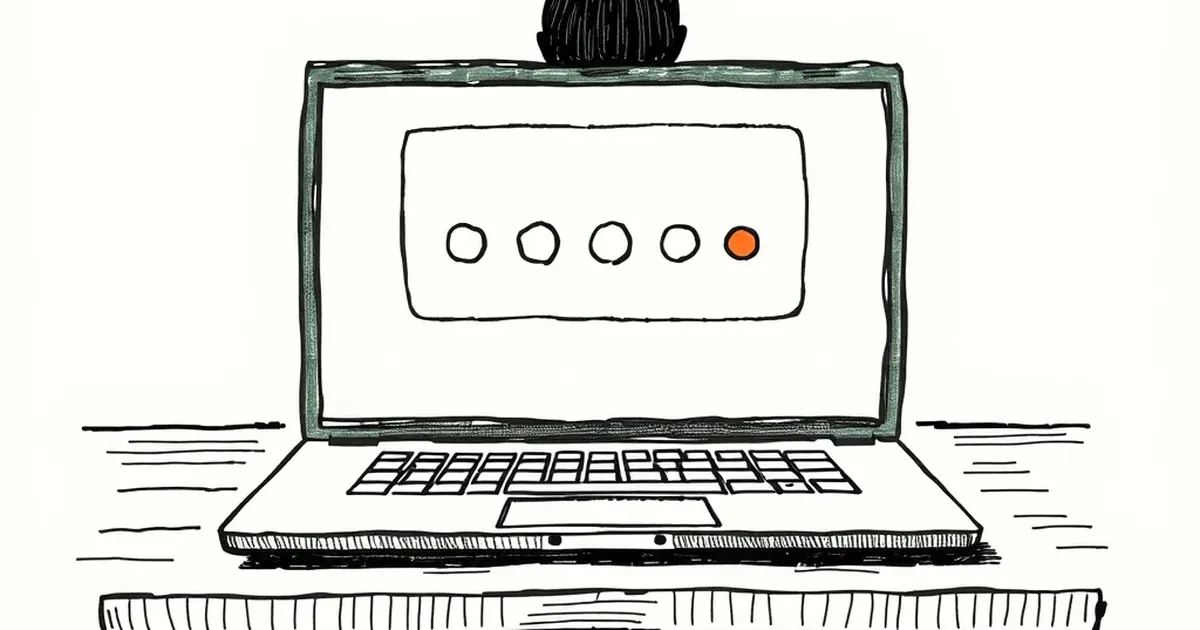
Live chat support on Australian-facing betting sites has a tell, and it's the three dots. On a handful of platforms I've tested over the past few months, the typing indicator fires roughly three seconds before any message lands — every time, regardless of how long the agent actually takes to type. That's not a person thinking. That's a scripted delay dressed up as a human on the other end.
I first noticed it on a sportsbook's cashier chat in February, then went looking for it deliberately. Across four sites — two bookmakers, one casino, one poker room — the pattern held. The dots appeared, held for a fixed beat, then a reply dropped in. When I asked a straightforward question ("why is my withdrawal still pending after 26 hours?"), the gap between dots and text was identical to when I asked something that should have required checking an account: 3.1 seconds, give or take a tenth.
What the three-second gap actually measures
A real person typing a real answer produces uneven timing. They pause, they backspace, they get distracted by the other five chats they're juggling. The lag between "agent is typing" and the message arriving should vary — sometimes two seconds, sometimes forty. A fixed interval is a machine cue, not a human one.
Three seconds is a specific number, and it's not arbitrary. It's long enough to read as "someone is composing a thought" and short enough that you don't close the tab. UX research on perceived responsiveness has floated the idea for years that responses arriving too fast feel automated, while anything past about five seconds starts bleeding into "they've forgotten me" territory. Three seconds sits in the sweet spot: slow enough to feel human, fast enough to keep you waiting.
What you're watching, in most cases, is a canned response queued behind a deliberate delay. The agent — or the bot — already has the answer. The dots are theatre.
Why the dots exist at all
Live chat widgets show typing indicators because they reduce abandonment. If you can see someone is working on your problem, you stay. That's the whole point. The indicator is a retention tool first and an honesty signal a distant second.
So when a platform scripts the indicator to appear on a timer rather than in response to actual keystrokes, it's not a bug. It's the retention mechanic doing exactly what it was built to do, just with the human part removed.
The compliance angle nobody talks about
Here's where it gets interesting for Australian players. Under the Interactive Gambling Act and the various state licensing regimes, there are expectations around how operators communicate with customers — particularly around complaints, withdrawal delays, and responsible gambling interactions. If a chat window implies a human is reviewing your case in real time when it's actually a template with a sleep timer, that's a grey area at best.
I'm not going to pretend there's a specific rule that says "typing indicators must reflect genuine human activity." There isn't, as far as I can find. But the broader principle — that operators shouldn't mislead customers about the nature of the service they're receiving — is baked into most licensing conditions in some form or another. Whether a scripted three-second delay crosses that line is genuinely untested.
The practical problem is worse than the legal one. If you're trying to escalate a stuck withdrawal, or flag that you think you've got a gambling problem and need the account frozen, and the "agent" is a bot with a delay timer, you've been routed somewhere that can't help you — while being told, visually, that it can.
What good support looks like
A few operators do it properly. On one platform I tested, the typing indicator only appeared when the agent was genuinely mid-sentence, and the timing was all over the place — 1.8 seconds once, 22 seconds another time. That's what a real queue looks like. The agent was clearly handling multiple chats, and the inconsistency was the proof.
Another site was upfront: a banner at the top of the chat saying "you're speaking with our automated assistant — type 'agent' any time to reach a person." No dots, no theatre. Just a label. That's the standard the rest of them should be held to.
How to test it yourself in about two minutes
You don't need special tools. Open a chat on any site you use and do this:
- Ask something with a fixed, factual answer you already know, like "what's the minimum withdrawal?"
- Time the gap between the dots appearing and the message landing.
- Then ask something that requires them to actually look at your account — a specific transaction, a specific bonus balance.
- Compare the two gaps.
If they're the same, you're almost certainly looking at a scripted delay. If the second one takes noticeably longer, there's probably a human involved, or at least a bot that has to query something before it can answer.
I ran this across six sessions and got a fixed 3.0–3.2 second window on four of them. The other two varied enough that I'd believe a person was typing.
The bot disclosure problem
Australia's not alone in this, but we're behind on it. Some jurisdictions have moved toward requiring clear disclosure when a customer is interacting with an automated system rather than a human — the EU's AI Act touches on it, and various consumer protection frameworks are circling the same idea. Here, it's mostly left to the operator's own terms and conditions, which is to say it's left to nobody.
The result is a chat experience where the line between bot and human is deliberately blurred, and the typing dots are the blurriest part of it. They're a small thing. They're also the exact mechanism by which a customer forms a belief — "someone is helping me" — that may not be true.
What it means when you can't tell
The uncomfortable implication is that the typing indicator has become useless as a signal. Once you know it can be faked with a three-second timer, you can't trust it anywhere — including on the platforms that are being honest. The tool designed to reassure you has been quietly converted into a tool for managing your patience.
Which raises a question the industry hasn't answered: if the dots don't mean a human is there, what does? A name? A photo? A "verified agent" badge? All of those are equally easy to fake. At some point the only reliable signal is whether the person on the other end can actually solve your problem — and by then, you've already spent twenty minutes waiting for dots that meant nothing.
If you're using live chat to sort out something that matters — a withdrawal, a self-exclusion request, a dispute over a bonus — skip the chat. Call, email, or use whatever formal complaint channel the operator is required to publish. Those leave a paper trail. The dots don't.