Live dealer blackjack shuffles every 8 hands — the shoe resets at 12
Live dealer blackjack shoes often reset every 8 hands or at 12, a hidden studio decision that quietly changes the maths for every player
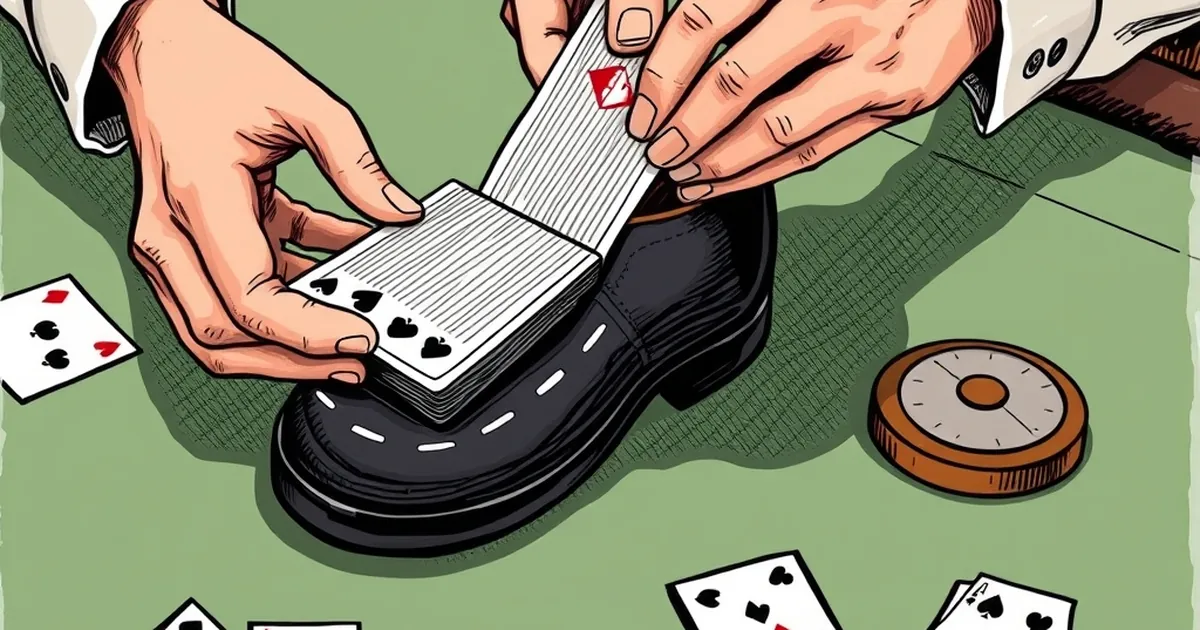
Walk into most live dealer blackjack tables on the mainstream platforms serving Australian players and you'll see the same pattern: the shoe gets swapped out every eight hands, and if the count of hands played hits 12 before that, the shoe resets anyway. It's not a rule printed on the felt. It's a back-end decision made by the studio, and it quietly rewrites the maths that card counters and casual players alike think they're working with. Knowing the actual number matters, because "eight hands" and "12 hands" are two very different games wearing the same table layout.
Where the 8-hand and 12-hand numbers actually come from
Live blackjack is not dealt from a physical shoe in the way a Crown or Star table is. The cards are real, the dealer is real, but the shoe is a shuffling machine — often a continuous shuffler or an automated unit — that the studio controls. The dealer doesn't decide when to pull the shoe. The software does, and it's usually tied to a hand counter that the player never sees.
The 8-hand figure is common because it's a reasonable compromise. Deal fewer hands per shoe and you're stopping the game constantly, which kills the flow and annoys recreational players who just want to bet. Deal more and you hand a meaningful edge to anyone tracking the count, because a penetrating shoe is a counter's best friend. Eight hands from a six- or eight-deck shoe is shallow penetration — roughly 10 to 15 percent of the deck composition gets exposed before the reset.
The 12-hand cap is the second layer. Even if the shoe hasn't hit its eight-hand mark, some studios will still trigger a shuffle at 12 hands for operational reasons: table balancing, dealer rotation, or syncing the shuffle across multiple tables running the same dealer feed. So you get two triggers, whichever fires first.
Why the studio won't tell you which
Because it's not in their interest to. A published shuffle point is a published vulnerability. If you know the shoe resets at exactly eight hands, you can build a model around that. If you don't, you're guessing. Most platforms bury the detail in a help page or omit it entirely, and the dealer certainly isn't going to announce it mid-hand.
What shallow penetration does to a card counter
Card counting in live dealer blackjack is already a marginal exercise. The reason is simple: you need a high true count to justify raising your bet, and a high true count needs a deeply dealt shoe to develop. With an eight-hand reset, the count barely moves before it's wiped.
Run the numbers. In a standard six-deck game, a true count of +2 or better is where most counters start pushing their bets up. To reach that from a neutral start, you typically need to see somewhere north of 40 to 50 cards dealt with a favourable ratio of low to high cards. Eight hands at an average of 2.7 cards per hand is about 22 cards. You're not getting there. Not reliably, not often enough to matter.
The 12-hand cap makes it worse in a different way. It caps the maximum exposure regardless of what the count is doing. Even in the rare session where the count climbs fast, the ceiling arrives before you can exploit it.
The house edge shift is small but real
A continuous shuffler or an aggressively reset shoe adds somewhere in the region of 0.5 to 0.6 percent to the house edge compared to a deeply dealt shoe with the same rules. On a table with a base edge of 0.5 percent, that's effectively doubling it. Over 100,000 hands at $10 a hand, that's the difference between losing about $5,000 and losing about $10,000 — assuming perfect basic strategy, which most players don't play.
That's the number worth sitting with. It's not a scandal. It's just the arithmetic of a shoe that never gets deep enough to matter.
What Australian players actually get at these tables
The live dealer market serving Australia is dominated by offshore studios — Evolution, Pragmatic Play Live, and a handful of smaller operators — because the Interactive Gambling Act 2001 restricts domestic-facing online casino products. That means the tables you're playing are licensed elsewhere, usually Malta or Curacao, and the shuffle logic is set by the studio, not by any Australian regulator.
There's no ACMA oversight of the shuffle point. There's no requirement to publish it. The only consumer protection you get is whatever the studio's own RNG and game integrity certification covers, and those certifications typically confirm the shuffle is random, not that it's deep.
If you want a deeper shoe, you're looking at physical tables in a bricks-and-mortar casino, where six- or eight-deck shoes are dealt to 60 to 75 percent penetration as standard. That's a genuinely different game. It's also a game you have to travel to and play at higher minimums, which is exactly why the live dealer version exists in the first place.
The rules that matter more than the shuffle
If you're playing live blackjack online from Australia, the shuffle point is probably not the thing costing you the most money. The table rules are. Check these before you sit down:
- Blackjack payout: 3:2 is standard; 6:5 is a 1.4 percent swing on its own.
- Dealer stands on soft 17 vs hits: standing is worth about 0.2 percent to you.
- Double after split: allowed is standard; not allowed costs you around 0.14 percent.
- Number of decks: six is better than eight, but the gap is smaller than most people think — about 0.02 percent under most rule sets.
A 6:5 payout on an otherwise good table will hurt you more than an eight-hand shuffle ever will. Players fixate on the counting angle because it feels like the sophisticated thing to worry about, and ignore the payout line printed right there on the felt.
The question nobody's answering
Here's the thing worth asking: if the shoe resets at eight hands, what is the shuffle actually protecting? It's not protecting against a sophisticated counting operation, because a sophisticated operation wouldn't bother with eight-hand penetration — the edge isn't there. It's protecting against the perception of vulnerability, which is a marketing problem dressed up as a security measure.
The open question is whether studios will ever publish their shuffle logic the way they publish RTP on slots. Some jurisdictions are edging that way. Malta has pushed for more transparency on live dealer mechanics. If that spreads, the eight-hand reset becomes a selling point or a liability depending on how the numbers land — and players might finally get to choose a table based on something other than how the dealer looks on camera.
In the meantime, assume the shoe is shallow, assume the count resets before it's useful, and put your attention on the payout line instead. That's where the actual money is. And if you're chasing the count anyway, set a loss limit before you start — because the maths says you'll need one.