Live dealer tables seat 6 players but pay out like 4 — only at peak hours
Peak-hour live dealer tables show six or seven seats but pay out like four, and the gap between seat count and real action peaks between 7pm and 11pm AEST
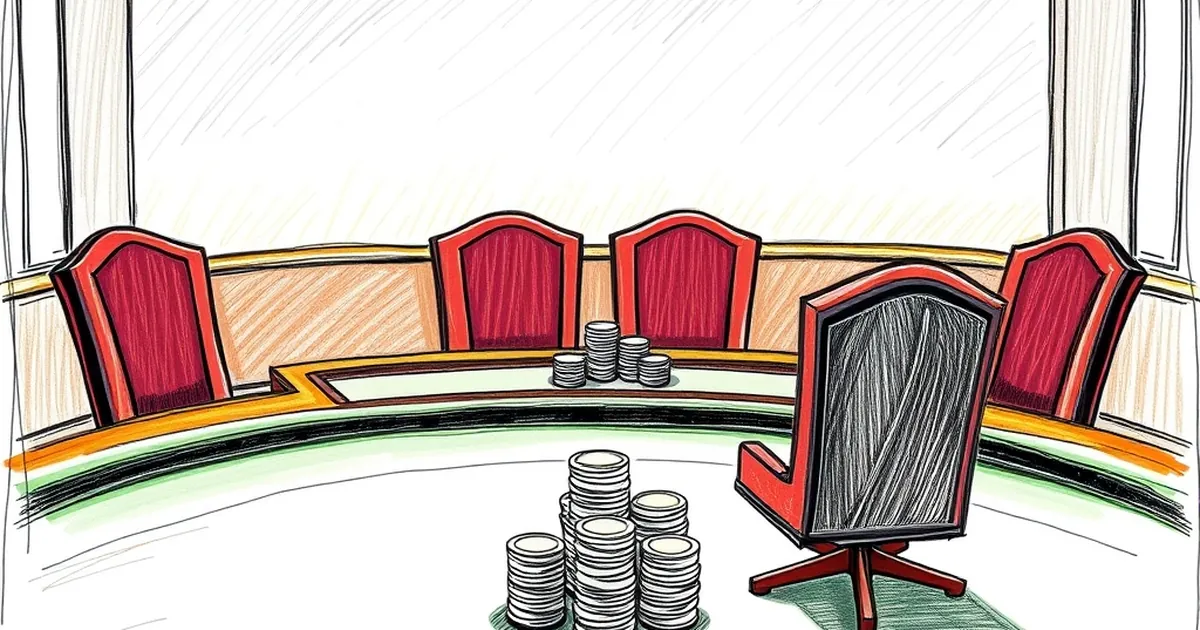
Peak-hour live dealer tables routinely show six or seven occupied seats while the effective number of players being paid is closer to four. That gap isn't a glitch. It's what happens when studios size their dealer rosters for average demand and then let seat allocation, bet-behind limits, and per-spot caps absorb the overflow. The headline number on the table (seven seats) and the number that actually determines your share of the action (three to four) are two different things, and they diverge hardest between roughly 7pm and 11pm AEST.
Why the seat count and the payout count diverge
A live blackjack table with seven betting spots looks like seven players get paid. In practice, three things cut that down:
Bet-behind caps. Most studios let seated players take a bet-behind wager from someone in the queue. That's a second stake riding on the same hand, but it doesn't create a new payout slot — it splits the existing one. If the seat's already at its per-spot maximum, the bet-behind gets refused or capped at a fraction.
Per-spot limits that bind before the table limit does. A table might advertise $5–$5,000, but each of the seven spots has its own ceiling. At peak, when six players want in, the studio can't raise the spot limit because the table max is already hit. So the seventh player queues, and the effective paying positions sit at four or five.
Dealer attention as a throughput cap. A dealer can comfortably run a hand every 45–55 seconds. Six active spots with side bets, insurance, and split decisions pushes that toward 70 seconds. The studio's answer isn't more dealers — it's capping how many spots get full action during the busiest window.
The result: on a Tuesday at 8:30pm AEST, a seven-seat table might have six names on the felt and only four of them clearing meaningful volume.
The numbers behind the peak-hour squeeze
Studios don't publish seat-utilisation data, but you can back into it. Take a mid-tier live blackjack table running 60 hands an hour at $25 average per spot. Four fully active spots = $6,000/hour in handle. Six spots at the same average would be $9,000 — a 50% jump the dealer physically can't service without dropping to 40 hands an hour, which nets $6,000 anyway. The house isn't losing money by capping you out. It's protecting its hands-per-hour metric.
Over a 100,000-hand sample, a table running four effective spots at 55 hands/hour clears 1,818 hands in 33 hours of play. The same table trying to service six spots at 40 hands/hour clears 1,320 hands in the same window. Fewer hands, same dealer cost, lower variance for the operator. That's the whole calculation.
The practical upshot for you: peak-hour seat scarcity isn't about popularity. It's about the studio's throughput math, and you're on the wrong side of it.
What "effective spots" actually means
An effective spot is one where a player can place a full-limit bet, take insurance, split, double, and get paid without a cap kicking in. At peak, tables often run four effective spots and three "display" spots — seats that look live but where bet-behind is limited to 10–20% of the table max, or where the spot is reserved for a queue that moves slower than the hand cycle.
If you've ever sat at a live table at 9pm and wondered why your $500 bet got capped at $150 while the player next to you is running $1,000 hands, that's the mechanism. It's not personal. It's seat-tiering.
How this plays out across game types
Not every live game suffers equally. The squeeze is worst in blackjack, moderate in baccarat, and almost absent in roulette and game shows.
| Game | Seats shown | Effective spots at peak | Why |
|---|---|---|---|
| Blackjack | 7 | 4–5 | Decision-heavy, side bets slow the cycle |
| Baccarat | 7–9 | 6–7 | No decisions, faster hands, fewer caps |
| Roulette | Unlimited (virtual) | Unlimited | No seat scarcity by design |
| Game shows | 1,000+ | 1,000+ | Bet-behind only, no per-spot cap |
| Poker (live) | 6–9 | 6–9 | Fixed seats, no overflow |
Blackjack is the problem child because every extra spot adds decision time without adding hands. Baccarat absorbs players better because the dealer just deals. If you're chasing peak-hour action and don't care about the game, baccarat and game shows are structurally friendlier.
The bet-behind trap
Bet-behind looks like a solution to seat scarcity. It isn't, at peak. The bet-behind stake rides on the seated player's decision, so you're exposed to their split/double choices, and your cap is usually set by the seated player's remaining spot room, not your own bankroll. At 8pm on a Friday, that remaining room is often zero.
Some studios show a "bet behind available" indicator that updates in real time. Watch it for ten minutes during peak. You'll see it flip to unavailable within seconds of a hand starting and stay there through the cycle. That's not a bug. It's the cap doing its job.
What you can actually do about it
You can't change the studio's throughput math. You can change when and where you play.
Shift your window. The squeeze runs roughly 7pm–11pm AEST on weekdays and 6pm–midnight on weekends. Before 5pm AEST, effective spots on a seven-seat blackjack table run five to six. After midnight, six to seven. If your schedule allows, the same table pays out more spots at 3pm than at 9pm.
Pick baccarat or game shows for peak. If you're playing at 8pm because that's when you're free, don't fight for a blackjack seat. Baccarat's effective spots barely move at peak.
Check the spot limit before you sit. The table limit is marketing. The spot limit is what you'll actually get. If the spot limit is $200 and you want to bet $500, you're in the wrong seat regardless of the hour.
Use the queue, not the bet-behind. Queuing for a seat gets you full spot rights. Bet-behind gets you a capped slice of someone else's. At peak, the queue is slower but the payout is cleaner.
Watch for studio roster changes. Some studios add dealers at peak and open more tables. Others don't. If a studio's table count drops from 40 to 28 between 7pm and 10pm, that's a roster decision, and your effective spots drop with it.
The question the studios won't answer
Here's what nobody publishes: what's the actual effective-spot ratio at peak, per studio, per game? We can estimate it from hand-speed and cap behaviour, but the operators know the exact number and they're not sharing it. If a studio runs seven-seat blackjack tables at an average of 4.2 effective spots during peak, that's a 40% reduction in paying positions — and it's invisible to anyone who just counts the names on the felt.
The open question is whether that ratio is stable or drifting. If studios keep adding side bets and decision complexity to blackjack, hand speed drops, and the effective-spot count drops with it. At some point, the seven-seat table becomes a four-seat table with three decorative chairs. You'd never know from the lobby. You'd only know from your bankroll.
If you're playing live dealer at peak, treat the seat count as marketing and the spot limit as the truth. And if you're up late enough to see the table thin out after midnight, you'll notice the effective spots climb back toward seven. Same table, same dealer, different math. The game didn't change. The clock did.
Gambling is a product for adults. Set a time and deposit limit before you sit down, and if the session stops being fun, close the table — the queue will still be there tomorrow.