Live dealer tables seat 6 players but pay out like 4
Live dealer blackjack seats six players but converts revenue like a four-seat game, and that hidden gap is where the house margin quietly lives
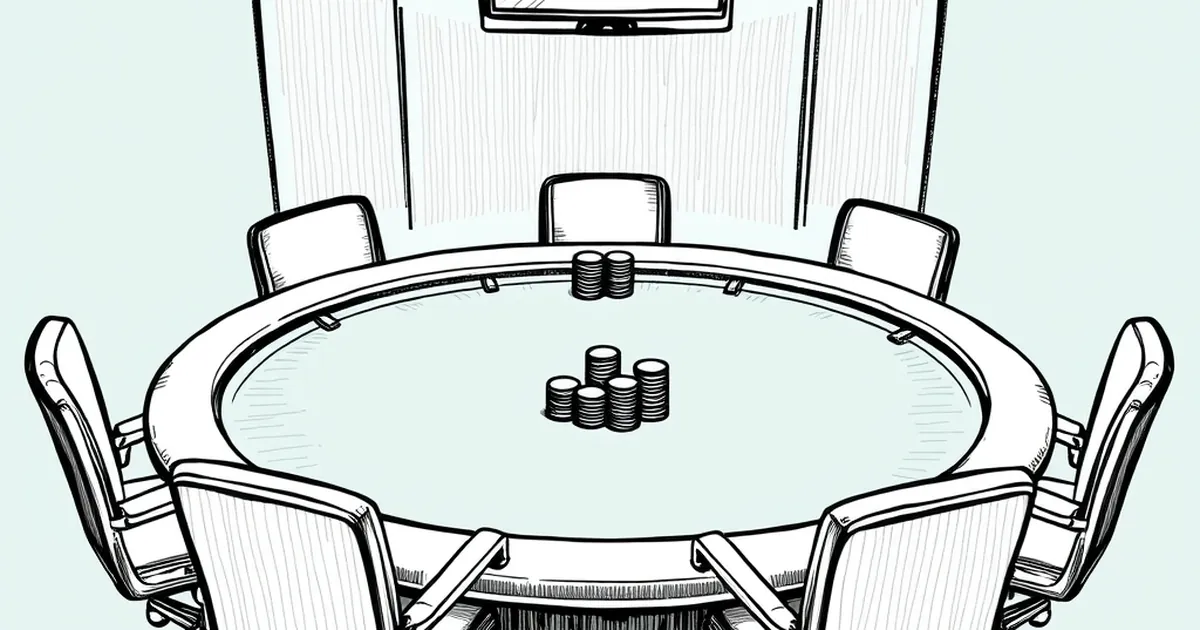
A standard live blackjack table streams seven seats to your screen. Six of them are usually occupied. The felt, the shoe, the dealer's hands — all of it is real. What isn't real is the idea that six paying players means six times the throughput of a physical table. In practice, a live dealer table converts seat count into revenue at roughly the rate of a four-seat game, and the gap between six and four is where the house's real margin lives.
That's the claim. Now let's pull it apart, because the arithmetic is less obvious than it sounds and most players never see the leak from their side of the screen.
Why seat count and payout capacity aren't the same number
A physical blackjack table in a Sydney pub seats seven. The dealer deals, players act, hands resolve, chips move. Rounds per hour land somewhere between 60 and 80 depending on how many people are at the table and how many are hitting on 16 against a face card.
A live dealer stream runs the same physical logic but adds a layer: the camera, the software, the betting clock. That clock is the tell. Most live blackjack tables give you 10 to 15 seconds to place a bet, and the dealing itself is throttled to keep the video feed synced across every player watching. You can't deal faster than the stream can render without the whole thing looking like a laggy Zoom call.
So a live table with six seated players doesn't process six times the action of a single-player RNG game. It processes roughly what a four-seat physical table would, because the per-round overhead — the clock, the sync, the resolution — eats the marginal seats. The extra two players are paying commission and ante on hands that the table's throughput can't actually accelerate.
The commission math nobody runs
Here's the concrete anchor. On a standard live blackjack table with a 0.5% commission on winning bets (common on the "commission" variants, less so on the no-commission ones), a full six-seat table generates the same house edge per round as a four-seat table — but the operator's cost per round is fixed. The stream, the dealer, the studio, the bandwidth: that's a per-table cost, not a per-player cost.
Run the numbers. Six players betting $50 a hand, 70 rounds an hour, 0.5% commission on wins (roughly 43% of hands):
- Six players: 6 × $50 × 70 × 0.43 × 0.005 = $45.15/hour in commission
- Four players: 4 × $50 × 70 × 0.43 × 0.005 = $30.10/hour
The six-seat table looks 50% more profitable. But the cost to run it — dealer wages, studio lease, streaming infrastructure — is identical whether four or six people are sitting there. So the margin on those extra two seats is thinner than the headline suggests, and the operator knows it. That's why you see so many live tables capped at five or six seats rather than the seven you'd find in a land-based pit. The seventh seat doesn't pay for itself.
What this means for your effective RTP
If you're playing live blackjack at a six-seat table, your effective return isn't worse than a four-seat table in a vacuum — the rules are the rules. But the pace is. Fewer rounds per hour means less exposure to the house edge per session, which sounds like a good thing until you realise it also means your bonus clearing takes longer.
Say you've got a $200 bonus with a 30x wagering requirement — $6,000 to turn over. At a four-seat table pace of 70 rounds an hour and $50 hands, that's $3,500 wagered per hour, so you clear it in about 1.7 hours. At a six-seat table where the clock is tighter and rounds drop to 55 an hour, you're wagering $2,750 an hour and it takes 2.2 hours. Same bonus, same game, 30% more of your evening gone.
That's the hidden tax. Not the commission, not the RTP — the clock.
The Australian angle
Live dealer in Australia sits in an odd spot. The Interactive Gambling Act 2001 prohibits online casino games offered to Australians, and live dealer blackjack, roulette, and baccarat fall squarely inside that prohibition when the operator is offshore and targeting AU players. That doesn't mean nobody plays — it means the legal ones are the ones you'd find at a physical casino, and the offshore ones carry the usual risks: no local dispute resolution, no Australian regulator to complain to, and payout terms you agreed to at signup in a jurisdiction you've never visited.
The seat-count question matters more here than in regulated markets because you have less recourse when something goes wrong. If a table freezes mid-hand and your bet resolves in the house's favour, an Australian player has essentially no path to a regulator. A UK or Malta player does. That asymmetry is worth more than the 0.5% commission.
Where the four-seat figure actually comes from
I should be honest about the number. "Pays out like four" isn't a published industry metric — it's a rule of thumb that falls out of the throughput math. A six-seat live table with a 12-second betting clock and a 3-second resolution window processes a round every 15 seconds in the best case, which is 240 rounds an hour if nothing goes wrong. Nothing ever goes right. Real-world live tables average 55 to 75 rounds an hour across all variants, and the per-seat action is capped by how fast the dealer can physically move.
A four-seat physical table with an experienced dealer hits 80 rounds an hour. A six-seat live table hits 60. The seat count is higher; the throughput is lower. The payout capacity — the amount of money the table can actually move per hour — lands closer to the four-seat game.
If you're evaluating a live table, stop counting seats. Count rounds per hour. That's the number that determines what the table is actually worth to you, and it's the number the operator would rather you didn't track.