Loot box odds hide at 0.6% — the pity timer waits until pull 50
The ACCC inquiry exposed how a 0.6% loot box drop rate and a pity timer at pull 50 create a gap between advertised odds and player experience
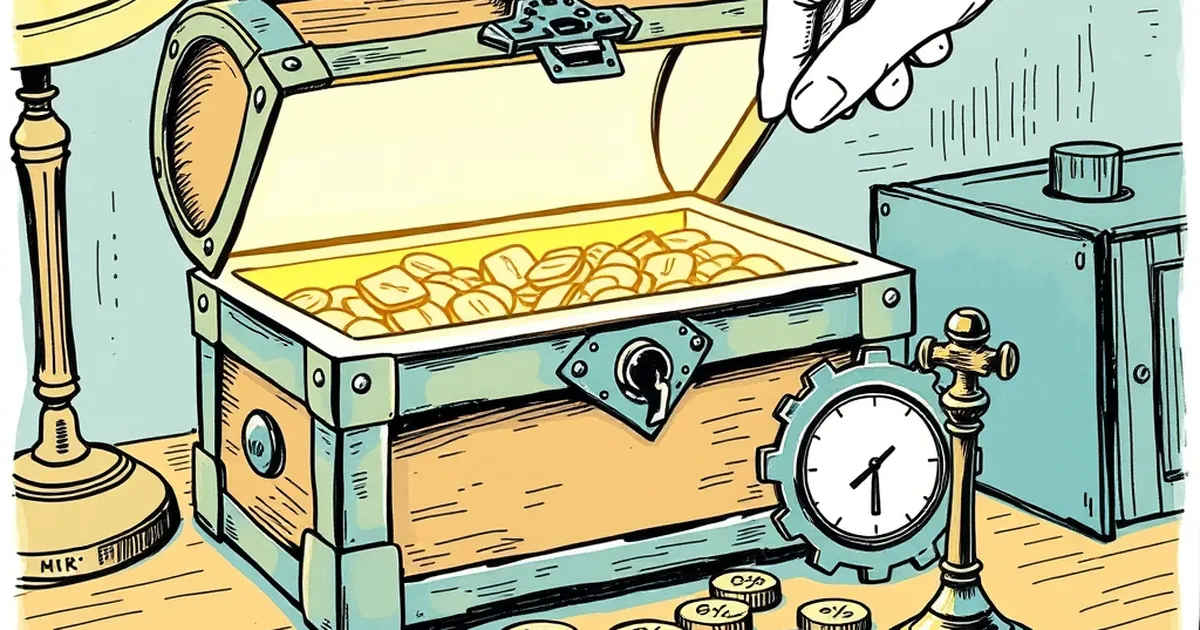
The ACCC's 2023-24 Digital Platform Services Inquiry dragged loot boxes back into the spotlight, and the numbers that surfaced were genuinely strange: a headline drop rate of 0.6% for the item everyone actually wants, sitting next to a pity timer that guarantees it at pull 50. If you do the maths, that's a system where the advertised probability and the felt experience diverge wildly — and for anyone building websites with any kind of reward mechanic, that gap is the whole story.
What a pity timer actually does to a probability
A flat 0.6% chance per pull sounds simple. It isn't. It's a marginal number sitting on top of a conditional system, and the two tell different stories.
If the 0.6% held constant across all 50 pulls, the chance of walking away empty-handed would be 0.994^50, or roughly 74%. Three in four players would hit the wall with nothing to show for it. That's not a game, that's a receipt.
The pity timer changes the shape entirely. It doesn't raise the average — it truncates the tail. Nobody goes past 50. The distribution gets squeezed into a hard ceiling, and the psychological effect is disproportionate to the mathematical one. Players don't remember the 0.6%. They remember the guarantee. The number on the store page is a rounding error next to the promise buried in the patch notes.
This is where behavioural economics gets interesting. Kahneman and Tversky's work on loss aversion showed that losses loom roughly twice as large as equivalent gains. A pity timer is, in effect, a loss-aversion tax: it converts an open-ended risk into a bounded one, and bounded risk is something humans will pay a premium to acquire.
The variable-ratio problem underneath
B.F. Skinner's variable-ratio reinforcement schedules — the ones that keep pigeons pecking at a lever long after the food stops — are the standard reference here, and they're usually invoked lazily. The more precise point is that Skinner found unpredictable reward timing produces the most persistent behaviour, but unpredictable is doing a lot of work in that sentence.
A pure random drop is unpredictable in outcome. A pity timer is unpredictable in outcome but predictable in worst case. That's a different animal. It removes the despair that would otherwise cause players to quit, while preserving enough variance to keep the dopamine loop ticking. You get the persistence of a variable-ratio schedule with the retention of a guaranteed floor.
Why 0.6% is a design choice, not an accident
Here's the part that matters for anyone building digital products: 0.6% is not a number that emerges from a spreadsheet. It's a number that gets tuned until the engagement curve looks right.
Too high, and the item stops feeling special. Too low, and players churn before the pity timer kicks in. The sweet spot is somewhere around "frustrating but not hopeless" — which is exactly the emotional register that keeps people coming back.
The pity timer at 50 is the safety valve. It's set far enough out that most players will spend real money before they hit it, but close enough that the guarantee feels meaningful. The 0.6% and the 50 aren't independent variables. They're a matched pair, and the relationship between them is the actual product.
A concrete comparison: Duolingo's streak system
Look at something less controversial for a moment. Duolingo's streak mechanic is a pity timer in a different costume. Miss a day and you lose the streak — unless you've banked a "streak freeze." The freeze isn't a reward for good behaviour. It's a bounded loss. It converts "you might lose everything" into "you might lose everything, but only twice."
Users report the same psychological texture as loot box players: the freeze doesn't make the streak more valuable, it makes the loss more tolerable. And tolerable losses are what keep people in the system long enough to form a habit.
The parallel isn't perfect, but the mechanism is identical. You're not selling the reward. You're selling the floor.
What this means for business websites
Most Australian businesses aren't running gacha mechanics, and shouldn't be. But the underlying logic shows up everywhere once you know what to look for.
Progress bars and "almost there" states
A checkout flow that shows "3 of 5 steps complete" is doing pity-timer work. It's converting an open-ended task into a bounded one. The user doesn't know how long the whole thing will take, but they know the ceiling. That's the entire value proposition.
Loyalty tiers with visible thresholds
"Spend $200 more to reach Gold" is a pity timer with a dollar sign. The threshold is arbitrary. The guarantee is what matters. And the effectiveness of the mechanic depends entirely on how visible the threshold is — which is why the best loyalty programs put the progress bar front and centre, not buried in an account page.
The 0.6% equivalent: scarcity that's actually bounded
Limited stock counters ("only 4 left") are the retail version of a drop rate. They're effective when they're credible and corrosive when they're not. The pity timer's lesson is that bounded scarcity outperforms unbounded scarcity, because bounded scarcity gives the buyer a decision they can actually make. Unbounded scarcity just creates anxiety.
The regulatory wind is shifting
The ACCC's inquiry recommended that loot boxes be treated as gambling-like content for under-18s, and several European regulators have gone further. The direction of travel is clear: hidden probabilities are becoming a compliance risk, not just an ethical one.
For Australian businesses, the practical takeaway is simpler than the regulatory one. If you're using any kind of variable reward — discounts, bonuses, referral credits, gamified progress — document the odds. Not because a regulator is coming, but because the moment a customer feels the odds are hidden, the mechanic stops working and starts costing you trust.
The pity timer at pull 50 works because players know it's there. A hidden pity timer is just a scam with extra steps.
Where this goes next
The interesting frontier isn't in games at all. It's in subscription products, where churn is the enemy and the pity timer is the retention tool. A streaming service that guarantees "your next recommendation will be a hit" after three misses is running the same play. A SaaS onboarding flow that promises "you'll see value within 14 days or we'll extend your trial" is doing it too.
The 0.6% number is a distraction. The real lesson is that people don't want fair odds — they want known odds, with a floor underneath them. Build that into your product, and you're not manipulating anyone. You're just being honest about the shape of the risk, which is more than most platforms manage.