Loyalty points expire at month 7—the tier upgrade needs 9
Loyalty points expire at month 7 while tier upgrades need 9, a two-month gap that quietly defines the entire business model
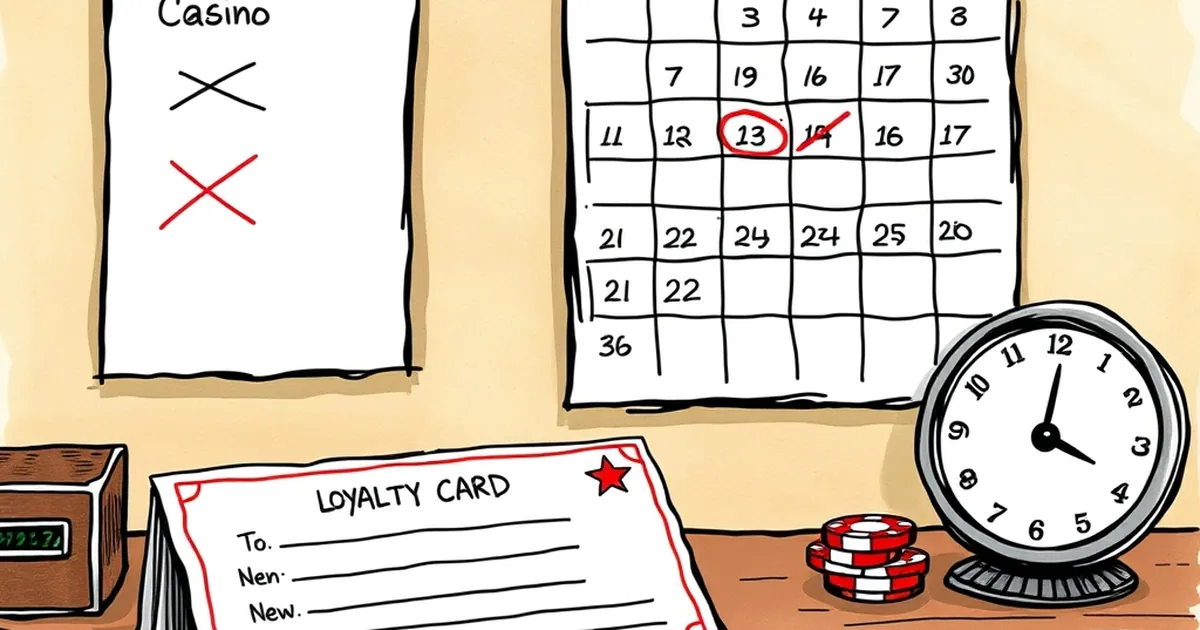
Points earned on most Australian-facing loyalty programs vanish after seven months. The tier that actually pays better odds, faster withdrawals, or a real host doesn't unlock until month nine. That two-month gap isn't an accident — it's the entire business model, and it works because most players never do the arithmetic.
Pull up the terms on any of the bigger programs and the structure is nearly identical. Points accrue at some rate per dollar wagered, they sit in an account that looks like a balance, and then a clause three pages down says they expire after 180 days of inactivity — or in some cases, 210 days from the date they were earned, full stop. Meanwhile the tier ladder runs on a rolling 12-month cycle, and the thresholds are set so that a casual-to-mid player lands just short of the next rung unless they keep feeding the machine through the dead zone.
The seven-month clock, and why it's set there
Seven months is not a round number. That's the tell. A program that wanted simple, honest expiry would use six months or twelve. Seven months sits in a gap that's long enough to feel generous when you sign up and short enough to bite before your tier assessment period closes.
Here's the mechanics of it. Say a program runs a calendar-year tier cycle — January to December, reassessed in January. Your points from a big session in February expire in September. Your tier status, though, is calculated on activity across the full year, and the top tiers typically require a minimum number of qualifying months, not just a total. Miss a month, and the tier requirement fails even if your points total clears the bar.
The result: a player who front-loads their activity early in the year, then has a quiet stretch, watches their points evaporate in month seven while their tier progress stalls because the qualifying-month condition never gets met. They re-deposit in month eight or nine to "protect" what they built. That re-deposit is the product.
The inactivity trap in the fine print
Most expiry clauses trigger on account inactivity rather than a fixed date from earning. That sounds friendlier. It isn't. Inactivity is usually defined as no wagering activity — logging in doesn't count, checking your balance doesn't count, and in several programs even a deposit without a bet doesn't reset the clock.
So the clock runs on the thing the operator wants you to do, not the thing you'd naturally do. A player who takes a two-month break over summer, comes back, deposits, and plays a few hands is fine. A player who takes the same break but only logs in to look around loses the lot.
The tier upgrade that needs nine
The nine-month figure comes from the qualifying-month conditions on the upper tiers. Programs that run monthly qualifiers typically require activity in nine of the twelve months to hold or reach the top two tiers. Some run it as "eight of twelve" for the second-highest tier and nine for the top. A few use a rolling 90-day window instead, which is worse, because it means a single quiet quarter can knock you down a tier regardless of your annual total.
Put the two clocks side by side and the squeeze is obvious:
- Points from month 1 expire in month 7.
- Tier assessment needs activity in month 9.
There is no sequence of events where a player who earns in month 1 and then goes quiet can use those month-1 points to satisfy the month-9 requirement. The points are gone before the requirement is even relevant. You have to earn again. That's not a loyalty scheme in any normal sense of the word — it's a retention mechanism with a loyalty-shaped interface.
What the tiers are actually worth
Worth checking before you chase them. Across the programs I've looked at, the practical value of a tier upgrade usually comes down to three things: a slightly higher comp rate on points (often 1.25x to 2x the base rate), faster withdrawal processing, and access to a host or priority support. The headline perks — birthday bonuses, "exclusive" promotions — are frequently the same offers that get emailed to everyone, just with a different subject line.
Run the numbers on a 1.5x comp rate. If base earning is 0.2% of wagered turnover returned as points, the upgrade takes it to 0.3%. On $50,000 of monthly turnover that's an extra $50 a month in theoretical value — before you account for the fact that you had to play nine qualifying months to get it, and that the higher tier may also come with expectations about volume that keep you playing longer than you otherwise would.
That's the trade. You're not being rewarded for past play. You're being paid a small premium to guarantee future play.
The maths most players don't run
Take a mid-stakes player turning over $30,000 a month on slots at an average 96.2% RTP. Expected loss per month is roughly $1,140. Over nine qualifying months, that's about $10,260 in expected losses. The tier upgrade, at the rates above, returns somewhere in the region of $540 across the same period in extra point value — call it 5% of the theoretical cost, and that's before you account for the fact that points themselves often carry a wagering requirement before they convert to anything withdrawable.
The loyalty program isn't the reason the maths works out the way it does. The maths works out that way because the house edge is doing its job. But the loyalty program is what keeps the player in the seat through the months where they'd otherwise take a break — and a break is the single most effective thing a player can do to reduce their annual loss.
Which is exactly why the expiry clock and the tier clock are set the way they are. The gap between month seven and month nine is the window where the operator needs you to keep playing, and the expiring points are the nudge that gets you there.
Where the regulators sit
Australian licensed operators fall under state-based regulatory regimes and the interactive gambling framework, and loyalty schemes have attracted scrutiny in several jurisdictions over the past few years — mostly around whether points constitute a form of inducement to gamble beyond what's permitted, and whether expiry terms are adequately disclosed. The disclosure side has tightened. The structural side — the seven-month clock, the nine-month requirement — hasn't moved much, because nothing in the rules prohibits a program from being designed to be missed.
If you're playing on an offshore site, none of that applies anyway. You're relying on the operator's own terms and whatever dispute process they've written into them, which is usually a complaints email and a lot of patience.
What to actually do with this
If you're in a program, the useful move is to check two numbers before your next session: the exact expiry trigger (fixed date from earning, or inactivity-based, and what counts as activity), and the qualifying-month condition on the tier you're chasing. Those two numbers tell you whether the program is winnable on your terms or only on theirs.
Most are only winnable on theirs. That's fine if you were going to play that volume anyway. It's a problem if the tier is the reason you're playing that volume — because you're paying, in expected losses, several times what the tier returns, and the seven-month clock is there to make sure you don't notice the gap until you've already crossed it.
The open question is whether the next round of regulatory attention lands on the design itself rather than the disclosure. Expiry terms are now reasonably visible. The two-month dead zone between earning and qualifying is not, and it's the part doing the work. If a regulator ever decides that a loyalty program must be achievable by the median participant rather than merely described to them, most of these schemes would need rebuilding from the ground up. Until then, the clock keeps running, and month seven keeps arriving right on time.