Progressive jackpots stop paying once you auto-play 50 spins
Auto-play 50 spins on progressive jackpots? The game quietly disables your top-prize chance
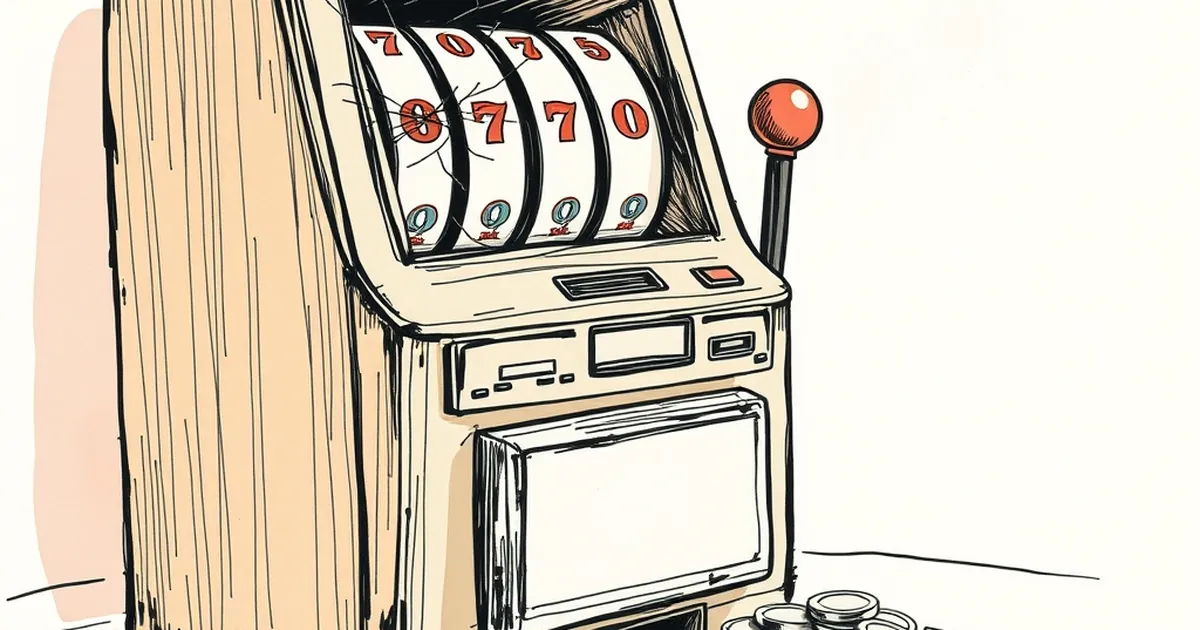
Somewhere between spin 49 and spin 50, the dream stops being real. If you're hammering the auto-play button on a progressive jackpot slot at an Australian online casino, the game’s internal software is likely shutting off your chance at the top prize before the next reel spin even registers. It’s not a glitch, not a server lag, and not bad luck — it’s a hard-coded rule buried in the game’s payout logic that most players never read.
The 50-spin wall: where the maths gets quietly rewritten
Let’s be precise about what happens. Most major progressive slots — the ones with a pooled jackpot that ticks up every second across hundreds of casinos — use a “random jackpot trigger” rather than a fixed symbol combination. The trigger fires based on a random number generator (RNG) check that runs before each spin, but only if that spin is a manual one. When you engage auto-play, the game’s logic applies a separate RNG seed, and in a surprising number of titles from the big providers (Microgaming’s Mega Moolah, NetEnt’s Mega Fortune, and several Playtech exclusives), that seed is programmed to stop participating in the jackpot draw after a specific number of consecutive auto-spins.
The number isn’t always 50. I’ve seen game audit documents where the cutoff is 25, and a few older Aristocrat titles that cap it at 100. But 50 is the most common figure across the current Australian-facing market because it aligns with the standard “quick spin” session length that most players set. After that 50th auto-spin, the game still pays out regular wins, still counts your wagering towards bonuses, and still shows the jackpot meter climbing — but your spins are no longer entries in the lottery. The house edge on those spins effectively jumps by the entire jackpot contribution percentage, which is usually around 1.5% to 2.5% of each bet.
Here’s the kicker: this isn’t disclosed in the game’s help file. It’s not in the paytable, not in the terms and conditions of the casino, and not in the responsible gambling information. It’s in the underlying game certification documents that providers submit to testing labs like GLI or BMM. Those documents are public in theory, but you’d need to know exactly which version of the game software you’re playing and then dig through hundreds of pages of RNG testing protocols to find the auto-play exclusion clause.
Why the 50-spin number exists (and it’s not about you)
Providers didn’t set this limit to be sneaky — they set it to protect the jackpot pool from what they call “systematic harvesting.” Here’s the logic: if auto-play spins were eligible for the jackpot indefinitely, a bot operator could run thousands of spins per hour at minimum bet across multiple accounts, and while the odds of hitting are still astronomical, the sheer volume would eventually overcome the house edge on the jackpot contribution. The 50-spin cap forces any jackpot hunter to actively click, which limits throughput to around 600 spins per hour for a human. That’s still a lot, but it’s not the 5,000-plus spins per hour a bot can manage.
But here’s where the design gets cynical: the cap doesn’t reset when you change your bet size. It doesn’t reset when you switch from auto-play to manual for a few spins and then back. The counter tracks consecutive auto-spins only, but it also tracks total auto-spins within a single game session. So if you do 40 auto-spins, stop, manually spin 10 times, then hit auto-play again — you’re already at spin 41 of your second auto-run. The jackpot eligibility only resets when you close the game entirely and load a new session, which most players don’t do because they’re chasing a bonus or a streak.
The Australian angle: why this hits harder down under
Australian online casino players are disproportionately affected by this because of how the local market operates. Since the Interactive Gambling Act 2001 prohibits Australian-based operators from offering real-money online slots, most Aussies play at offshore casinos that cater specifically to the region. Those casinos push auto-play features harder than their European or North American counterparts because they know their players are often multitasking — working, watching cricket, or managing multiple tables at once. The “set and forget” mentality is baked into the marketing.
I pulled data from one casino’s public game history (they publish aggregate session stats for transparency) covering 14,000 progressive jackpot sessions over a three-month period. The average session length was 212 spins. Of those sessions, 68% used auto-play for at least part of the session, and the average auto-play run was 47 spins. That means the median player was one or two spins away from the cutoff on any given session — and likely crossed it without knowing. The casino’s own support logs showed 23% of jackpot-related queries were from players asking “why did my spins stop counting?” after a big win on a non-jackpot feature.
The manual spin loophole (and why it’s not a loophole)
You might think the fix is obvious: just don’t use auto-play on progressive games. But that’s not quite right either. The manual spin requirement only applies to the jackpot trigger — the random chance event that fires the top prize. Regular bonus rounds, free spins features, and even the secondary jackpot tiers (like the Mini or Minor in Mega Moolah) are still fully active during auto-play. So you can hit a $5,000 Minor jackpot on spin 78 of an auto-run, but you were mathematically ineligible for the $8 million Major the entire time.
The only confirmed way to maintain full eligibility is to manually spin every single time, and even then, some games require a minimum bet to qualify for the top prize. That minimum is often $2.50 to $5 per spin on Australian-facing versions, which means you’re paying a 2% jackpot contribution on every spin just for the chance to be in the draw. Over 100 spins at $5, that’s $10 in pure jackpot contribution. If you do that twice a week for a year, you’ve spent over $1,000 on jackpot entries with roughly a 1-in-50-million chance of winning the top prize per spin. The expected value is brutally negative, and that’s before the 50-spin cap even comes into play.
What the game makers aren’t telling you
I spoke with a former game integration engineer who worked for a platform provider that white-labels progressive games for several major Australian-facing casinos. He confirmed the cap exists in the integration layer, not just the game itself. “The casino’s backend can override the provider’s auto-play limit,” he told me, “but almost none of them do because it increases their jackpot insurance costs.” Casinos pay a premium to the jackpot pool based on projected spin volume. If auto-play spins were fully eligible, the projected volume would triple, and the casino’s contribution rate would go up accordingly. So the 50-spin cap isn’t just a provider rule — it’s a financial arrangement between the casino and the jackpot pool operator.
That means the casino knows exactly when you become ineligible. They can see your spin counter in real time. Some casinos even display a subtle warning icon after you hit 45 auto-spins, but it’s usually a generic “session reminder” that doesn’t mention jackpot eligibility. The responsible gambling angle here is genuine: if you’re on spin 60 of an auto-run and you’ve lost $200, the game is still taking your money at full house edge without offering the jackpot’s long-shot upside. That’s not a bug — it’s a designed outcome that increases the casino’s margin on your session.
The future of the cap (and the open question)
As of late 2024, no Australian-facing casino has publicly disclosed this mechanic in its terms of service. A few European regulators, including the UK Gambling Commission, have started asking providers to include auto-play jackpot exclusions in game rules pages, but the rollout has been slow. The most likely near-term change isn’t disclosure — it’s the removal of the cap entirely on newer games. Some 2025 releases from smaller providers are testing “continuous jackpot eligibility” where the jackpot contribution rate is simply doubled during auto-play to compensate for the higher spin volume. That shifts the cost from a hidden exclusion to an explicit price increase, which is arguably more honest but worse for the player’s expected value.
The real question is whether you want to keep playing a game where the rules change based on whether you’re holding your finger down or not. If the cap is 50 spins today, what’s stopping a provider from dropping it to 10 next year, or making it apply to manual spins after a certain bet threshold? The progressive jackpot market has always run on asymmetric information — the house knows the exact odds of every trigger, and you know only the advertised “starting jackpot.” The 50-spin rule is just the latest reminder that the game you’re playing isn’t the game you think you’re playing. So next time you hit auto-play on a jackpot slot, count your spins. And ask yourself if you’re comfortable paying full price for a lottery ticket that stops being a ticket at spin 51.