Reward loop peaks at attempt 3 — your paywall lands at 6
Behavioural psychology shows persistence peaks at attempt three, yet most Australian businesses place their paywall well past that point
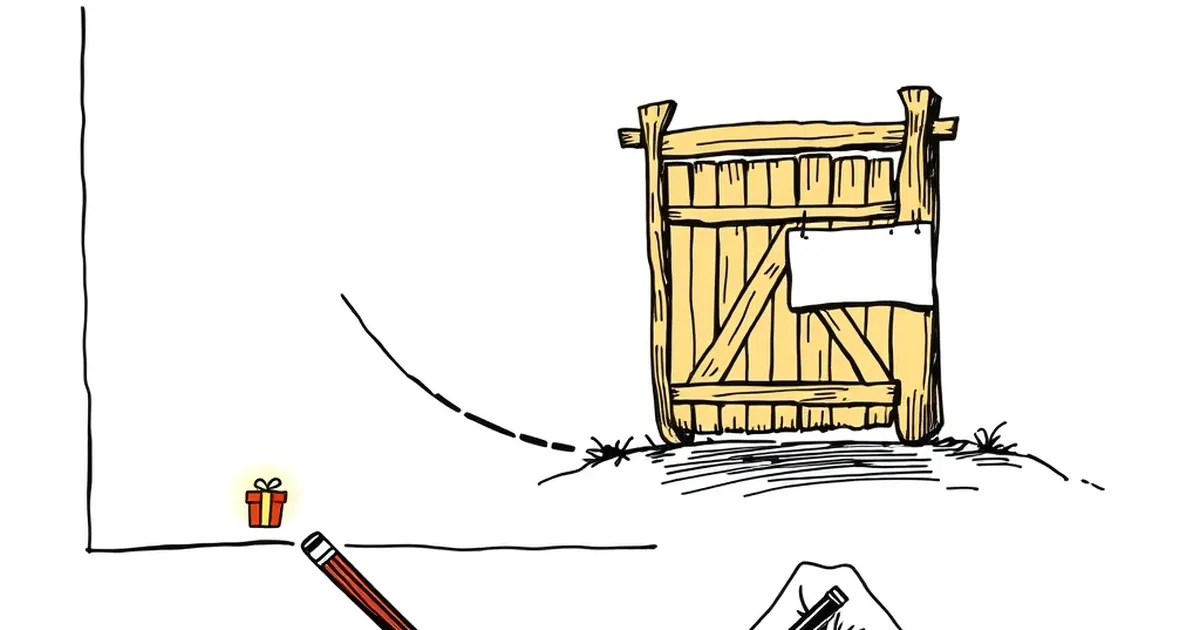
There's a well-worn finding in behavioural psychology that keeps surfacing in the strangest places: people persist hardest somewhere around the third attempt at something, and their willingness to keep going collapses not long after. If that's true, then the timing of your paywall isn't a pricing decision at all. It's a decision about where you sit on someone's motivation curve — and most Australian businesses are placing it on the wrong side of the peak.
The shape of persistence, and why it isn't a straight line
Back in the 1930s, a psychologist named Clark Hull was running rats through mazes and noticed something that didn't fit the prevailing models. The animals didn't just get steadily more or less motivated. Their effort followed a curve — rising, cresting, then falling away. Later work on what's sometimes called the goal gradient effect, and Skinner's schedules of reinforcement, filled in the picture: effort is highest when a reward feels close and achievable, and it decays once the cost of another attempt starts to outweigh the imagined payoff.
Then there's Kahneman and Tversky's loss aversion, which does a lot of quiet work here. People don't weigh a win and a loss equally — the loss stings roughly twice as much. So every additional attempt carries a psychological cost that compounds faster than the reward does.
Put those together and you get something like this: attempt one is curiosity. Attempt two is "okay, this might actually work." Attempt three is the peak — the point where the person has invested enough to care but hasn't yet accumulated enough friction to resent it. Attempt four or five is where the curve starts bending downward. By attempt six, you're often dealing with someone who's already decided, consciously or not, that this isn't for them.
They just haven't left yet.
Where the paywall usually sits, and why
Here's the pattern I keep seeing in small and mid-sized Australian business sites. A visitor arrives, pokes around, maybe tries a calculator, a quote form, a product configurator, a free tool. They hit a wall — sometimes literally a paywall, sometimes a "create an account to continue" gate — at roughly the sixth interaction.
Why six? Because six feels safe. Six feels like the visitor has had a fair go and you've earned the right to ask. It's the number that emerges when you're optimising for not annoying people, and it's a perfectly reasonable instinct that happens to be wrong.
The problem is that the sixth interaction is often where the visitor has just finished the third meaningful attempt. Not the third click — the third genuine try at getting value. Three attempts at understanding your pricing. Three attempts at configuring something that fits. Three attempts at finding the answer they came for. By the time they've done that, the peak has been and gone, and you've asked them to pay at the exact moment their enthusiasm has started to sag.
I've watched this play out on a client's site — a Melbourne outfit selling a niche B2B service — where the free tool let people run four scenarios before prompting for contact details. Analytics showed a clean story: the vast majority who ran three scenarios went on to engage further, but the drop-off between scenario three and scenario four was brutal, and the prompt at four converted at roughly a third the rate of an earlier test that asked at three. Same tool, same audience, same offer. The only thing that moved was the position on the curve.
What attempt three actually looks like
The tricky part is that "attempt" is not the same as "pageview," and getting this wrong is how people end up moving the wall to the wrong spot and concluding the whole idea is nonsense.
An attempt has three ingredients: intent, effort, and a result the person can evaluate. Someone typing a question into your search bar and getting a useful answer — that's an attempt. Someone filling in half a form and abandoning it — that's not an attempt, that's friction. Someone scrolling past your pricing page three times without stopping — also not an attempt.
So the practical exercise is to sit down with your analytics and ask: what is the unit of value in this experience, and how many of those units does a typical engaged visitor consume before they either convert or leave? If the answer is "they tend to do three or four and then disappear," you now know roughly where the peak sits for your audience. If it's "they do one and leave," you have a different problem entirely — you haven't built something worth attempting twice.
There's a useful discipline in not asking for the sale at the peak, by the way. The peak is where you want to remove friction, not add it. Attempt three is the moment to make the next step easier, not to introduce a decision. The ask belongs slightly after the peak, when the person has already decided they want the thing and is looking for permission to proceed.
The counter-argument worth taking seriously
Not everyone buys this. There's a reasonable case that moving your gate earlier just annoys people who were never going to convert anyway, and that a longer free run builds the kind of trust that pays off over months rather than sessions. For high-consideration purchases — professional services, anything over a few thousand dollars — that argument holds up well. Nobody hires an accountant after three clicks.
But even there, the curve applies to micro-attempts, not the final decision. Someone evaluating an accountant might make three attempts at understanding your fees, three at checking your credentials, three at reading a case study. Each of those little sequences has its own peak. The paywall you're timing isn't necessarily the one that asks for money — it's the one that asks for anything: an email, a call, a commitment of attention that could go elsewhere.
The businesses that get this right tend to think in layers. They let the first three attempts at any given question happen frictionlessly, then offer something — a resource, a comparison, a short call — at the point where curiosity is still high and fatigue hasn't set in.
What to do with this on Monday
Pull up your funnel and find the last three steps before people either convert or vanish. For most sites, that's where the real story is, and it's usually not where the attention goes.
Then ask a blunt question: at which of those steps does the visitor stop trying and start tolerating? That's your attempt-six moment. Everything before it is where the value lives, and everything after it is where you've started losing people you already had.
The forward-looking part is this: as more of your customer's early research moves into AI assistants and comparison tools, the number of attempts they'll make on your site before deciding will shrink, not grow. The window between "interested" and "gone" is closing. Which means the old instinct — wait until they've had a fair go, then ask — gets more expensive every year. The sites that win the next few years will be the ones that can identify attempt three in real time and treat it as the most valuable moment they have, rather than the moment just before they finally feel entitled to interrupt.