Reward pop-ups fire at 3 taps—the habit forms at 40
Reward speed and habit formation are separate design problems, and the gap between a fast dopamine hit and an automatic tap shapes product decisions
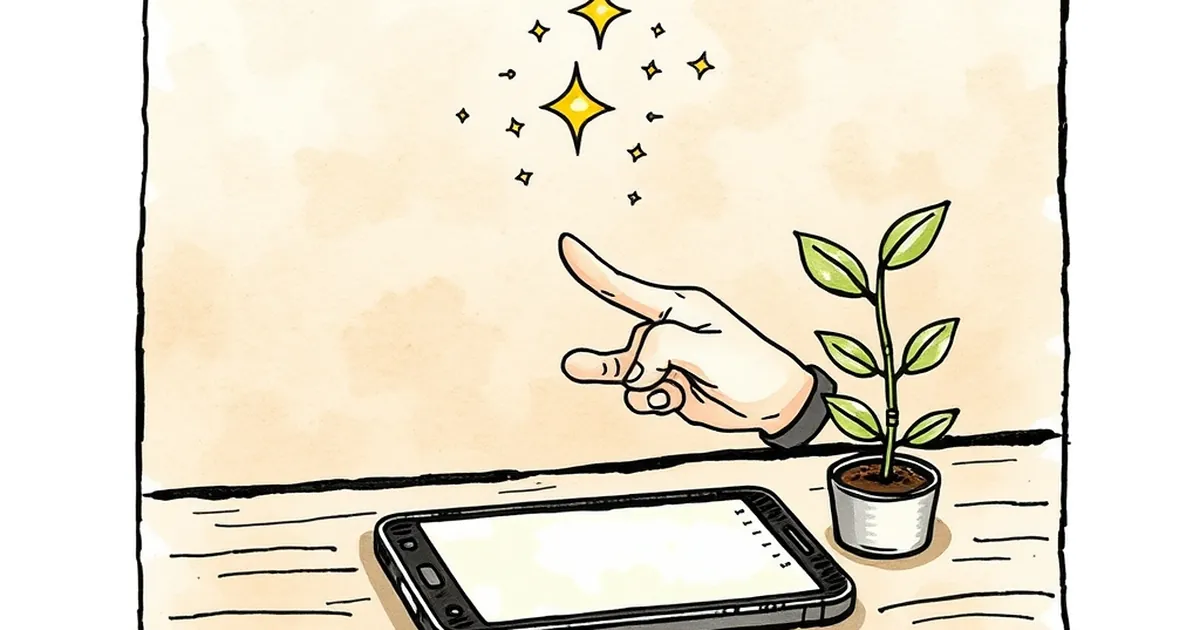
Picture a punter on a phone at a Sydney bus stop, thumbing through an app that just handed them a small win for the third time in a row. The dopamine hit lands in under a second. Now picture the same person forty taps later, opening the app without deciding to. Somewhere between those two moments, a product team made a deliberate choice about how fast the reward should arrive — and that choice has more to do with behavioural psychology than with anything in the codebase.
The gap between the hit and the habit
There's a useful distinction that product teams often blur: the speed of a reward and the strength of the habit it builds are two different variables, and they pull in opposite directions if you're not careful.
A reward that fires at three taps is almost perfectly frictionless. That's the point. B.F. Skinner's work on operant conditioning showed that the timing of reinforcement matters enormously — immediate consequences shape behaviour far more efficiently than delayed ones. If your app can deliver a satisfying outcome in under a second, it will. Every product manager knows this instinctively, even if they've never read a single paper on the subject.
But a habit isn't a reward. A habit is what happens when the reward stops being the reason you show up. Charles Duhigg's framing of the habit loop — cue, routine, reward — is a simplification, but a useful one: the reward's job is to teach the brain that the routine is worth repeating. Once that lesson is learned, the cue alone is enough to trigger the behaviour. The reward can become smaller, less predictable, or even absent, and the routine persists.
So the question isn't "how fast should the reward fire?" It's "how many repetitions does it take before the cue does the work on its own?" And that number is almost never three. Forty is a more honest ballpark, and even that varies wildly by context.
Why variable rewards are so sticky — and so risky
Here's where it gets genuinely interesting. Predictable rewards produce predictable behaviour, but they don't produce compulsive behaviour. Skinner found that variable-ratio reinforcement — where the reward arrives after an unpredictable number of actions — produced the highest and most persistent response rates of any schedule he tested. The uncertainty itself is the hook.
This is well-trodden ground in behavioural economics. Kahneman and Tversky's work on loss aversion showed that losses loom larger than equivalent gains, which is why a "you're about to lose your streak" notification can be more motivating than "you've earned a badge." And the anticipation of an uncertain reward activates dopamine pathways more strongly than the reward itself — a finding from Wolfram Schultz's work on reward prediction error that has since been replicated many times over.
For a business building a website or an app, this is a double-edged sword. Variable rewards are extraordinarily effective at driving return visits. They're also the mechanism behind some of the most criticised patterns in consumer tech — the pull-to-refresh slot machine, the notification that might be a message from a friend or might be a marketing nudge. The difference between a healthy habit and a harmful one often comes down to whether the reward is aligned with something the user actually wants, or whether it's manufacturing a want that only exists to serve engagement metrics.
What forty repetitions actually looks like in a product
Let's get concrete. Suppose you run a small Australian e-commerce site and you've built a loyalty mechanic where customers earn a small discount after every fifth purchase. The reward is predictable, modest, and — crucially — tied to a behaviour you genuinely want: repeat purchasing.
Now suppose you redesign it so the reward fires at random, sometimes after two purchases, sometimes after nine, with a flashy animation and a countdown timer. Engagement metrics will probably spike. Return visits will probably climb. But you've also changed what the customer is doing: they're no longer buying because they want the product; they're buying because they're chasing the reward. That's a different habit, and it's a fragile one. It also tends to collapse the moment a competitor offers a bigger, faster hit.
The forty-repetition figure matters here because it reframes how you think about onboarding. If a habit takes dozens of repetitions to form, then the first three taps aren't where the work happens — they're where you earn the right to ask for the next thirty-seven. That means the design question isn't "how do we make the first reward as exciting as possible?" It's "how do we make the fortieth visit feel as natural as the third?"
Practical answers tend to be unglamorous. Reduce friction on the routine, not the reward. Make the cue consistent — same time, same context, same entry point. Keep the reward meaningful but not so large that it becomes the entire point. And measure habit formation directly: cohort retention at week four and week eight tells you far more about whether a habit is forming than day-one conversion ever will.
The ethical line is the design brief
There's a version of this article that ends with "and that's why you should use variable rewards in your product." That's not the version worth writing. The more interesting observation is that the same behavioural mechanics work in both directions, and the line between them is drawn at the design brief, not at the implementation.
A fitness app that nudges you to close your rings uses the same loss-aversion lever as a streak-based social app that punishes you for missing a day. The mechanics are identical. What differs is whether the underlying behaviour serves the user's stated goal or merely the company's retention target. Australian consumer law has started to take an interest in dark patterns — the ACCC's 2023 Digital Platform Services Inquiry flagged manipulative interface design as a priority area — and that's probably healthy. But regulation tends to arrive late, and it tends to target the most egregious cases.
The faster lever is internal: ask, for every reward loop you ship, whether the habit it builds is one the user would endorse if you described it to them plainly. If the answer is "probably not," the reward firing at three taps isn't the problem. The forty-repetition habit is.
What to build next
If you're designing a website or app in 2025 and you want habits that last without the ethical hangover, start by mapping the routine you want to become automatic, then work backwards to the cue and the reward. Test how many repetitions it actually takes before users return unprompted — not because a notification told them to, but because the routine has become part of their day. That number is your real benchmark, and it's almost certainly higher than your current onboarding funnel assumes.
Then look at your reward timing with fresh eyes. Fast rewards are cheap to build and easy to overuse. The products people genuinely stick with tend to be the ones where the reward was never the main event — it was just the thing that taught them the routine was worth keeping.