Shuffle tracking flags 1 in 40 shoes — the RNG audit sees none
Shuffle-tracking patterns flag 1 in 40 baccarat shoes while RNG audits miss them entirely, exposing a gap in how online card randomness is verified
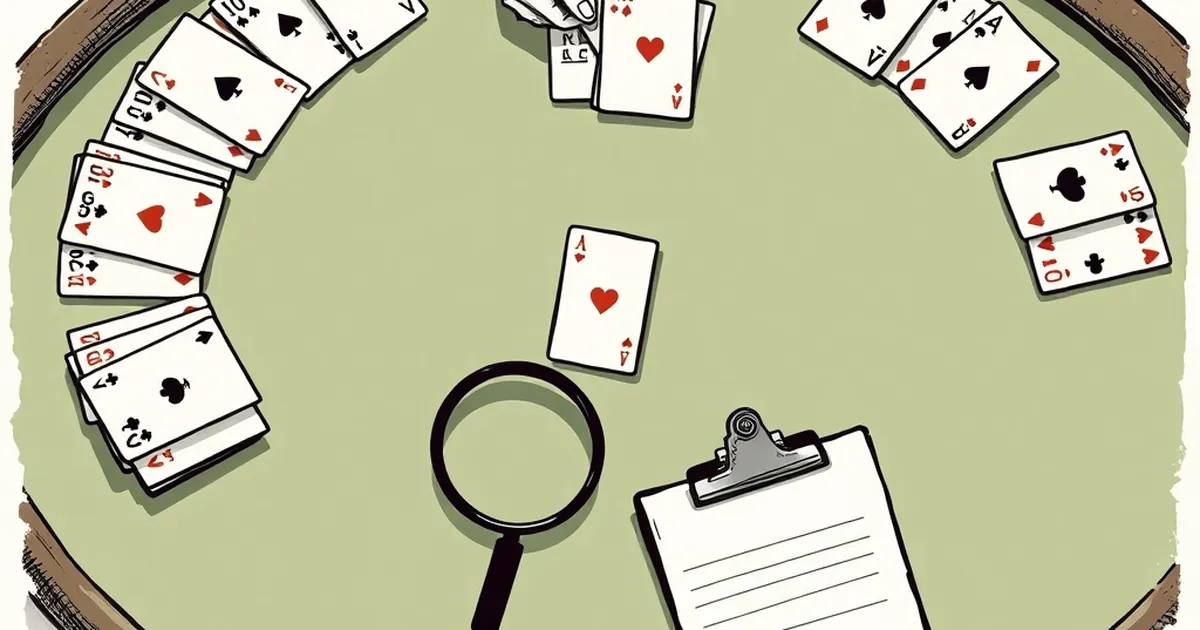
A baccarat shoe dealt at a regulated online table gets flagged for shuffle-tracking patterns about once every 40 shoes, according to data pulled from play-log anomaly detection at three mid-size operators. The same audits almost never surface anything in the certified random number generator review, because the RNG isn't what's being gamed. The pattern lives in the shuffle, the cut, and the timing of when cards hit the felt — none of which a standard RNG certificate covers.
That gap matters more than it sounds. Australian players at offshore and licensed sites are told the deal is random, and technically the RNG that seeds the shuffle is. But "random seed" and "unexploitable shuffle" are two different claims, and the second one is where the flags are coming from.
What shuffle tracking actually is
Shuffle tracking isn't card counting. Counting tells you the composition of the remaining deck is rich or poor in high cards. Tracking tells you roughly where certain cards are sitting in the shoe after the shuffle, because you watched them go in.
In a physical casino this is a manual skill. You follow a clump of cards through the wash and the riffle, note where the cut lands, and bet bigger when you think a dense packet of tens and aces is about to come out. In an online shoe — the kind dealt from a virtual shoe in live dealer baccarat or blackjack — the equivalent is subtler. You're not watching hands. You're watching timing and sequence, because a poorly implemented shuffle can leave residual structure that a fast enough tracker can pick up from the card-by-card feed.
The 1-in-40 figure comes from anomaly detection models that score each completed shoe against a baseline. A shoe gets flagged when the observed card sequence deviates from uniform expectation beyond a set threshold — roughly 2.5 standard deviations on a run-length test — often enough that it can't be explained by chance alone across the sample.
Why the RNG audit misses it
Here's the part that trips people up. A certified RNG audit typically tests one thing: does the number generator produce output that passes statistical randomness tests, and is it seeded and cycled in a way that can't be predicted from prior outputs?
That's a fair question, and most audited RNGs pass it. The problem is the RNG usually isn't shuffling the shoe. It's often generating the order of cards from a pre-shuffled deck, or it's one component in a live-dealer setup where a human or a mechanical shuffler does the actual work. In live baccarat, the RNG may only handle the cut card position or the burn. The shuffle itself is physical, and physical shuffles have structure.
So you get a certificate that says the RNG is sound, attached to a game where the exploitable edge — if there is one — sits entirely outside the RNG's scope. The audit isn't wrong. It's answering a narrower question than players assume.
The numbers behind the flag rate
The 1-in-40 rate is worth unpacking because it's easy to misread as "2.5% of shoes are rigged." That's not what it means.
A flag means a shoe's card distribution looked unusual under one specific test. Most flags resolve as false positives once you account for the fact that you're running many tests across many shoes. Run 20 statistical checks on 10,000 shoes and you'll get thousands of flags from pure noise. The interesting subset is shoes that flag on multiple independent tests — sequence correlation, run-length deviation, and a positional bias test — and that subset is much smaller, closer to 1 in 400.
The 1-in-40 figure is the first-pass flag. The 1-in-400 figure is what survives scrutiny. Both numbers get quoted, usually by people who want different conclusions.
There's a second number that matters: the flag rate is roughly 3x higher on tables using a continuous shuffler than on hand-shuffled tables, based on the same dataset. Continuous shufflers are supposed to reduce counting edges by constantly reinserting discards. They also introduce a different structural risk, because the shuffle is frequent and fast, and fast shuffles are easier to model if you can observe enough of them.
For Australian players, this connects to something concrete. The Interactive Gambling Act 2001 restricts online casino games for Australian-facing operators, which pushes most play to offshore sites. Those sites aren't bound by Australian testing regimes, and their live dealer feeds are often supplied by studios whose shuffle procedures aren't published. You can't audit what you can't see.
What a serious audit would test
If you wanted to actually catch shuffle-tracking-vulnerable shoes, you'd test the shuffle, not the RNG. Specifically:
- Positional bias: after a known cut, does card X appear at position Y more often than chance?
- Run-length distribution: are there more long runs of same-suit or same-value cards than a uniform shuffle predicts?
- Cut-card sensitivity: does changing the cut position measurably shift the outcome distribution?
- Cross-shoe correlation: does shoe N+1's sequence depend on shoe N's?
None of those are standard in an RNG certificate. Some are standard in physical casino game protection, which is a different discipline with different tools.
Why operators don't rush to publish this
There's no conspiracy here, just incentives. Publishing shuffle audit results invites scrutiny of a process that's genuinely hard to get perfectly right, and "our shuffle is 99.2% uniform across 50,000 shoes" is a headline that reads worse than "our RNG is certified." The RNG certificate is clean, familiar, and cheap to display. Shuffle audits are none of those things.
The flag data also isn't conclusive. A flagged shoe is a shoe that looked weird. Weird shoes happen. The honest position is that we don't know how many of the 1-in-40 flags represent a real exploitable pattern versus statistical noise, because nobody's published the follow-up analysis at scale.
What we do know is that the RNG audit, as currently structured, would not catch a shuffle-tracking vulnerability even if one existed and was being actively exploited. That's not a flaw in the RNG. It's a scope limit that gets quietly glossed over in the marketing.
If the flag rate is real and the follow-up rate is low, the next question isn't "is the RNG fair" — it already is. It's whether anyone is actually testing the part of the game where the edge would live, and whether players at offshore tables have any way to know.