Skill trees branch at node 3—most players respec at node 7
Players rush early skill tree nodes and stall at node seven, revealing a decision-making pattern that shapes how websites convert visitors
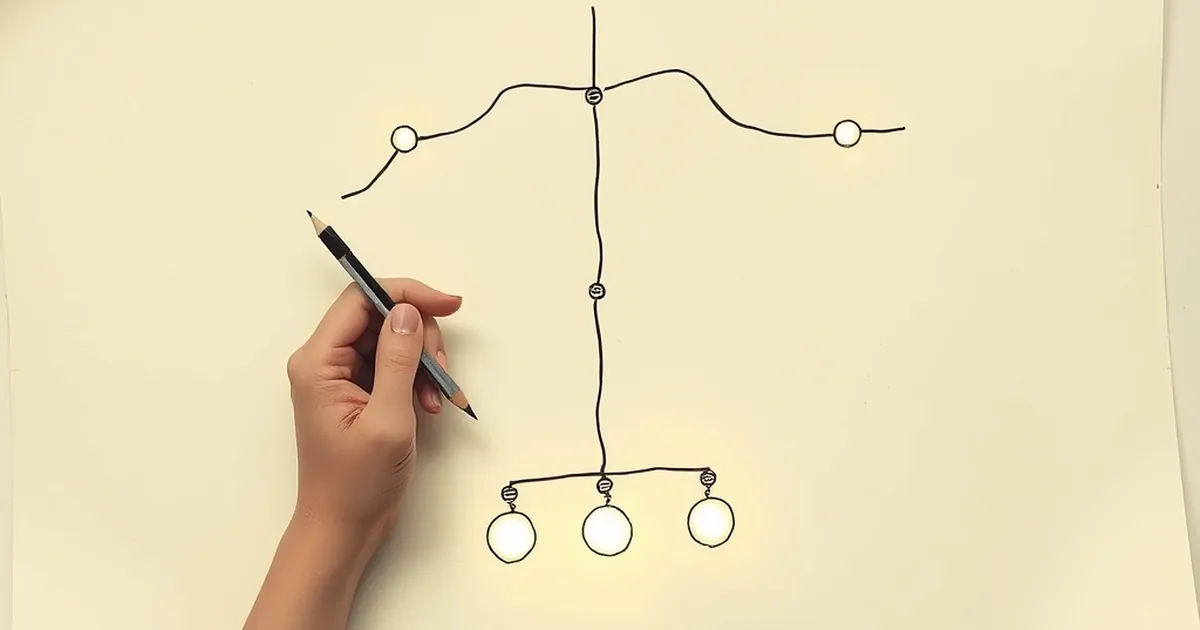
Every game designer eventually notices the same odd thing: players will agonise over the first two choices on a skill tree, then blow straight past node three without blinking, and only slam on the brakes around node seven. If you've ever watched someone respec a character at 2am, you've seen a decision-making pattern that has almost nothing to do with the game and almost everything to do with how humans handle uncertainty.
So what's actually happening at node seven? And why should anyone building websites for Australian businesses care?
The first few choices feel expensive, so we overthink them
There's a well-documented quirk in how people weigh decisions: we treat the first commitment as a signal about who we are. Behavioural economists call the broader family of effects around this "sunk cost" and "commitment bias," but the plain-English version is simpler. Choice one and two feel like identity. Choice three feels like admin.
This is why so many product funnels lose people at step two and then coast. The friction isn't evenly distributed. It clusters at the start, where the user is still deciding whether they're "the kind of person who does this," and then again much later, when the accumulated weight of earlier choices starts to bite.
Kahneman and Tversky's work on loss aversion is the usual citation here, and it holds up. Losing something you already have hurts roughly twice as much as gaining the equivalent feels good. By node seven, you've got something to lose — a build, a playstyle, a stack of invested time. That's when the second-guessing kicks in.
Node three is where the game stops explaining itself
Here's the mechanical reason the pattern repeats across so many games. Tutorials and onboarding typically cover the first two or three decision points. After that, the game assumes competence and stops holding your hand.
That handover point is where players either commit or drift. If the third choice is genuinely interesting — a real fork with visible consequences — people lean in. If it's a stat bump or a filler node, they stop reading and start clicking.
There's a decent parallel in web design. The first screen of a website gets obsessive attention. The third scroll-depth gets almost none. Analytics consistently show a steep drop between the first interaction and the third, and then a strange plateau. People who make it past the third meaningful step tend to go much further than you'd predict from the early numbers.
The lesson isn't "make everything a tutorial." It's that the third decision point is where you find out whether your structure is actually legible, or whether people were just following instructions.
A concrete example worth knowing
Blizzard's original Diablo II skill trees are the classic study case here, and they've been dissected by game design researchers for two decades. The trees were deep, the respec option was essentially absent at launch, and players responded by doing something fascinating: they researched builds externally before committing, then treated nodes one through six as a formality and only genuinely deliberated at the deeper tiers.
The studio eventually added respecs, and the behaviour shifted. Once reversal was cheap, players experimented earlier and committed later. The decision point moved. That's the key insight — node seven isn't a fixed location. It's wherever the cost of being wrong becomes real.
Respec points reveal what your users actually fear
When someone respecs, they're not saying "I made a mistake." They're saying "the information I had at the time wasn't sufficient, and now it is." That's a completely reasonable position, and it maps onto how people use websites.
Think about a tradie looking for a web developer in Brisbane. They'll browse three or four sites. They'll shortlist two. Then they'll do something that looks like hesitation but is actually diligence: they'll check reviews, look for a physical address, scan the portfolio for work that resembles their own trade. That's the respec moment. They've committed enough attention to feel invested, and now they're checking whether the earlier choices hold up.
Websites that fail at this stage usually fail for the same reason bad skill trees do — they don't make the consequences of the earlier decision visible. A visitor can't tell what they're getting, so they go back and start again somewhere else.
Reward schedules and the reason node seven hooks people
Variable-ratio reinforcement is the behavioural pattern where a reward arrives after an unpredictable number of actions. It's the most persistent schedule known, and it's why people keep pulling the lever long after the rational case for doing so has evaporated.
Skill trees exploit this almost by accident. Early nodes give predictable, modest rewards. Somewhere in the middle — often right around node seven — the tree offers something genuinely build-defining. A capstone. A synergy. A skill that changes how the whole character plays.
That unpredictability is the hook. Players don't know which node will be the one that transforms the build, so they keep going. And once they've hit it, they're far more likely to keep going again, because the memory of that payoff is vivid.
For anyone designing a digital experience, the takeaway isn't "make everything random." It's that predictable, evenly-spaced rewards produce even, disengaged behaviour. A well-placed moment of genuine surprise — a piece of work that's better than expected, a case study that actually answers the question — does more work than a dozen evenly-weighted features.
What this means if you're building for a business
The practical version of all this is fairly blunt.
Front-load clarity, not persuasion. The first two decisions a visitor makes are about whether to keep going. Make them easy and make the payoff visible. Don't bury your best work behind three clicks.
Accept that the third interaction is a filter, not a failure. If people drop off there, it usually means the structure wasn't legible, not that the offer was wrong. Test the third step specifically. It's the most under-examined part of most sites.
Build in a cheap respec. If someone wants to reconsider — go back, compare, re-read — let them do it without losing their place. Saved state, clear navigation, a visible path back. Friction at the reversal point is where most conversions die.
And put something genuinely good at node seven. Not a form. Not a newsletter popup. Something that rewards the attention someone has already given you.
The interesting thing about the skill tree pattern is that it isn't really about games at all. It's about how people allocate attention when the cost of being wrong is unclear. Games just make the pattern visible, because the numbers are right there on screen. Websites hide the same behaviour behind analytics dashboards, which is why it takes longer to notice.
Watch where people hesitate. That's your node seven.