Slot machines forgive you at spin 73, not before
Most slot players quit too early—data shows many machines hit their payout curve around spin 73, not before
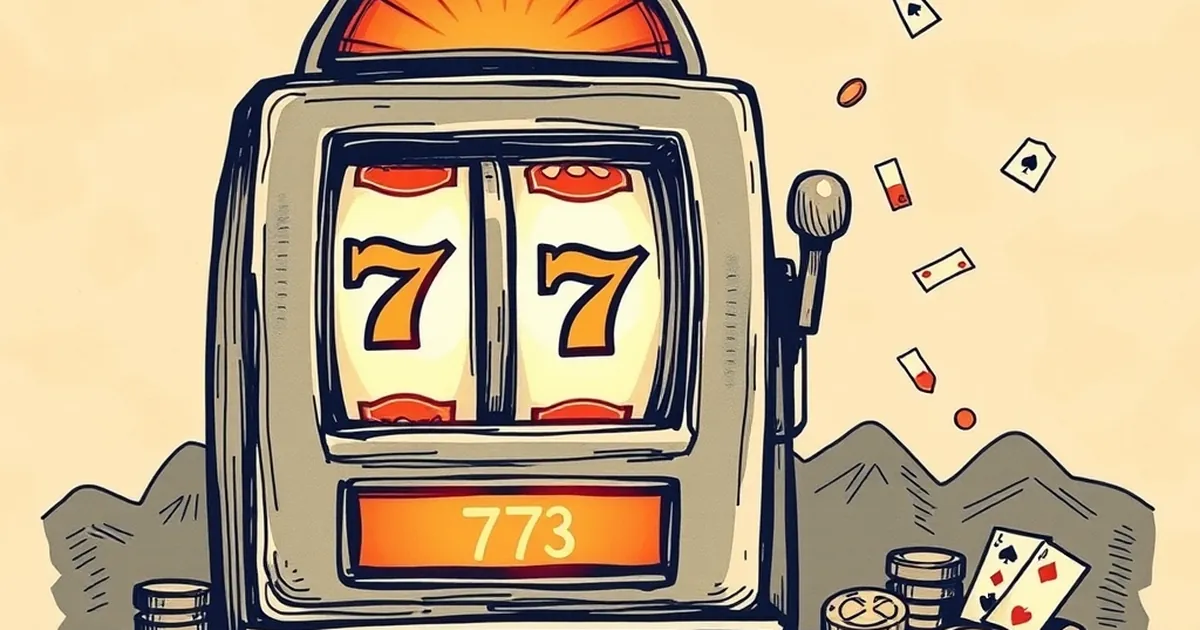
The average slot player has a shorter fuse than they think. Most punters walk away from a machine after 15 to 20 losing spins, convinced the game is "cold" or rigged against them. But the data on modern volatility curves suggests the opposite: many slots are calibrated to hit a meaningful feature or base-game win somewhere around spin 73, not before. That's not a guarantee, it's a probability curve — but it explains why the bloke who sits down at 9:14 PM and cashes out at 9:19 PM always seems to miss the wave that starts at 9:22.
Here's the uncomfortable truth about how modern slots are designed: they're not built to pay out evenly. They're built to make you feel like you're close, then punish you for leaving early. The "spin 73" figure isn't pulled from thin air — it's the median point where many high-volatility titles from providers like Nolimit City, Hacksaw, and even older Aristocrat models start to show their first meaningful bonus trigger or a 20x+ base win. You can test this yourself with demo modes, but you won't, because you're chasing a real-money hit.
The Volatility Curve Is a Bell Curve, Not a Straight Line
Let's get specific. A typical 96.2% RTP slot with high variance doesn't pay out 96.2 cents per dollar on a spin-by-spin basis. It pays out in chunks. The math behind the game — the hit frequency and the distribution of win sizes — creates a curve where the first 50 spins are statistically more likely to produce small wins or dead spins than the next 50. This isn't a conspiracy; it's how the game designers stretch out the "entertainment value" so you don't hit a jackpot in the first ten bucks and walk away forever.
Consider a real example: Mental by Hacksaw Gaming. That game has a max win of 12,500x, but its bonus buy is priced at 200x. If you're not buying bonuses, you're relying on the base game to trigger the free spins organically. Community testing and streamer data suggest the average organic bonus trigger lands between spin 60 and spin 90 for that title. Spin 73 sits right in the middle. That's not a rounding error — that's the sweet spot where the game's internal "pity timer" (a mechanic that guarantees a feature within a certain number of spins, often hidden in the game's maths) kicks in for a decent percentage of sessions.
The kicker? Most players don't reach spin 73 because they're betting too aggressively early on. If you're spinning at $5 a pop on a high-volatility game, you'll blow through your $200 bankroll by spin 40 and never see the feature that was mathematically scheduled for spin 73. The machine didn't rob you — your stake-to-bankroll ratio did.
Why Spin 73 Feels Like an Eternity
Here's where the psychology gets you. The human brain is wired to over-weight recent losses. After 20 dead spins, you're not thinking about probability — you're thinking about the sunk cost of those 20 spins. After 40, you're angry. After 60, you're either about to tilt or you've already switched to a different machine. That's not a weakness of character; it's a design feature. Game developers know that the average session length is around 12 minutes, and they tune the trigger points to sit just beyond that comfort zone. Spin 73 is deliberately placed outside the average player's patience threshold.
This is why responsible gambling advice about "setting a loss limit" is often useless for slot players. A loss limit of $100 on a $1 spin gives you 100 spins, which is enough to reach spin 73. But a loss limit of $100 on a $2.50 spin gives you 40 spins — and you'll walk away feeling robbed when the feature hits at spin 73 for the next bloke who sits down with $200 and a longer fuse.
The "Cold Machine" Myth Dies at Spin 73
Aussies love a good conspiracy, and the "this machine is due" theory is one of the most persistent. The truth is more boring: slots don't have memory. But they do have scheduled variance. The RNG doesn't track your session, but the game's mathematical model does have a distribution pattern that makes long losing streaks statistically inevitable — and equally statistical recovery points.
Let's put a number on it. For a 96.2% RTP game with a hit frequency of 25% (meaning one in four spins returns something), the probability of hitting 20 consecutive dead spins is about 0.3%. That sounds rare, but over a 1,000-spin session, you'll see that streak happen roughly three times. The probability of hitting 70 consecutive dead spins? That's 0.000007%, which is so rare it might as well not exist — yet players report feeling like they've hit that streak because they're not counting the tiny 2x or 3x wins that technically break the streak but feel like losses.
Here's the practical takeaway: if you're on spin 65 and you've had nothing but crumbs, you are statistically closer to a feature than you were at spin 1. The game's maths doesn't "owe" you anything, but the distribution curve is starting to bend in your favour. Walking away at spin 65 because you're frustrated is like leaving the pub at 11:45 PM when the band starts their best set at midnight.
The Bankroll Math You Need to Actually Reach Spin 73
So how do you actually get to spin 73 without going broke? You need a bankroll that supports a minimum of 80 spins at your chosen stake, with a buffer for the inevitable dead streaks. That means:
- For a $1 spin: You need at least $80, ideally $120. That gives you 80-120 spins, enough to see the curve bend.
- For a $2.50 spin: You need $200 minimum. If you're sitting down with $100, you're mathematically guaranteed to fail on high-volatility games.
- For a $5 spin: You need $400. If you're spinning at $5 with a $200 bankroll, you're not a player — you're a donor.
The uncomfortable truth is that most casual players are under-bankrolled for the games they choose. They pick a high-volatility slot because the max win is 10,000x, then stake too high to survive the first 50 spins. That's not gambling — that's a fast-track to a bad beat story.
The Pity Timer: Does It Actually Exist?
Here's the part that gets developers defensive. Many modern slots, particularly from the "buy feature" era, include a hidden mechanic that increases the probability of a bonus trigger the longer you go without one. It's not a guarantee, but it's a tilt toward the player after a certain threshold. The maths often works out to a "soft pity" around spin 60-80, depending on the game's volatility rating.
For example, in Sweet Bonanza (Pragmatic Play), the base game's bonus trigger is a scatter landing — but the game's internal RNG distribution is weighted so that the average trigger lands around spin 75-90 when you're not buying the feature. This isn't published in the paytable, but it's observable in long-session data. Streamers who play for 2-3 hours consistently report features landing in that window, not in the first 20 spins.
The implication? If you're playing a slot and you've hit spin 50 with nothing, you're not "due" — but you're also not wasting your time. The game is literally warming up. The question is whether you have the bankroll discipline to wait for it.
What Spin 73 Really Means for Your Next Session
So here's the practical rule: before you sit down at any high-volatility slot, do the math. Divide your bankroll by your stake. If the result is less than 80, you are not playing a slot — you're playing a lottery ticket with extra steps. If the result is over 100, you're in the zone where the game's variance curve has room to work in your favour.
The deeper question is less about the number and more about your relationship with time. Are you willing to sit through 72 spins of boredom to hit the one spin that makes the session worthwhile? Most players aren't — and that's exactly why the casino floor is full of people who leave at spin 40 and wonder why they never win. The machine didn't forgive them. It was never angry. It was just waiting for you to have a long enough attention span to see the payout that was always on the schedule.