Slots hold 3s on the win screen — the spin button waits 0
Slot machines force a 3-second win celebration while the spin button unlocks instantly, revealing how design asymmetry keeps players betting
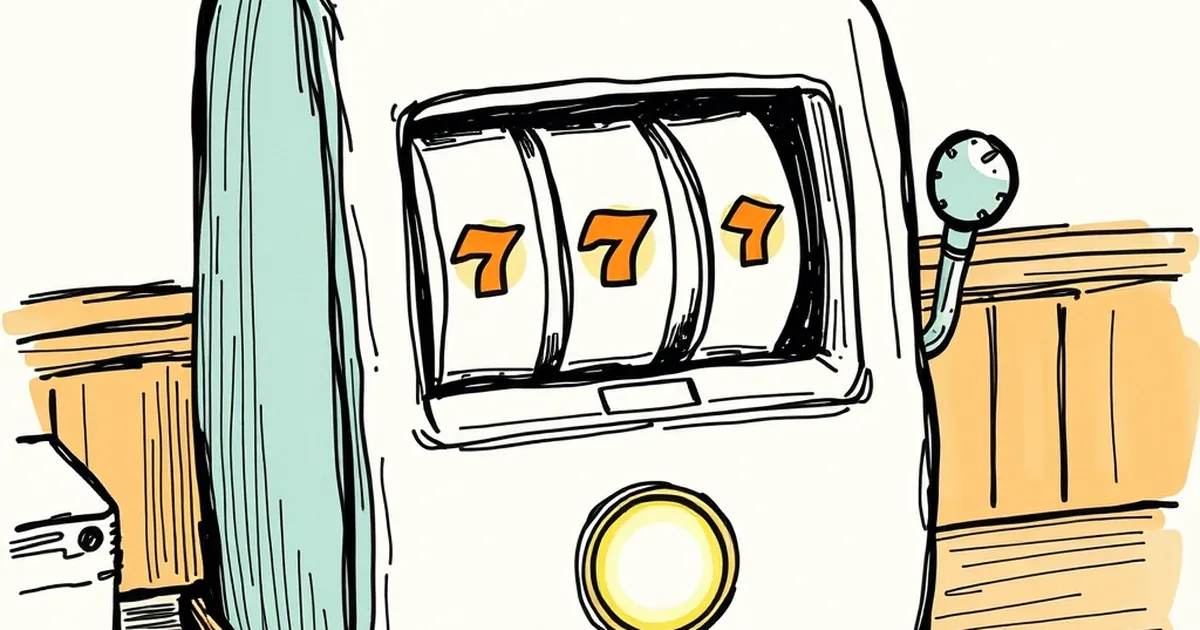
There's a number floating around in slot design docs that sums up the modern pokies experience better than any RTP figure: 3 seconds on the win screen, 0 seconds before the spin button goes live again. The celebration is mandatory. The pause is optional. You get told you won, and you can immediately bet into the next outcome before the last one has finished being counted.
That asymmetry isn't an accident. It's the product.
The win screen is a sales pitch, not a receipt
A win screen does three jobs, and none of them are "inform the player." It confirms the outcome, which the reels already did. It converts the result into a number, which the balance already did. And it gives you a beat to feel something before the next spin starts.
That third job is the one designers actually care about. The 3-second hold is long enough for the dopamine hit to land, short enough that you don't start thinking about leaving. It's the same timing logic behind a notification chime or a slot machine's coin cascade — a manufactured pause that exists to make the reward feel like an event rather than a line item.
What it isn't is a courtesy. Nobody's giving you three seconds to savour your $2.40. They're giving you three seconds to register that winning feels good, so the next spin — which you can take instantly — inherits some of that feeling.
The spin button itself never waits. On most modern slots, the moment the reels stop, the button is live. No cooldown, no confirmation, no "are you sure?" That's true on $0.10 spins and it's true on $50 spins. The game treats every stake as equally routine.
Why the pause only exists on the way in
Here's the thing worth sitting with: the delay is always attached to the reward, never to the wager.
You get 3 seconds of confetti on a win. You get zero seconds of friction on the decision to spin again. Compare that to almost any other product where money changes hands. A $50 online purchase gets a confirmation screen, a review step, sometimes a cooling-off period. A $50 spin gets a button that's ready before the animation finishes.
The industry knows this asymmetry matters. In 2023, the UK Gambling Commission's consultation on online slot design proposed mandatory limits on exactly this kind of thing — minimum spin speeds, bans on autoplay features that let you fire off spins without touching anything, restrictions on win celebrations that make losses look like wins. The proposals didn't all survive, but the fact they were tabled tells you the regulators can see the same pattern players can feel.
Australia's own approach has been different. The Interactive Gambling Act 2001 bans online casino games outright for local operators, which means most Australians playing slots are on offshore sites outside any domestic design regulation. The 3-second win screen and the 0-second spin button aren't governed by anything you can appeal to locally. That's not a moral point, it's just the practical layout.
The near-miss problem underneath
The win screen timing sits on top of a deeper design choice: how often the game shows you something that looks like it was close. Near-miss mechanics — where two scatters land and the third stops one position short — are legal in most jurisdictions and common in Australian-facing offshore slots. They don't change the RTP. They change how the game feels to play.
Combine a near-miss with a 3-second celebration on the actual wins and a 0-second spin button, and you get a loop where almost every outcome produces some kind of engagement signal. The wins get a screen. The near-misses get a flinch. The losses get nothing but a live button.
What the spin button timing actually costs you
Let's put a number on it. A typical modern slot runs around 4 to 6 spins per minute if you're playing manually with no breaks. If you're on autoplay — where it's legal — that can double or triple.
Say you're on 5 spins per minute at $1 a spin. That's $300 an hour in turnover. At a 96% RTP, you're looking at an expected loss of about $12 an hour. Fine, that's the math, everyone knows it. The point isn't the RTP. The point is that the 0-second spin button is what makes 5 spins per minute the default instead of 2.
If the button waited even 4 seconds after each result — the same length as a win screen — you'd be down to roughly 3 spins per minute without changing anything else about the game. Same RTP, same volatility, same paytable. Just a different pace. The house edge doesn't move. Your hourly exposure does.
That's why regulators care about spin speed more than they care about RTP disclosures. RTP is a long-run number that most players never actually experience. Spin speed is the thing that determines whether you're playing for 20 minutes or 2 hours, and whether your $50 deposit lasts the night or the first ad break.
The autoplay question that keeps coming back
Autoplay is the logical endpoint of the 0-second spin button. If the button doesn't wait, why should you? Set 100 spins, walk away, come back to whatever happened.
Most regulated markets have either banned autoplay outright or capped it hard. The UK banned it on slots in 2021. Sweden restricts it. Australia's offshore-facing sites mostly still offer it, because they're not bound by the same rules. The argument for the ban is straightforward: autoplay removes the moment where a player might decide to stop. The argument against is that it's a convenience feature and adults can manage their own money.
Both arguments have something to them. But notice what autoplay does to the win screen. When you're running 100 automated spins, the 3-second celebration either gets skipped entirely or it plays over the top of the next spin already in progress. The dopamine timing that the win screen was built for stops working. You're just watching numbers move.
Which raises the question of who the 3-second win screen is actually for. If it's for the casual player spinning manually, it's a reward signal. If it's for the autoplay player, it's decoration. The design assumes the first kind of player and quietly profits from the second.
Where this leaves the spin button
The 3-second win screen and the 0-second spin button aren't separate features. They're two halves of the same pacing decision, and the pacing is the product. RTP tells you what happens over 100,000 spins. Spin timing tells you what happens over the next 10 minutes, which is the only window most players are actually operating in.
So the open question isn't whether 3 seconds is too long or 0 seconds is too short. It's whether a game should be allowed to celebrate a win for longer than it lets you think about the next bet. Right now the answer is yes, almost everywhere, and the number is baked into the design before you ever open the game.
If you're playing, the practical move is to notice the asymmetry rather than fight it. Set a loss limit before you spin, not after. Use the site's session timer if it has one. And if a win screen ever feels like it's rushing you toward the next spin rather than letting you enjoy the last one — that's not you reading too much into it. That's the design working exactly as intended.
Gambling help is available 24/7 on 1800 858 858.