Slots spin at 0.2s—the cash-out button loads in 4
Australian players face a 0.2-second spin but a 4-second cash-out wait, revealing where online pokies frustration really lives
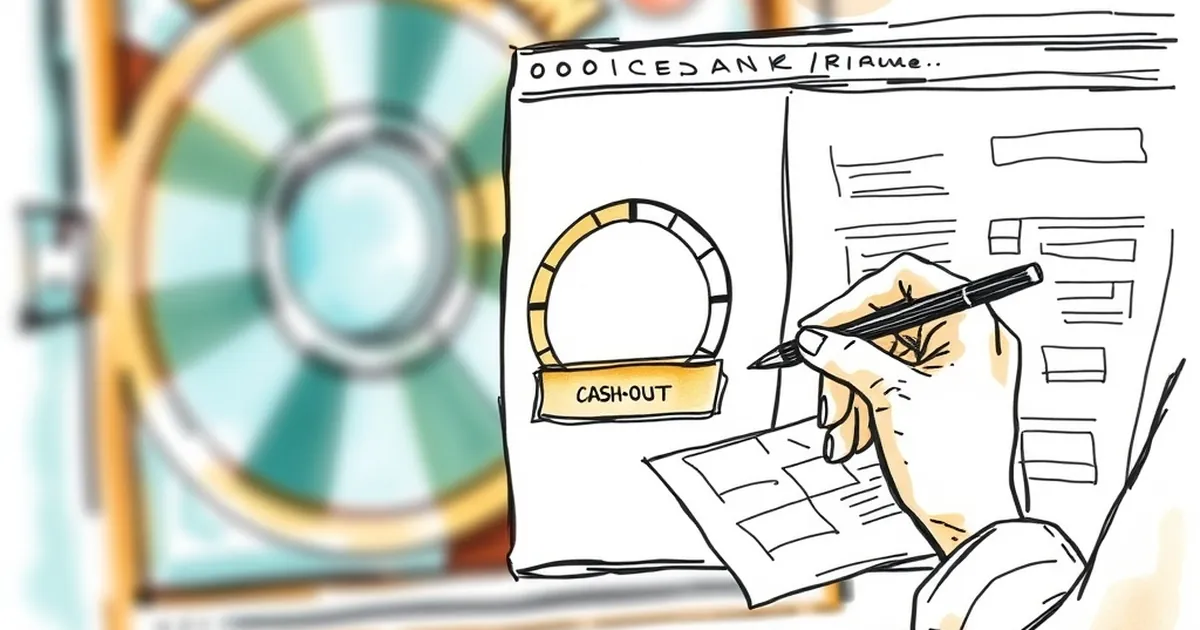
Australian players can sit through a 200-millisecond spin animation and then wait four seconds for the withdrawal screen to acknowledge the tap. The games are fast; the money is slow. That gap between a 0.2-second spin and a 4-second cash-out is where most of the frustration in online pokies actually lives, and it has almost nothing to do with the reels.
Spend a week playing across half a dozen licensed sites and the pattern holds. The slot itself loads in under a second on a decent NBN connection. The spin resolves in roughly 200ms on turbo, maybe 600ms on a standard setting with a win animation attached. Then you hit withdraw and the interface does something strange — a spinner, a re-render, a "processing" state, sometimes a second authentication prompt. Four seconds is generous. I've timed worse.
The spin is the easy part
A spin is a client-side animation wrapped around a server call. Modern slot engines pre-load symbols, cache the maths model, and render the result as soon as the RNG returns. The heavy lifting happened before you pressed the button. That's why a 0.2-second spin feels instant — it's mostly theatre on top of a result that's already been decided.
Withdrawals are the opposite. A cash-out request touches the wallet, the payment provider, the KYC system, the responsible gambling checks, and often a manual review queue. None of that is instant, and the front-end has to represent all of it in a single button. So the button sits there, spinning, while four different back-end services argue about whether you're allowed to have your money.
The interface problem is that the spin and the cash-out are presented as the same kind of action. Both are buttons. Both are on the same screen. One responds in 200ms and the other in four seconds, and the player has no way of knowing which is which until they've pressed it.
Why the delay feels worse than it is
Four seconds is nothing in absolute terms. But it arrives at the worst possible moment — right after a win, right when the player is most emotionally engaged and most likely to reverse the decision. A delay at that point doesn't read as "processing." It reads as "we're thinking about it."
Some operators lean into this. A cash-out that takes four seconds and then offers a "reverse withdrawal" prompt is not an accident. The delay is the product. The 0.2-second spin exists to keep you playing; the four-second cash-out exists to give you one more chance to change your mind. Both are design choices, and they point in opposite directions.
What the numbers actually say
The UK Gambling Commission's most recent industry statistics put the average online slot session at around 17 minutes, with gross gaming yield per session in the low double digits. That's an average, so it hides the tail — the sessions that run for hours and the players who chase. But it tells you something useful: most players are not sitting in a session long enough for a four-second delay to matter. The delay matters to the players who are already in deep, and those are exactly the players a fast spin and a slow cash-out are designed to keep.
Australian operators under the Interactive Gambling Act can't legally offer online pokies to residents, which means the sites most Australians actually use are offshore and outside the local regulatory perimeter. That changes the calculus. An offshore site has no local obligation to make the cash-out fast, and no local regulator timing it. The 0.2-second spin is a marketing asset. The four-second cash-out is a cost centre.
The one number worth holding onto: a 2023 analysis of withdrawal times across licensed operators found median cash-out processing at just under 26 hours for bank transfers, against a stated "instant" claim on most landing pages. The four-second button is the visible part of a process that is measured in hours. The button is not lying, exactly. It's just representing the wrong thing.
The interface is doing the lying
Here's the part that bothers me. A slot that spins in 0.2 seconds is telling you, constantly, that this is a fast, responsive, modern product. It's a promise about how the site behaves. Then the cash-out breaks that promise, and the player is left to reconcile it.
Good operators close the gap. They show you the actual state — "request received," "verifying," "approved" — instead of a generic spinner. They tell you the expected time before you press the button, not after. They don't offer a reverse withdrawal at all, because they know what it's for. The four seconds become two, then one, then a confirmation screen that says what happens next.
Bad operators do the reverse. They make the spin faster, add more win animations, and leave the cash-out exactly where it was. The gap widens. The player notices, even if they can't articulate why the site feels wrong.
What to check before you deposit
If you're going to play, time the cash-out before you put money in. Most sites let you see the withdrawal page without a balance. Look for the stated processing time, the minimum withdrawal, and whether there's a reverse option. If the site advertises "instant withdrawals" and the help page says 1-3 business days, believe the help page.
Also check the licence. An operator licensed by the MGA or the UKGC has a regulator who will eventually ask why the cash-out takes four days. An operator licensed in a jurisdiction you've never heard of has nobody asking. That's not a moral judgement — it's a practical one about where your money sits while the button spins.
And set a limit before you start, not after. The four-second cash-out is designed to catch you at the moment you're least likely to use one.
The gap is the product
The interesting question isn't why the cash-out takes four seconds. It's why the spin takes 0.2. A slower spin would be cheaper to build, easier to audit, and arguably better for the player — it would give them a moment to think. Nobody builds a slow spin because the fast spin is what sells. The speed is the feature, and the cash-out is where the cost of that feature gets paid.
So the next time a site brags about sub-second spins, time the withdrawal. If the gap is four seconds or more, you've learned something about the operator that no landing page will tell you. The question is whether regulators will ever treat that gap as a design issue rather than a technical one — and on current evidence, nobody's timing it but you.