Sportsbook bet delay hits 5s at $50 — the odds don't move
Australian punters report a five-second delay on $50 sportsbook bets while odds stay locked, raising questions about why stake size triggers the hold
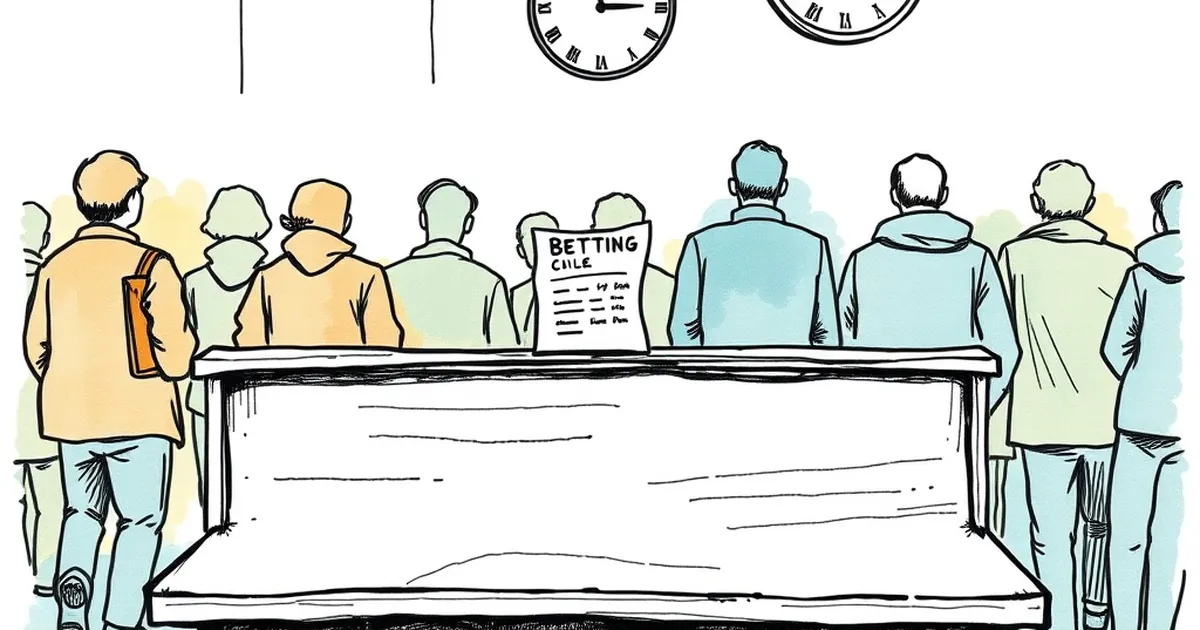
There's a specific complaint doing the rounds on Australian betting forums right now: place a $50 single on an NBA game or an EPL fixture, hit confirm, and the bet sits in limbo for a full five seconds before it's accepted. The odds you agreed to don't move during that window — the price is locked, the market is locked, nothing visibly changes. The bet just… waits. And punters are starting to ask why a $50 wager triggers a delay that a $5 wager on the same market doesn't.
That five-second figure isn't universal. It's a pattern reported across several of the bigger corporate bookmakers, and it tends to kick in somewhere between $20 and $100 depending on the operator and the sport. But the $50 threshold keeps coming up, and the consistency of the complaint across different apps suggests it's not a coincidence or a slow phone.
What's actually happening in those five seconds
When you tap confirm, your bet doesn't go straight to the bookmaker's own risk desk. It passes through a stack of checks, and at least one of them is a third-party service — a "bet delay" or "bet acceptance" layer that some operators bolt on to flag suspicious activity or manage liability exposure.
The delay itself isn't new. Bet delays have existed since the telephone betting days, and every serious book has some form of it. What's changed is that the threshold for triggering one has dropped. A few years ago, a $50 bet on a major market was background noise — you'd need to be firing thousands to get manually reviewed. Now, with automated risk systems doing the work, a $50 stake on a volatile market or an account with a certain betting pattern can trip a rule that holds the bet for a fixed window.
Five seconds is a common default because it's long enough for an automated system to run a liability check and short enough that most punters won't abandon the bet. In practice, the check almost always comes back clean. The bet is accepted. The odds haven't moved. But the delay happened, and it happened because your stake crossed a line somewhere in the system.
The odds don't move — but the window still matters
Here's the part that grates. If the odds were going to shift during those five seconds, a delay would at least make sense — the book is protecting itself against you betting into a stale price. But when the price is locked and the market is stable, the delay is purely administrative. It's the book's internal risk machinery doing its thing, and you're just sitting there watching a spinner.
That said, the "odds don't move" framing isn't quite the whole story. The odds on your bet don't move. But the delay gives the operator a window to see how the market is reacting elsewhere. If a flood of money is coming in on the other side, the book can adjust its overall exposure before your bet is confirmed. You're not getting a worse price, but the book is getting a clearer picture of where the risk sits.
Why $50 specifically
The $50 figure is a useful anchor because it sits right in the middle of the recreational betting range. It's not a whale bet. It's not a $5 throwaway. It's the kind of stake a regular punter places on a Saturday afternoon without thinking twice — and that's exactly why it's become a trigger point.
Operators won't publish their exact thresholds, and they don't have to. But the pattern across user reports suggests something like this: bets under $20 on major markets go straight through. Bets between $20 and $50 get a lighter check, often sub-second. Bets at $50 and above on certain markets — particularly live markets, player props, or anything with a tight margin — get the full five-second treatment.
The logic is straightforward. A $50 bet on a player prop market with a 6% margin is a different risk profile to a $50 bet on the head-to-head at 1.90. The book is more exposed on the prop, and the automated system knows it. So the delay isn't really about the dollar amount. It's about the dollar amount multiplied by the market's volatility.
What it looks like in practice
You'll notice it most on:
- Live betting markets — where prices change every few seconds and the book is managing a moving book
- Player props and exotics — thinner markets, less liquidity, more manual oversight
- Same-game multis — because the combined odds create a liability the system wants to check
- New accounts or accounts with a recent deposit — the risk profile is less established
If you're betting $50 on the AFL head-to-head on a Friday night, you probably won't see it. If you're betting $50 on a first goalscorer market in a Championship game at 3am, you almost certainly will.
The real question: is this a problem?
From the bookmaker's side, no. A five-second delay on a $50 bet is a reasonable risk control. It's not stopping anyone from betting. It's not changing the price. It's just a pause.
From the punter's side, it's annoying, but it's also a signal. If your $50 bets are consistently getting delayed, it means the system has flagged something about your account or your betting style. That could be as simple as betting on markets the book considers sharp, or as mundane as placing a lot of bets in a short window.
The more interesting question is what happens when the delay becomes the norm rather than the exception. If $50 triggers a five-second hold today, what triggers it tomorrow? The threshold has been creeping down for years. And every time it drops, the experience for the average punter gets a little more friction-filled — not because they're doing anything wrong, but because the book's risk models are getting more granular.
There's also a responsible gambling angle here, though it cuts both ways. A five-second delay is a speed bump. For most people, it's harmless. For someone chasing losses, it's five seconds of forced pause — which might be the only thing standing between a considered bet and a tilt-driven one. The book isn't doing it for that reason, but the effect exists.
What you can actually do about it
Not much, directly. You can't opt out of a bet delay, and asking support why your $50 bet took five seconds will get you a template response about "standard risk management procedures."
What you can do is watch the pattern. If it's happening consistently, it's worth knowing why — not because you're going to change the book's mind, but because it tells you something about how they see your account. If you're getting delayed on markets you consider soft, that's a compliment. If you're getting delayed on everything, that's a different conversation.
And if the delay itself is the thing that bothers you more than the stake, there are operators with faster acceptance times on comparable markets. The difference between a five-second hold and a one-second hold is four seconds of your life, but it's also a signal about how the book is set up. Some are built for volume and speed. Some are built for risk control. You can guess which one you're on by watching the spinner.
The open question is whether the $50 threshold holds, or whether it keeps sliding down toward $20, then $10, until every bet gets a pause. At that point, the delay isn't a risk control anymore — it's just the cost of doing business with a book that doesn't trust its own customers. And punters will notice.