Streak badge lands at day 7—retention needs day 14
A day 7 streak badge shows 41% retention versus 12%, but selection bias may explain it—here's how to prove whether the badge causes day 14 retention
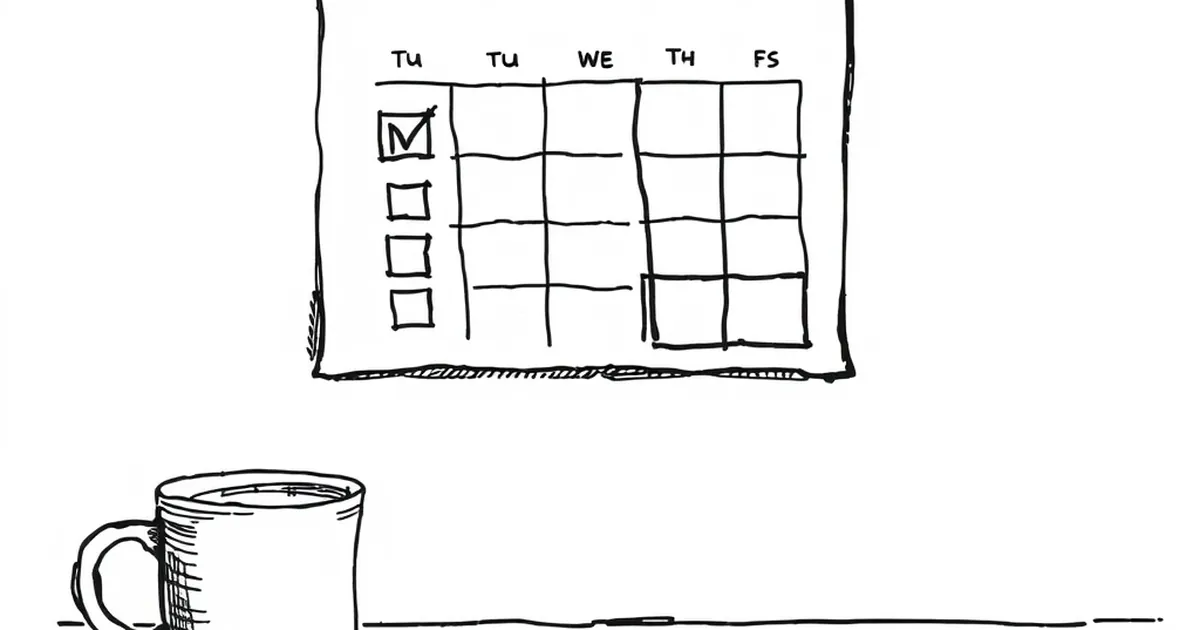
Your product manager slides a chart across the table. Day 7 retention for users who hit the streak badge is 41 per cent. For everyone else, it's 12. The obvious read is that the badge works. The less obvious read is that you've just measured selection bias and called it a feature. The people who reach day 7 were always going to come back — the badge just told you who they were. The real question is whether the badge causes day 14 retention, and whether you can prove it before the roadmap review on Thursday.
The streak badge is a variable-ratio machine, whether you meant it or not
B.F. Skinner's work on schedules of reinforcement is the load-bearing wall under every streak mechanic ever shipped. He found that behaviour reinforced on a variable schedule — sometimes rewarded, sometimes not, unpredictably — persists far longer than behaviour reinforced every single time. Fixed-ratio schedules (reward every seventh press) produce a burst of activity followed by a rapid extinction once the reward stops. Variable-ratio schedules produce steady, stubborn, hard-to-kill behaviour.
Most streak badges are fixed schedules wearing a costume. Day 7, day 14, day 30 — the user can see the whole ladder. That's fine for the first week, when the goal is legible and close. It's a problem at day 8, when the next rung is six days away and the reward has already been collected. The dopamine hit of the badge has fired, the anticipation has collapsed, and you're left with a user staring at a greyed-out calendar wondering why they're still opening the app.
The fix isn't to randomise the badge — that would feel arbitrary and users would smell it. It's to make the content of the streak variable even when the cadence is fixed. A day 7 badge that unlocks a genuinely surprising piece of value (a personalised insight, a new capability, a peek at something the user hasn't seen) does more work than a badge that just says "7". The badge is the schedule. The reward has to carry the variance.
Day 7 is a commitment device. Day 14 is a habit.
There's a useful distinction buried in the behavioural economics literature between commitment and habit. A commitment device is something you do once, deliberately, to lock in future behaviour — Ulysses tying himself to the mast. A habit is something that runs without deliberation, triggered by context rather than intention.
Day 7 badges are commitment devices. They work on the small slice of users who are already motivated, who respond to goal-gradient effects (the well-documented tendency for effort to intensify as people approach a goal — Kivetz, Urminsky and Zheng showed this clearly with coffee card studies). The badge pulls people across the line because the line is visible and close.
Day 14 requires something else entirely. By then the user has either built a contextual trigger — the app is part of a morning routine, a commute, a work ritual — or they haven't. No badge can manufacture a trigger. What a badge can do is buy you enough repetitions to let a trigger form, which is why the design question at day 7 isn't "how do we celebrate?" but "what context are we attaching to?"
Wendy Wood's research on habit formation is blunt about this: habits are cue-driven, not reward-driven, once they're established. If your day 7 badge celebration is a confetti animation with no accompanying contextual anchor, you've spent your best retention moment on a firework.
What the day 7 cohort actually tells you (and what it doesn't)
Back to that 41 per cent versus 12 per cent chart. The gap is real but it's almost entirely explained by pre-existing intent. Users who hit day 7 had higher baseline motivation — they signed up for a reason, they had a use case, they found the product before the badge ever appeared. The badge is a marker of that motivation, not the cause.
This is the classic post hoc problem, and it trips up smart teams constantly. The way out is to run the badge as an actual experiment: randomise who sees the day 7 celebration, hold everything else constant, and measure day 14 retention in both arms. If the badge arm shows a meaningful lift at day 14 — not day 8, not day 10 — you've got causal evidence. If it doesn't, you've learned something more valuable than a win: you've learned that the badge is a vanity metric generator and the real lever is somewhere else.
A concrete example worth stealing: Duolingo's streak freeze. The freeze isn't a reward — it's a loss-aversion mechanic. Users who've built a streak become acutely sensitive to losing it, and Kahneman and Tversky's work on loss aversion tells you why: losses loom roughly twice as large as equivalent gains. A streak freeze lets users protect the streak at a small cost, which converts a fragile streak into a durable one. The mechanic works because it targets the fear of loss rather than the pleasure of gain, and fear of loss is a much stickier motivator past the first week.
You don't need to copy the freeze. You need to copy the insight: at day 7, the user's relationship to the streak changes from "I'm building something" to "I have something to lose." Design for the second state, not the first.
Designing for day 14 without gaming the user
The temptation, once you accept that day 7 doesn't prove day 14, is to escalate — bigger badges, more aggressive notifications, artificial scarcity. Resist it. Escalation works briefly and then produces the exact behaviour you don't want: users who feel manipulated, disengage, and tell other people about it.
Three things that actually move the day 14 number:
Anchor the streak to an existing routine. Ask users at onboarding what time of day they'll use the product, and prompt them at that time. Implementation intentions — the "if X, then Y" planning format studied by Peter Gollwitzer — have a solid evidence base for turning intentions into behaviour. A streak badge that fires at the user's chosen time is doing habit-formation work. One that fires at 9am because that's when your cron job runs is doing noise.
Make the day 7 reward forward-looking. Instead of celebrating what the user has done, show them what's now unlocked. A new feature, a deeper view, a capability that only makes sense once they've got a week of data. This converts the badge from a full stop into a door.
Measure the right window. Day 14 retention, not day 8. And measure it in a randomised arm, not a cohort. If you can't run a clean experiment, at minimum compare badge-hitters against a matched control on baseline engagement — same signup source, same first-week activity, same use case. It won't be perfect but it'll stop you shipping on a spurious correlation.
The question to ask before the next sprint
The streak badge is a fine mechanic. It's also a mirror: it shows you who was already committed. The work that matters is what happens after the badge fires — whether the user has a cue, a reason, and something to lose. If you can answer those three questions for your day 7 cohort, you've got a shot at day 14. If you can't, the badge is just a receipt for motivation you didn't create.
Before you build the day 14 badge, run the experiment on the day 7 one. Find out whether you're measuring causation or just admiring your own selection bias. The answer will change what you build next — and it's cheaper to learn it now than after you've shipped a ladder nobody climbs.