Streak counter hits 7 days—the badge ships at 14
The seven-day streak feels good for four seconds, but the real design problem is the gap between rewards given and rewards promised
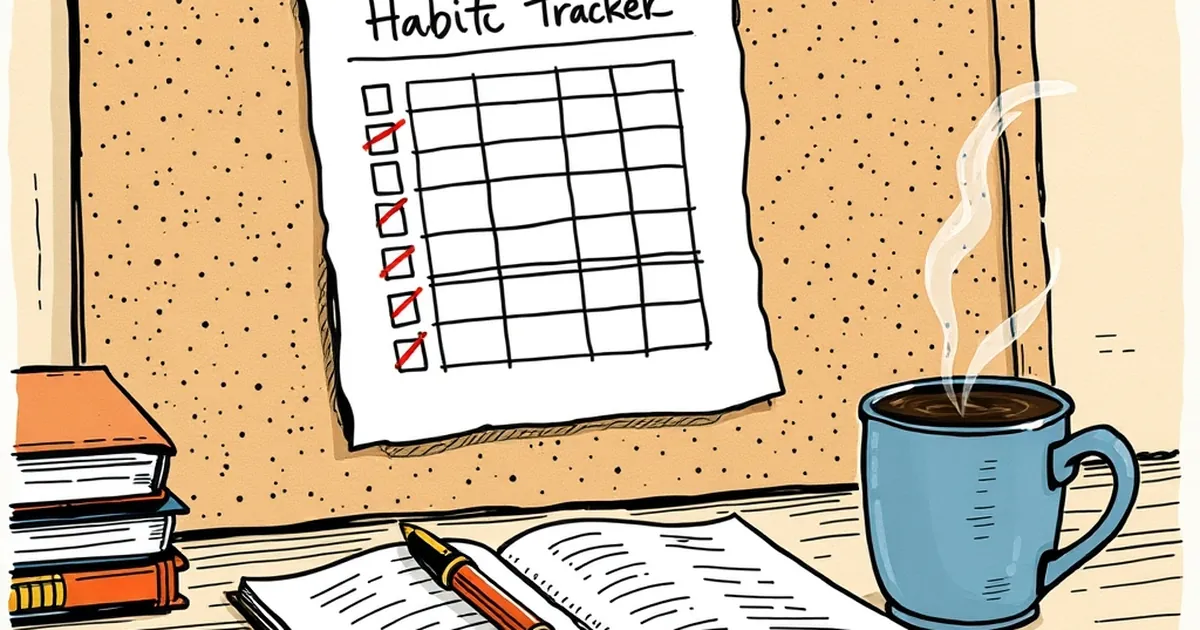
You've built a streak counter. A user has just hit day seven, the little flame icon is glowing, and the badge you promised them is still seven days away. So what do you actually ship on day eight, nine, ten — and does the promise of a badge at fourteen do any real work, or is it just decoration you'll regret? This is the quiet design problem underneath every habit feature: the gap between the reward you've already given and the reward you've only promised.
The streak is not the reward. The gap is.
A seven-day streak feels good for about four seconds. Then the user does the maths: badge at fourteen, so I'm halfway. Halfway is a strange emotional place. It's far enough in that quitting feels wasteful, and far enough out that the finish line is still abstract.
Behavioural economists have a name for the discomfort in that middle stretch. Kahneman and Tversky's work on loss aversion showed that losses loom roughly twice as large as equivalent gains. A streak counter weaponises this beautifully — and slightly cruelly. By day seven, the user isn't protecting a badge. They're protecting seven days of accumulated effort they'd have to write off. The badge is almost beside the point.
This is why streaks work at all. They convert a forward-looking reward (get the badge) into a backward-looking asset (don't lose what you've built). The counter does the heavy lifting. The badge is a ceremonial close.
Which raises the question you're probably already asking: if the counter is doing the work, why does the badge keep getting pushed to the end of the runway?
Variable rewards, and the trap of the fixed schedule
B.F. Skinner's work on reinforcement schedules is the most-quoted thing in this entire corner of design, usually badly. Everyone remembers variable-ratio reinforcement — the unpredictable payout that produces the most persistent behaviour. Fewer people remember that fixed-interval schedules, where a reward arrives on a predictable clock, produce a very specific pattern: a burst of activity right before the reward is due, then a lull.
If your badge ships at exactly fourteen days, you have built a fixed-interval schedule. Expect a spike of engagement on day thirteen and a noticeable dip on day fifteen. The user got the thing. The thing is now behind them.
The fix isn't to make the badge random — that would feel arbitrary and cheap, and users are quick to smell manipulation. The fix is to stop treating the badge as the only event on the calendar.
Concrete example worth studying: Duolingo's streak system layers several reward types onto the same counter. There's the daily streak itself, streak freezes you can buy or earn, milestone celebrations at 7, 30, 100, 365 days, and a separate league system running on a weekly reset. No single reward carries the whole load. If you miss a milestone, there's another structure still pulling on you. The counter never has a dead zone longer than a week.
That's the design principle: no gap longer than the user's patience. For most consumer products, that's somewhere between five and ten days. Fourteen is pushing it.
What to ship in the gap
So you're at day seven with a badge promised at fourteen. Here's what actually earns its place in that window.
Make day eight visibly different
The cheapest, most effective move is to change the counter's appearance at the midpoint. A different colour, a subtle glow, a small label that says "halfway." This costs nothing, ships in an afternoon, and gives the user a micro-event on day eight instead of day fourteen. The streak now has texture, not just length.
This is a form of what researchers call goal-gradient behaviour — the well-documented tendency for effort to increase as people approach a goal. The classic study here is the loyalty card experiment: customers given a card requiring ten purchases, but with two stamps already filled in, completed it faster than customers given a card requiring eight purchases with none filled. Same effort required. Different framing. The perceived progress mattered more than the actual distance.
Your day-eight visual change does the same thing. It doesn't reduce the distance to fourteen. It makes the distance feel like progress.
Give the streak a second axis
A counter that only counts days is fragile. One missed day and the whole structure collapses, which is why so many users quit on day one of a broken streak rather than day zero.
Add a second measurable thing that doesn't reset. Total days active, all-time. Longest streak ever recorded. Number of distinct weeks with at least one session. Now a broken streak isn't a total loss — the user still has an asset, and the badge at fourteen is one goal among several rather than the only one.
This matters more than it sounds. Loss aversion cuts both ways. If breaking a streak means losing everything, users will pre-emptively quit to avoid the pain. If breaking a streak means losing one number while keeping three others, they'll come back tomorrow.
Say something at day ten
Day ten is the dead zone. Nothing is happening. No milestone, no badge, no reason to feel anything in particular.
This is where a short, honest message does more work than any badge. Not a marketing nudge — a plain acknowledgement that they're four days out. Something like: "Ten days. Four to go." That's it. No call to action, no upsell, no confetti.
The reason this works is that it treats the user as a person tracking a goal rather than a target being farmed for engagement. Users can tell the difference, and the ones who stick around are the ones who noticed you weren't trying to trick them.
The badge at fourteen should not be the peak
Here's the design mistake that's easy to make and hard to undo: making the fourteen-day badge the biggest moment in the whole system. If it is, everything after day fourteen is a downhill slope, and you'll be inventing a fifteen-day badge, then a twenty-one-day badge, then a thirty-day badge, each one slightly less meaningful than the last.
Better to design the fourteen-day badge as the first badge, not the last. It should be small, clean, and clearly part of a series. The user should be able to see the shape of what comes next without being told they're falling behind.
This is where a lot of Australian SaaS and consumer products get it wrong. The streak ships, the badge ships, and then the roadmap stops. Six weeks later someone notices retention is flat and the fix is "add more badges," which is the design equivalent of adding more lanes to a traffic jam.
What to actually do next
If you're sitting on a live streak counter right now with a fourteen-day badge queued up, the highest-leverage thing you can change this week isn't the badge. It's the day-eight moment. Make the counter visibly change at the midpoint. Add a second, non-resetting number so a broken streak isn't catastrophic. Ship a plain acknowledgement at day ten. Then watch what happens to day-fifteen retention — not day-fourteen, day-fifteen, because that's where the fixed-interval lull shows up.
If the numbers hold, you've learned something useful: your users care about the progress, not the prize. If they don't hold, you've learned something more useful still — the badge was doing more work than you thought, and you should probably ship the next one at twenty-one days rather than thirty.
Either way, the answer to "what do we ship between seven and fourteen" is almost never "nothing, they'll wait." They won't. The gap is the product.