Streak resets on day 3—players return on day 11
Why losing a streak hurts more than gaining one, and how loss aversion explains the seven-day gap before players finally return
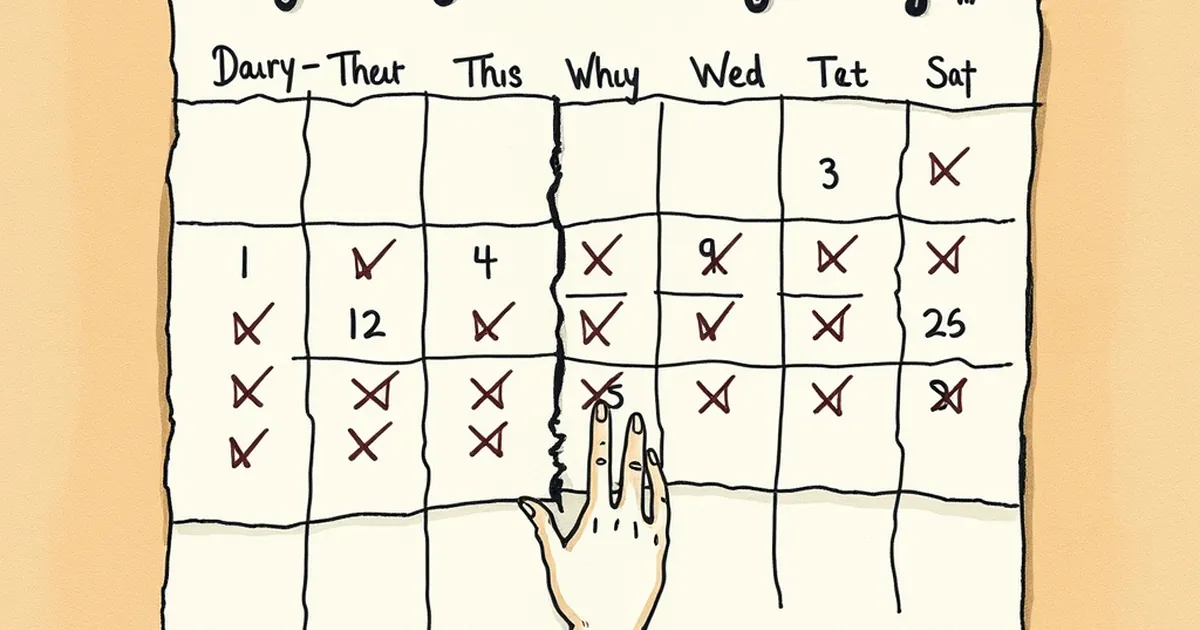
You've built a daily streak feature. Users who hit day three are your most engaged cohort. Then they miss a day, the counter resets to zero, and the data says something strange: a meaningful chunk of them don't come back on day four. They come back on day eleven. What happened in those seven missing days, and why does the reset itself seem to push people away rather than pull them back?
The reset isn't neutral — it's a loss
Behavioural economics has a name for what your users feel when a 47-day streak drops to zero: loss aversion. Kahneman and Tversky's foundational work showed that losses loom roughly twice as large as equivalent gains. A streak counter is a running tally of accumulated effort, and when it resets, the user doesn't experience "back to the start." They experience the destruction of something they'd built.
That distinction matters enormously for how you design the recovery path. If a reset feels like a loss, the rational (if unconscious) response is to avoid the thing that caused the loss. Not forever — just long enough for the sting to fade. Seven days is a plausible cooling-off period. Long enough to stop feeling like a failure, short enough that the habit hasn't fully decayed.
The mistake most product teams make is treating the day-11 return as evidence that the streak mechanic "works eventually." It doesn't. You lost a week of engagement from your best users, and you did it with a design choice.
Variable rewards and the shape of the return
B.F. Skinner's work on variable-ratio reinforcement is the most cited concept in engagement design, and for good reason: unpredictable rewards produce more persistent behaviour than predictable ones. Streaks are the opposite — they're a fixed, predictable reward that escalates. Day 4 is worth exactly as much as day 3, which is worth exactly as much as day 2, until some milestone at day 30 or 100.
This creates a specific failure mode. The value of maintaining a streak is back-loaded: the payoff lives at the milestone, not in the daily act. When the streak breaks at day 3, the user loses almost nothing in absolute terms — three days of accumulated counter — but they also lose the possibility of the milestone. That's a much bigger psychological hit than the counter suggests.
A user at day 3 with a 100-day milestone ahead isn't protecting three days of effort. They're protecting a 97-day runway to something they wanted.
Which is why the return often happens around day 11 rather than day 4. The user needs time to renegotiate the goal. The original milestone is now unreachable on the old timeline, so they either abandon the feature or quietly reset their own expectations and come back with a new mental target. Day 11 is roughly when that internal renegotiation completes.
What actually happens between day 3 and day 11
There's a well-documented pattern in habit research — often called the "what the hell effect" — where a single lapse triggers abandonment of an entire goal. Dieters who eat one slice of cake eat the whole cake. Streak users who miss one day often stop opening the app entirely for a stretch.
But the day-11 return tells us the abandonment isn't permanent. Something pulls them back. In practice, three things tend to be responsible:
The underlying utility never left. If your product solves a real problem — a business dashboard, a booking tool, a fitness tracker — the user's need for it didn't disappear when the streak did. They came back because they needed the thing, not the counter. The streak was a motivator layered on top of genuine value.
Social or competitive context reasserted itself. If other people can see the streak, or if there's a leaderboard, the absence becomes visible. Competitive play is a powerful re-engagement force, but it works on a delay — people need to feel the gap before they act on it.
The milestone got reframed. By day 11, the user has mentally written off the original target and set a new one. "I'll just see how far I get this time" is a much lower-stakes framing than "I'm maintaining a 100-day streak."
Designing for the reset instead of against it
If resets are losses, and losses trigger avoidance, the obvious move is to stop making resets feel like losses. That doesn't mean removing the streak — it means changing what the counter represents.
A few approaches that hold up:
Track cumulative days rather than consecutive days. "You've shown up 47 times" doesn't reset. It only goes up. The motivational pull is weaker per session, but it never punishes the user for having a life.
Offer a repair mechanic. A single missed day can be forgiven — either automatically, or by completing a small make-up action. This preserves the loss aversion that makes streaks work while removing the cliff edge. Duolingo's streak freeze is the canonical example, and it's widely credited with reducing churn among mid-streak users.
Segment the milestone structure. Instead of one 100-day target, use a ladder: 3, 7, 14, 30. A user who breaks at day 3 has already banked the day-3 badge. The reset costs them the next rung, not everything.
Make the return path explicit. If someone misses a day, don't show them a zero. Show them a "welcome back" state that acknowledges the gap and offers a low-friction re-entry. The default zero is a punishment screen, and punishment screens don't drive returns — they drive the seven-day silence you're already seeing.
The question worth asking your own data
Pull the cohort. Look at users who broke a streak between day 2 and day 5. What's the distribution of their return day? If there's a cluster around day 10 or 11, you're not looking at random attrition — you're looking at a predictable emotional recovery curve that your product is forcing users through.
The forward-looking move isn't to eliminate streaks. It's to recognise that a streak counter is a psychological instrument, and like any instrument, it has a failure mode. The reset is the failure mode. Design the recovery, not just the reward, and the day-11 cluster starts collapsing back toward day 4 — where your engaged users actually belong.