Streamers show 96% RTP — the build you install ships 89%
Streamers may play a 96% RTP build while your installed version ships at 89%, a gap worth roughly seven cents per dollar cycled
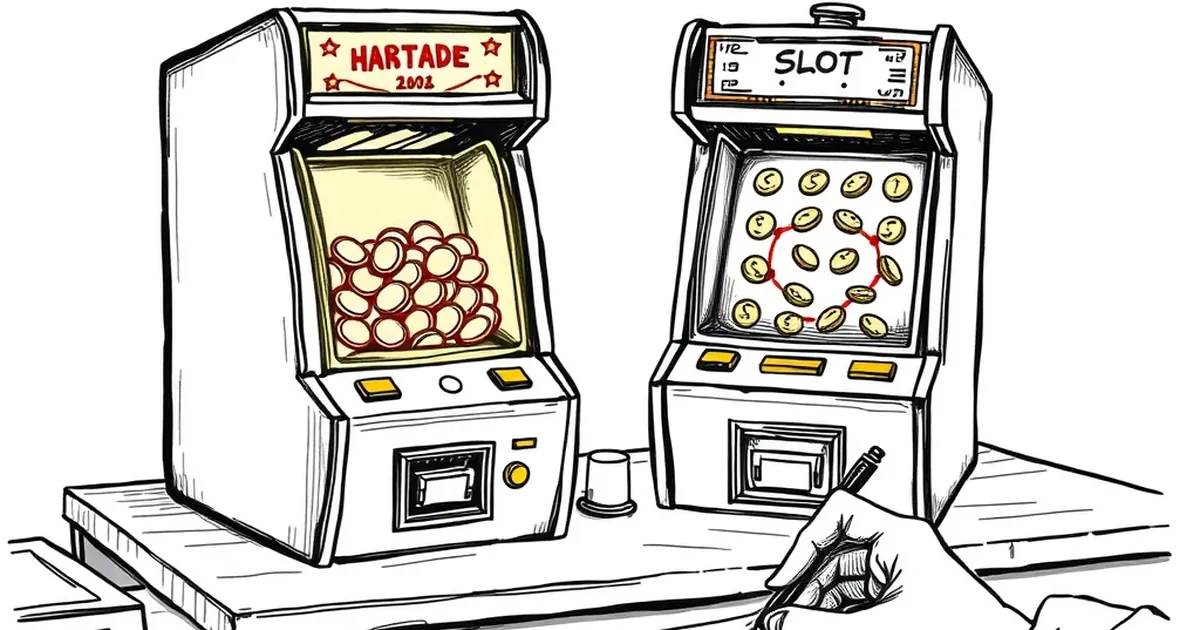
There's a specific kind of whiplash in watching a streamer hit a 400x bonus on a slot that, when you load the same game, pays out like a broken ATM. The claim isn't that streamers are lying about their wins — it's that the build they're playing and the build you're playing aren't always the same thing. Same artwork, same name, same provider logo, but the maths underneath can be tuned to a different RTP profile, and the gap between a 96% demo and an 89% live version is roughly seven cents on every dollar you cycle through the machine.
The RTP dial most players don't know exists
Regulated markets force operators to publish a theoretical return figure, and in Australia that means the NSW Independent Casino Commission, state-based regulators, and for online play the offshore licensing bodies most .com.au-facing sites actually operate under. What those rules don't always force is a single RTP per game. Providers routinely ship slots with multiple certified maths models — often three or four — and the operator picks which one to deploy.
A game like Book of 99 or Gates of Olympus-style titles has been released at 96.5%, 94%, and 87% in different configurations depending on the casino and jurisdiction. The 87% version is legal in plenty of places. The 96.5% version is what gets shown in the promo video.
So when a streamer clips a session at 96%, they may genuinely be playing 96%. You open the same slot on a site that's running the 89% build and the difference isn't cosmetic — it's structural. Over 100,000 spins at $1 stake, the 96% version returns $96,000 on average. The 89% version returns $89,000. That's $7,000 of expected value evaporating without a single rule change, bonus term, or wagering requirement being mentioned in the fine print.
Why the same game has different numbers
Slot maths is built around a target RTP, then the volatility profile, hit frequency, and max win are adjusted to fit. Lower the RTP and you typically either cut the frequency of mid-tier wins, shave the paytable, or reduce how often the bonus triggers. Sometimes all three. The game feels different at 89% — fewer near-misses that pay, longer dry spells — but the visual feedback is identical, so players blame variance instead of the build.
Providers are upfront about this internally. Their game sheets list "RTP configurable: 96.2% / 94.1% / 88.8%" as a feature, not a bug. Casinos want the flexibility because a lower RTP build is more profitable per spin, and in markets where players don't check, there's no commercial reason to run the generous version.
What Australian players are actually loading
Australia's online gambling landscape is a mess of offshore operators, because the Interactive Gambling Act 2001 blocks licensed domestic sites from offering casino games to Australians. Most .com.au-facing casinos hold licences in Curaçao, Malta, or Kahnawake. Curaçao, notably, doesn't mandate RTP disclosure at the game level. Malta does, but enforcement varies.
That means a player in Sydney signing up to a Curaçao-licensed site has effectively no regulatory guarantee they're getting the 96% build. The game information panel might show a range, or a single figure that applies to a version, not necessarily the one deployed. Some sites publish the actual RTP per game in the help file — check it. Others don't, and that silence is the tell.
The practical test: open the game's info screen and look for a specific RTP number tied to that title. If it says "up to 96.5%" or omits the figure entirely, assume you're on the lower build until proven otherwise. If it says 96.5% flat, screenshot it. If the number changes after a software update, you've got your answer about how the operator treats disclosure.
The streamer economy distorts perception
Streamers aren't running a scam in the traditional sense. Many are on affiliate deals where the casino gives them a high-RTP build specifically so the content looks good, or they're playing with bonus funds that change the effective maths. Some are on demo mode, which almost always runs the top RTP configuration because there's no money at stake.
The problem is the aggregate effect. A viewer watches ten hours of 96% slots and internalises that as the baseline. They deposit at a site running 89% builds and spend weeks convinced they're just unlucky. The variance is real, but it's masking a fixed cost they never agreed to.
There's also the bonus-buy angle. If a streamer buys a bonus for $100 and it returns $400, that's a 4x on the feature. On a 96% build, the average bonus-buy return is close to the RTP, so a 4x is a good outcome but not absurd. On an 89% build, the same feature has a lower expected return and the distribution skews harder — more frequent duds, rarer big hits. The streamer's highlight reel doesn't show the twenty failed buys that funded the one that worked.
How to check what you're actually playing
A few concrete steps, none of which require trusting anyone's marketing:
- Open the game's paytable/info screen before your first spin. Look for a specific RTP percentage. If it's a range or absent, flag it.
- Cross-reference the provider's official game sheet. Most major providers (Pragmatic, Hacksaw, Nolimit, Push) publish RTP variants on their own sites. If the casino's number is lower than the provider's top figure, you're on a reduced build.
- Check the game version or build number if it's visible. Some operators run older builds with different maths than the current release.
- Compare across two sites. Load the same slot at two casinos and check both info screens. If one says 96.2% and the other says 94%, you've just found a $2.20-per-$100 difference.
None of this is illegal on the operator's side in most offshore jurisdictions, which is the uncomfortable part. The game is certified, the RTP is disclosed (sometimes), and the player agreed to the terms. The gap between what's shown and what's shipped is a feature of the market structure, not a bug in it.
The question that doesn't have a clean answer
If a casino can legally run an 89% build of a game that's advertised, streamed, and reviewed at 96%, what obligation does the operator actually have to tell you which one you're loading? The regulator says disclose the RTP. The provider says all variants are certified. The streamer says look at this win. And the player, somewhere in the middle, is expected to read a help file most people never open.
The number to watch isn't the RTP on the promo page. It's whether the figure in the game's own info panel matches it — and whether that figure stays the same the next time you log in. If it moves, you'll know exactly how much the house thinks you're worth per spin. And if it doesn't move but the wins feel different, you might be looking at the same game with a different maths model underneath, which is the quietest way to change the odds without changing a single visible thing.