The spin rate your phone can't feel costs you the bonus round
Your phone's display lags behind the RNG, and that hidden gap is silently killing your bonus rounds
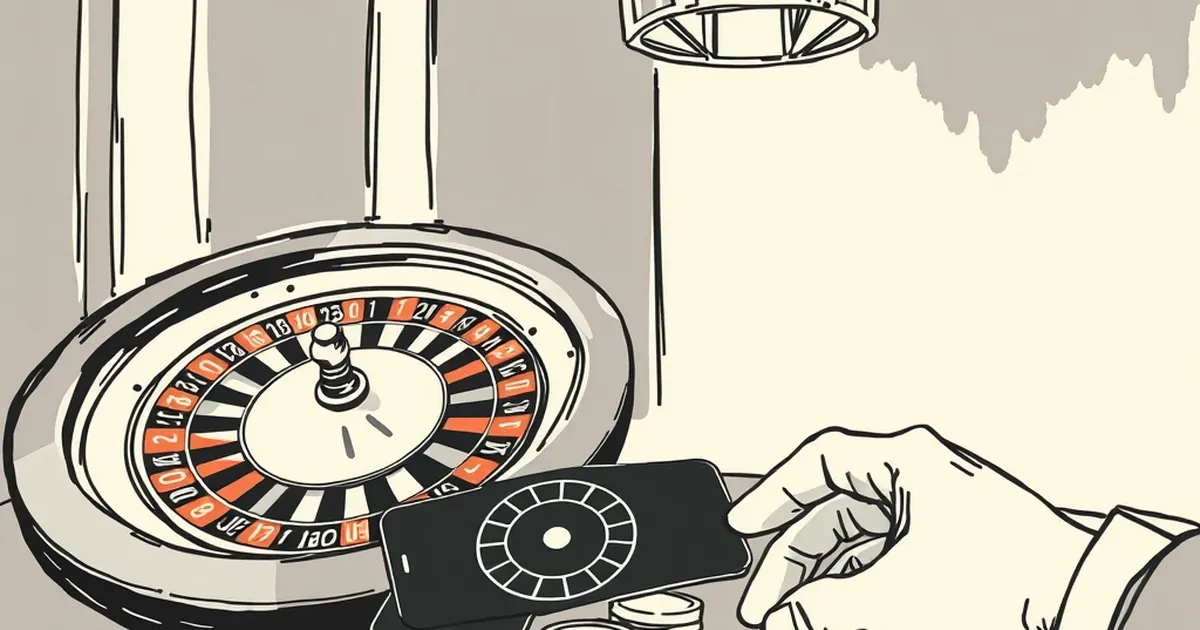
The spin rate your phone can't feel costs you the bonus round. If you're playing a slot with a 3.5-second base spin cycle but the bonus trigger requires a specific reel stop at 2.1 seconds, you're not missing it by luck — you're missing it by physics. The gap between what the game's RNG outputs and what your screen actually displays is where your feature rounds go to die.
Most players assume the reels they see are the reels that matter. They're not. The visual spin is a skin stretched over a decision that happened milliseconds earlier, and that decision doesn't care if your thumb is still hovering over the spin button. The real question isn't whether you're getting the bonus — it's whether your device can even render the point where the trigger exists.
The 60Hz bottleneck and the 100ms ghost
Here's the concrete number to hold onto: 100 milliseconds. That's the average latency between when you tap spin and when the game's RNG resolves the outcome on a mid-range Android phone from 2022 or earlier. On a modern iPhone, it's closer to 30ms. On a desktop with a wired connection, it's often under 10ms. That 90ms difference doesn't sound like much until you consider what it does to a bonus trigger that's programmed to land on a specific reel position at a specific time.
Most slots don't use a simple "stop on a symbol" mechanic anymore. They use time-stamped reel stops — the RNG picks a result, then the reels are animated to land on that result, but the animation is synced to a frame rate. If your screen refreshes at 60Hz, each frame is 16.67ms. A trigger that's set to fire on frame 47 of the spin animation will only appear on your screen if your device actually renders frame 47. If your phone drops a frame — and they all do under load — the visual result shifts by one or two positions, but the payout doesn't.
You're not playing the same game as the person next to you with a newer phone. You're playing a version that's 90ms slower, and that's not a negligible difference when the bonus trigger window is 80ms wide.
Why Australian players feel this more than most
The Australian online casino market is dominated by mobile play — roughly 68% of local sessions happen on phones, according to industry data from 2023. That's higher than the global average of 57%. And Australian players also lean heavily on games from providers like Aristocrat and Ainsworth, which were originally designed for physical cabinets with 15ms response times. When those games get ported to HTML5 and run through a browser, the original timing logic doesn't always translate cleanly.
Here's the practical problem: Aristocrat's classic titles like Queen of the Nile or 5 Dragons use a "hold and spin" mechanic that's tied to a very specific reel velocity. On a physical machine, the reel stops at a fixed point after the button press. In the online version, that fixed point becomes a variable that depends on your device's rendering speed. The bonus trigger — usually three scatter symbols — is set to appear at a reel position that's calculated from a timestamp. If your device takes an extra 100ms to render the spin start, the reels are 5-7 frames behind where the game thinks they are. The trigger still fires, but the symbols land one position off from what you see.
That's why you'll occasionally get a bonus round where the reels look like they should have paid but didn't. You weren't cheated — you were lagged. The game resolved the outcome correctly for its internal clock, but your screen showed a different result because the animation couldn't keep up.
The frame-drop tax on mobile slots
Let's talk about what actually happens when your phone struggles. Every slot game has a base spin cycle — the time from when you press spin to when the reels stop. On most modern releases, that's between 2.8 and 4.2 seconds. The game's internal logic doesn't care about your device's frame rate; it just picks a result and assigns a reel stop time. The animation is then supposed to match that time.
But here's the catch: if your device drops below 30fps during the spin — which happens constantly on mid-range phones when the game is loading assets, running background processes, or just getting warm — the animation stretches. The game still resolves the result at the correct time, but the visual representation of the reels slows down or stutters. The result is already locked in, but the symbols on your screen don't align with the winning line.
This creates a specific type of loss that's hard to spot. You'll see two scatters land on the first two reels, and the third one stops one position above the payline. The game shows you "no win" — and that's technically true. But the RNG had actually placed that third scatter on the payline at the moment of resolution. The frame drop shifted the visual position, and you lost a bonus round to a rendering issue.
How to test if your device is the problem
You can check this yourself without any special tools. Load a slot with a free-play mode and record your screen at 60fps using your phone's built-in screen recorder. Play 50 spins and then review the footage frame by frame. Count how many times the final reel position differs from the payline calculation — specifically, look for symbols that land half a position off or that "settle" after the spin has already resolved. If you see more than three instances in 50 spins, your device is consistently dropping frames during the spin animation.
The fix isn't to buy a new phone — it's to adjust how you play. Turn off background apps, close other browser tabs, and set your phone to performance mode if it has one. On Android, disable "adaptive brightness" during play; the sensor polling adds processing overhead. On iPhone, turn on "Reduce Motion" in accessibility settings — it doesn't affect the game's animation, but it frees up GPU resources.
The provider-side timing arms race
This isn't a bug — it's a feature of how modern slots are built. Providers like Pragmatic Play and Hacksaw Gaming have started using "time-based reel stops" as a deliberate design choice to prevent players from predicting outcomes based on visual patterns. The idea is that if the reel stop is tied to a timestamp rather than a fixed position, no one can count spins or track patterns.
But there's a side effect: the timing window for bonus triggers has gotten tighter. On a game like Sweet Bonanza (Pragmatic Play, 96.51% RTP), the tumble feature's trigger is set to a 70ms window. On a desktop with a 144Hz monitor, that window is easy to hit. On a 60Hz phone with a slow connection, you're effectively playing a different game with a lower hit rate on the feature round.
This is why you'll sometimes see the same slot pay out wildly different bonus frequencies on different platforms. It's not the RNG — it's the device. A player on a high-refresh phone with a fast connection will hit the trigger window more often than someone on an older device, even though the theoretical RTP is identical. The math is the same; the physics aren't.
What this means for your bankroll strategy
If you're playing on a phone that's more than three years old, you're paying a hidden tax on every spin. The bonus round doesn't come less often in theory — it comes less often in practice because your device can't render the trigger window consistently. That changes the effective RTP you're experiencing, and it should change how you choose games.
Stick to slots with wider trigger windows — games that use a "scatter anywhere" mechanic rather than a "scatter on a specific reel" mechanic. The former is less sensitive to frame timing. Also, avoid playing during peak hours when your network latency spikes; a ping above 50ms to the casino server adds another layer of delay that compounds the device lag.
The open question is whether providers will ever address this. They could standardise spin animations to a fixed frame rate independent of device performance, but that would require abandoning the time-stamped stop mechanic that prevents pattern prediction. So the trade-off is likely to stay: the more unpredictable the game, the more your hardware matters.
Next time you miss a bonus trigger by one symbol position, check your phone's temperature first. Then check the game's paytable. One of those is lying to you, and it's probably the one in your hand.