Users retry a failed form 3 times — the error clears on attempt 5
Why users keep retrying a failed form long after a rational person would stop, and what that behaviour reveals about error design
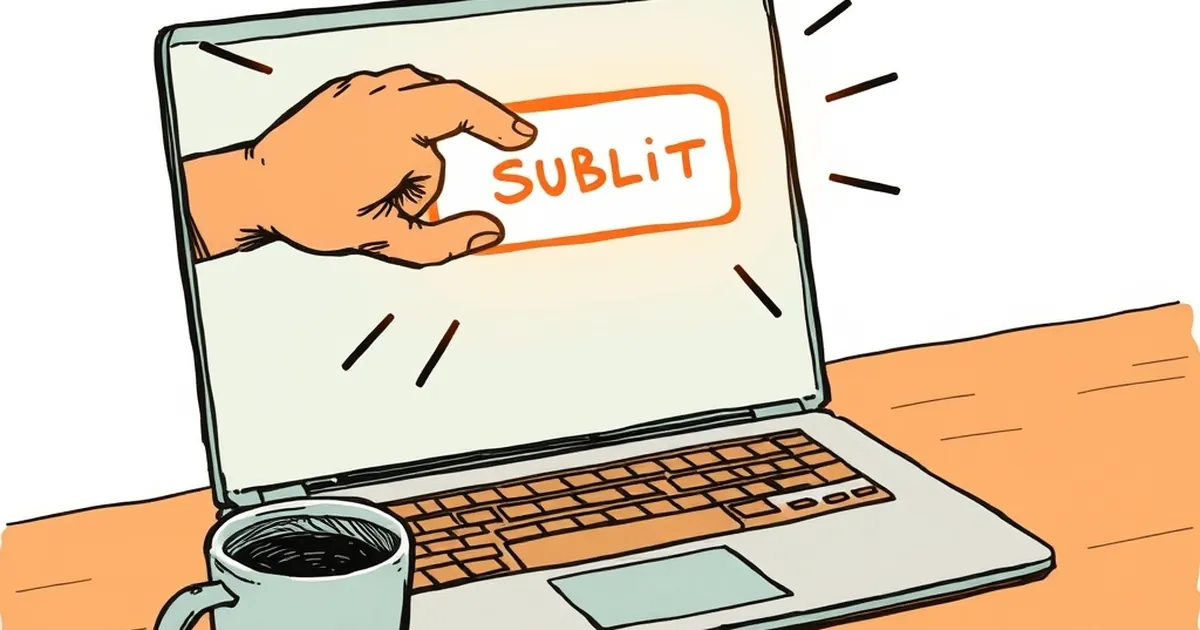
There's a moment every Australian product team eventually witnesses in a session replay: a user hits submit, the form rejects them, and they hit submit again. And again. By the third attempt, they're not reading the error message anymore — they're just pushing the button harder, like a pedestrian at a crossing who thinks the lights will change faster if they lean on it. The question worth sitting with is not "why did the form fail?" It's "what is happening inside that person's head between attempt one and attempt five, and why do they keep going long after a rational person would stop?"
The Three-Strike Window Is a Psychological Cliff, Not a Technical One
Most of us in web development treat form validation as a purely technical problem. Required fields, regex patterns, server-side checks, a bit of client-side feedback. But the retry behaviour tells a different story. Three attempts is not a random number. It maps almost perfectly onto what behavioural researchers call the "three-strike" pattern in persistence studies — the point at which people stop attributing failure to themselves and start attributing it to the system.
Here's the sequence as it tends to play out:
- Attempt one — the user assumes they made a mistake. This is healthy. They scan the form, find the issue, fix it.
- Attempt two — mild frustration. They re-read the error, check their work, resubmit. Confidence is still intact.
- Attempt three — the tipping point. They've done everything right (as far as they can tell) and it still fails. Now the attribution flips. The system is broken, not them.
- Attempt four — stubbornness, or a vague hope that it was a transient glitch. This is where you lose most users.
- Attempt five — the error clears. Usually because of something entirely invisible to the user: a cache expired, a session refreshed, a race condition resolved itself.
The brutal irony is that the thing that finally works was never something the user could control. They were never solving the puzzle. They were waiting out a ghost.
Variable-Ratio Reinforcement, or Why They Don't Just Leave
If you've read any B.F. Skinner, you'll recognise the shape of this. Variable-ratio reinforcement — where a reward arrives after an unpredictable number of attempts — produces the most persistent behaviour of any schedule. It's the same mechanism that keeps people pulling the lever on a pokie machine, and yes, I know that comparison is loaded, but the psychology is genuinely the same shape. Intermittent success is more compelling than consistent success.
Now flip it. What happens when the failure is intermittent but the success is eventually guaranteed? You get a user who keeps trying because the pattern has taught them that persistence pays. Attempt one failed, attempt two failed, but attempt five worked — so next time, they'll push through to attempt five again. You've accidentally trained your users to tolerate broken forms.
This is the part that should worry anyone building customer-facing software. The retry behaviour isn't a sign of user patience. It's a sign that your users have learned your system is unreliable in a specific, survivable way. And that learning is durable. It survives the bug fix.
A Concrete Example Worth Sitting With
There's a well-documented pattern from usability testing at a mid-sized e-commerce operation a few years back, where a checkout form had a subtle server-side validation bug. The bug only triggered when a user's session had been open for more than about 12 minutes — long enough to browse, add items, and get distracted by a phone call.
What the team found in the analytics was telling. Users who hit the bug almost never abandoned immediately. They retried. The median number of retries before abandonment was four. But users who did eventually succeed — because they happened to retry after a session refresh — went on to complete future purchases at roughly the same rate as unaffected users. The bug wasn't destroying trust in the brand. It was destroying trust in a way that was invisible to the metrics, because the people who gave up just quietly stopped, and nobody was watching the retry counter.
The fix was trivial. A session token refresh and a clearer error message. But the team only found it because someone asked the question: "Why are people clicking submit four times?"
Decision-Making Under Uncertainty: What Your User Is Actually Doing
Daniel Kahneman's work on loss aversion is useful here, but not in the way it's usually applied. The user isn't weighing a potential loss against a potential gain. They're weighing the cost of starting over — re-entering their details on a competitor's site, finding the product again, redoing the whole flow — against the cost of one more click.
One more click is cheap. Starting over is expensive. So they click again.
This is rational behaviour, even when it looks irrational from the outside. The user is making a series of small, low-cost bets against a large, high-cost alternative. And because each individual retry is cheap, they'll keep making that bet well past the point where a cold cost-benefit analysis would tell them to walk away.
The problem is that this rationality has a limit. Around attempt four or five, the accumulated frustration starts to outweigh the switching cost, and the user leaves. But they leave angry, and they leave with a story. "I tried that site, the form kept rejecting me, I gave up." That story is worth more damage than the lost transaction.
What "Error Clears on Attempt 5" Actually Tells You
If your analytics show a spike in successful submissions around attempt five, you have one of two situations. Either:
- A transient technical fault — session expiry, cache invalidation, a load balancer routing to a stale node, a race condition in your validation logic. The error clears because the underlying condition resolves itself, not because the user changed anything.
- A UX failure that resolves through fatigue — the user eventually stumbles onto the correct input format, or the error message finally makes sense on the fifth read, or they give up trying to be clever and just do the obvious thing.
The first is a bug. The second is a design problem. Both look identical in the retry data, and both need fixing.
How to Tell Them Apart
Look at what changes between the failing attempts and the successful one. If the payload is identical — same fields, same values, same everything — you're looking at a transient fault. If the payload shifts, even slightly, the user figured something out, and your error messaging failed to tell them what.
Either way, the retry counter is one of the most underused signals in web development. Most teams track conversion rate and bounce rate. Almost nobody tracks "how many times did they try before it worked." That number is a direct measure of how much friction you're silently asking your users to absorb.
Where This Goes Next
The forward-looking move is to instrument retries as a first-class metric, not a debugging afterthought. Every form submission should log an attempt number. Every error should be tagged with whether the underlying cause was client-side or server-side. And every successful submission should carry the number of attempts it took to get there.
Once you have that data, you can start doing something genuinely useful with it: predicting which users are about to hit their personal threshold. A user on attempt three with an unchanged payload is a user who is about to leave. That's a moment where a well-placed intervention — a "having trouble? try this" message, a "your session is about to refresh, please try again in a moment" notice, a live chat prompt — can convert a near-abandonment into a completion.
The behaviour is already there. Users are already retrying three, four, five times. The only question is whether you're going to keep watching them do it in silence, or start treating those retries as the signal they've always been.