Wagering math flips at deposit three — the terms don't
Identical bonus terms hide shifting wagering maths across deposit tiers, where expected value can fall sharply by the third deposit
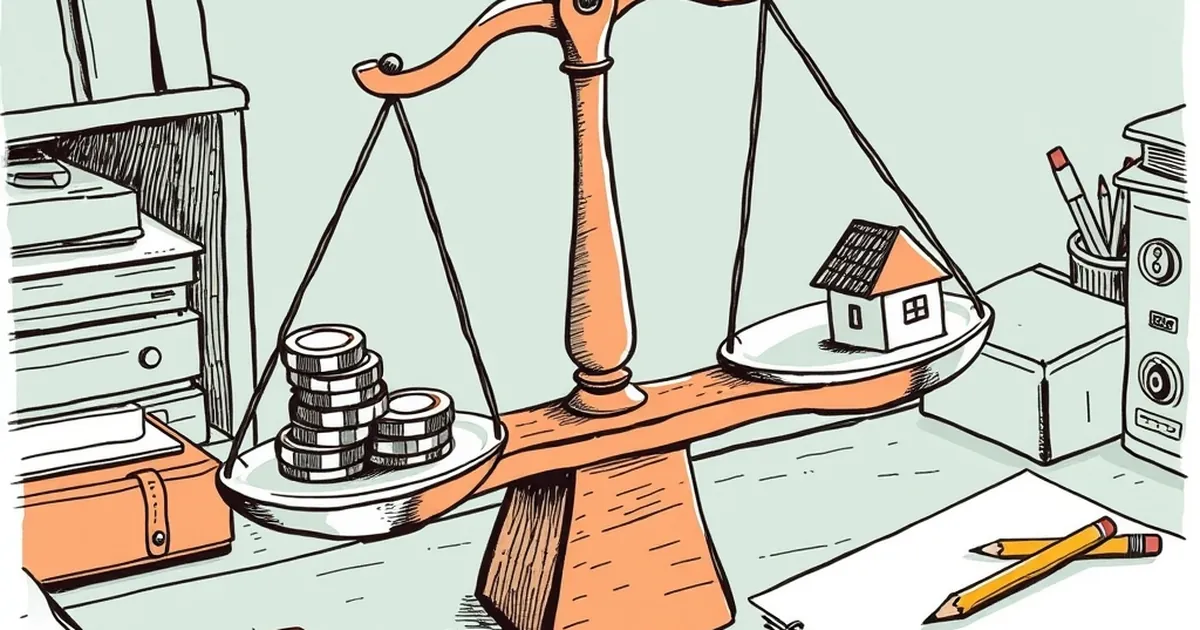
The third deposit is where most Australian bettors stop reading and start clicking, and it's exactly where the maths changes underneath them. A bonus that was worth $180 in expected value on deposit one can be worth $40 by deposit three, even though the terms page is word-for-word identical. Nothing in the fine print moves. The arithmetic does.
The same clause, a different number
Take a standard welcome package structure you'll see across a dozen AU-facing sites: 100% match on deposit one up to $200, 50% on deposit two up to $200, 25% on deposit three up to $200. The terms — 30x wagering on the bonus, slots contribute 100%, most table games 10%, max bet $5, 30-day expiry — are copy-pasted across all three.
What changes is the bonus amount relative to what you actually deposit, and that quietly rewrites the value of every clause attached to it.
Here's the raw shape of it:
| Deposit 1 | Deposit 2 | Deposit 3 | |
|---|---|---|---|
| You deposit | $200 | $400 | $800 |
| Match rate | 100% | 50% | 25% |
| Bonus received | $200 | $200 | $200 |
| Wagering required (30x) | $6,000 | $6,000 | $6,000 |
| Bonus as % of deposit | 100% | 50% | 25% |
The wagering figure is identical in all three columns. The cost of clearing it is not, because you're staking $6,000 of your own turnover to unlock a bonus that represents a smaller and smaller slice of what you put in.
Why the EV collapses
Assume a 96.5% RTP slot and a house edge of 3.5%. Clearing $6,000 in wagering carries an expected loss of $210. That number doesn't care which deposit you're on.
- Deposit 1: bonus $200, expected loss $210. EV ≈ –$10.
- Deposit 2: bonus $200, expected loss $210. EV ≈ –$10.
- Deposit 3: bonus $200, expected loss $210. EV ≈ –$10.
So far, so flat — which is the trap. The EV looks stable because the bonus is capped at $200 each time. But the deposit you're risking to access it has quadrupled by deposit three. On deposit one you're risking $200 of your own money for a $200 bonus. On deposit three you're risking $800 for the same $200, and the $6,000 wagering requirement now sits against a deposit four times larger.
If you'd deposited $200 on deposit three instead of $800 — which the terms permit, since the match is capped, not required — you'd get a $50 bonus, not $200, but you'd also only be turning over your own $200 once rather than $800. The percentage of your bankroll exposed to the 3.5% edge drops sharply.
The max-bet clause bites hardest at deposit three
A $5 max bet while a bonus is active is standard. On deposit one, with a $200 bonus and a $200 deposit, a $5 spin is 1.25% of your combined $400 balance. On deposit three, with a $200 bonus and an $800 deposit, the same $5 spin is 0.5% of your $1,000 balance.
That sounds safer. It isn't, because the wagering requirement is fixed at $6,000 regardless. At $5 a spin you need 1,200 spins minimum to clear it. At deposit one, 1,200 spins at $5 is $6,000 of turnover against a $400 bankroll — you're recycling your balance fifteen times over. At deposit three it's the same 1,200 spins, but against $1,000. The variance you'll absorb across those spins is identical in dollar terms and larger in survival terms, because a downswing on deposit three wipes out a bigger real-money contribution.
Run the numbers on a 1,200-spin session at 96.5% RTP with typical slot variance (SD around 4.5x stake per spin): you're looking at a standard deviation of roughly $5 × 4.5 × √1,200 ≈ $780. That's more than the entire bonus. There's a meaningful chance — north of 20% on most mid-variance slots — that you finish the wagering requirement with less than you deposited, bonus included.
Where the terms quietly diverge
The clause that catches people at deposit three isn't the wagering multiplier. It's the contribution weighting and the expiry clock.
Most AU-accessible sites weight pokies at 100% and everything else at 10% or less. If you're a blackjack player, your $6,000 requirement becomes $60,000 of turnover. On deposit one, that's absurd but survivable because you only deposited $200. On deposit three, you've committed $800 to a bonus you cannot realistically clear without switching to slots — and if you don't switch, the 30-day expiry will void it.
The expiry is the second lever. Thirty days to clear $6,000 in wagering means $200 a day in turnover, every day, for a month. Miss three days and you're behind. On deposit one, a missed week is recoverable. On deposit three, the same missed week is fatal to the bonus, and you've locked up $800 of your own money in the process.
The sticky-bonus problem
Some operators now issue deposit-three bonuses as sticky — the bonus is deducted from any withdrawal, so you only ever withdraw your own funds plus winnings on top. A sticky $200 bonus on a $200 deposit is worth roughly the same as a non-sticky $200 bonus at 30x. A sticky $200 bonus on an $800 deposit is worth considerably less, because you're tying up four times the real money for the same theoretical upside.
The terms page won't say "sticky" in bold. It'll say something like "bonus funds are removed from withdrawal requests" in clause 7.3.
What this means if you're three deposits deep
The practical read: the third deposit in a welcome package is rarely the best value in the sequence, and it's frequently the worst. If you've already taken deposits one and two, the deposit-three offer is usually not worth clearing unless you were going to play $6,000 in turnover anyway, at which point you're not really chasing the bonus — you're playing, and the bonus is a rebate on losses you were going to incur regardless.
The open question is whether regulators will force operators to disclose effective EV per deposit tier rather than a headline match percentage. The ACT's 2024 gaming review flagged bonus transparency as a priority but stopped short of mandating per-tier EV disclosure. Until that changes, the maths flips on deposit three and the terms stay silent — which means the only defence is doing the multiplication yourself before you click.
If you're going to play through a bonus, set a hard deposit limit before you start, and treat the wagering requirement as a cost, not a challenge. Gambling Help Online is on 1800 858 858 if the chasing starts to feel less like arithmetic and more like obligation.