What happens when the slot's max win needs 400 spins
A 400-spin max win is a variance problem disguised as a jackpot, and understanding what happens in the reels changes how you read the paytable
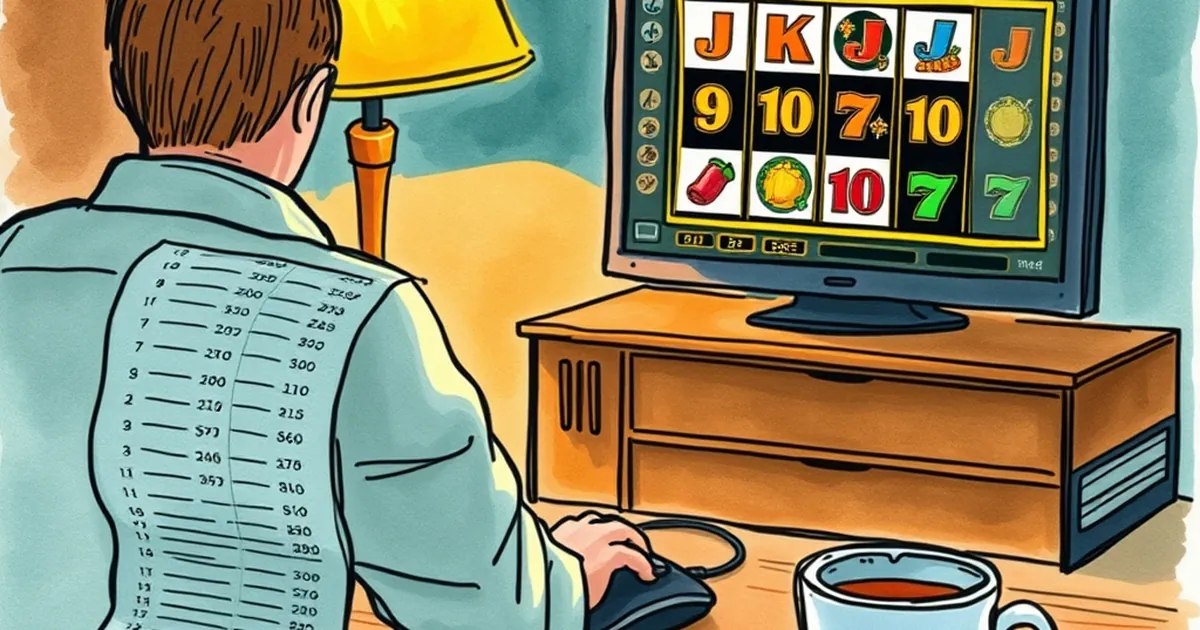
A max win that takes 400 spins to land isn't a payout schedule — it's a variance problem wearing a jackpot's clothes. When a slot advertises a top prize that needs roughly 400 spins of build-up before the maths even allows it, the number on the marketing banner and the number in your session are two different animals. Here's what's actually happening in the reels during those 400 spins, and why the figure should change how you read the paytable.
The 400-spin figure is a useful fiction, so let's start by taking it apart. Most "max win" claims on modern Australian-facing slots are expressed as a multiple of stake — 5,000x, 10,000x, occasionally 50,000x on the high-volatility stuff. That number is the ceiling the game's maths can produce, not a target it's steering toward. When a provider says the top prize needs a long spin sequence to become reachable, what they usually mean is that the maximum payout only exists inside a bonus round, and that bonus round only arrives on a frequency that makes 400 spins a fair estimate of the wait. At 400 spins and, say, $1 a spin, you've cycled $400 through the machine before the feature that contains the max win has a realistic chance of showing up. And "realistic chance" is doing heavy lifting in that sentence.
The bonus round is where the ceiling lives
Almost no slot pays its max win from the base game. The big multipliers, the expanding symbols, the persistent wilds — they're gated behind a feature, and the feature is gated behind a trigger frequency. That trigger might be a scatter count with a published probability, or it might be a "buy feature" the provider sells directly. Either way, the 400-spin number is really a statement about trigger frequency, not about payout.
What 400 spins actually buys you
If a bonus triggers once every 400 spins on average, that's a 0.25% hit rate per spin. Run the binomial maths and you get the uncomfortable part: over a 400-spin session, the chance of seeing at least one trigger is about 63%. Which means roughly 37% of players who commit to 400 spins will see nothing. Not a small tail — more than a third. Double the session to 800 spins and the no-trigger probability drops to about 13.5%. You can see why the "average" is a poor planning tool. It describes the long run, and your session is not the long run.
This is the same trap as reading RTP as a session expectation. A 96.2% RTP slot over 100,000 spins will land close to that figure; over 400 spins the actual return can swing wildly in either direction, and the max win is the far right edge of that swing. The 400-spin framing quietly implies the ceiling is "due" after a certain amount of play. It isn't. Each spin is independent, and the reels have no memory of how long you've been sitting there.
Why providers pick 400 and not 40
Trigger frequency is a dial the maths team turns, and it trades directly against the size of the prize. Make the bonus land every 40 spins and the max win has to shrink, or the RTP blows out and the game becomes unprofitable. Stretch the trigger to every 400 spins and you can afford a headline number that looks enormous on a comparison site. The 400 figure isn't a design accident — it's the price of the banner.
There's a second dial too: volatility. A game with a 400-spin average trigger and a 10,000x ceiling is a high-variance machine by definition. Long dry spells are the expected texture of play, not a malfunction. If you're the kind of player who gets frustrated after 50 spins without a feature, a slot built around a 400-spin cycle is the wrong machine for you regardless of how good the max win looks.
The buy-feature shortcut and its real cost
Many slots with long natural trigger cycles also sell the bonus outright. This is where the 400-spin number becomes genuinely useful, because the buy price tells you what the provider thinks the feature is worth. If the bonus costs 100x your stake, and the average bonus pays back something in the region of 96–97% of that price over the long run, then the max win is a lottery ticket inside an already-expensive ticket. Buying the feature doesn't dodge the variance — it concentrates it. You've skipped the 400 spins, but you've also paid upfront for a distribution that mostly returns less than you spent, with a thin tail that occasionally returns thousands of times more.
For Australian players, the buy-feature button is also worth checking against local rules. Interactive gambling regulation here is strict, and the legality of feature-buy mechanics varies by operator and licence. If a site is offering a buy button to AU customers, that's a prompt to look at who holds the licence, not just the price.
What to actually do with the number
Treat the 400-spin figure as a budget warning, not a schedule. If the max win needs 400 spins to become reachable, then a session that can't comfortably absorb 400 spins of stake — plus the 37% chance of seeing nothing at the end of it — is a session that shouldn't be chasing that prize. Work backwards: decide what you're willing to cycle through the machine, divide by your stake, and see whether the resulting spin count is anywhere near the trigger cycle. If it's a tenth of it, you're buying lottery odds, and that's fine as long as you know it.
The other move is to check the game's published stats before you play. Trigger frequency, max win multiple, and RTP together tell you far more than the banner. A slot with a 400-spin cycle, a 5,000x ceiling, and 96.1% RTP is a very different proposition from one with a 150-spin cycle and a 2,000x ceiling, even if both look similar on a thumbnail. Set a loss limit before the first spin, and treat the max win as something that happens to somebody, not something you're owed for patience.
The open question is whether the 400-spin framing survives contact with how people actually play. Providers keep pushing ceilings higher because the number sells, but every step up the multiplier ladder stretches the trigger cycle or deepens the variance, and at some point the headline stops describing a game anyone plays in a normal session. If the max win needs 400 spins to be reachable, and most sessions run 100 to 200, then the prize at the top of the paytable is effectively decoration — a number designed to be read, not hit. The maths is honest about that. The marketing isn't.