What the bonus clock starts counting before you deposit
The bonus clock starts before your deposit clears, quietly running down wagering time while your funds are still in transit
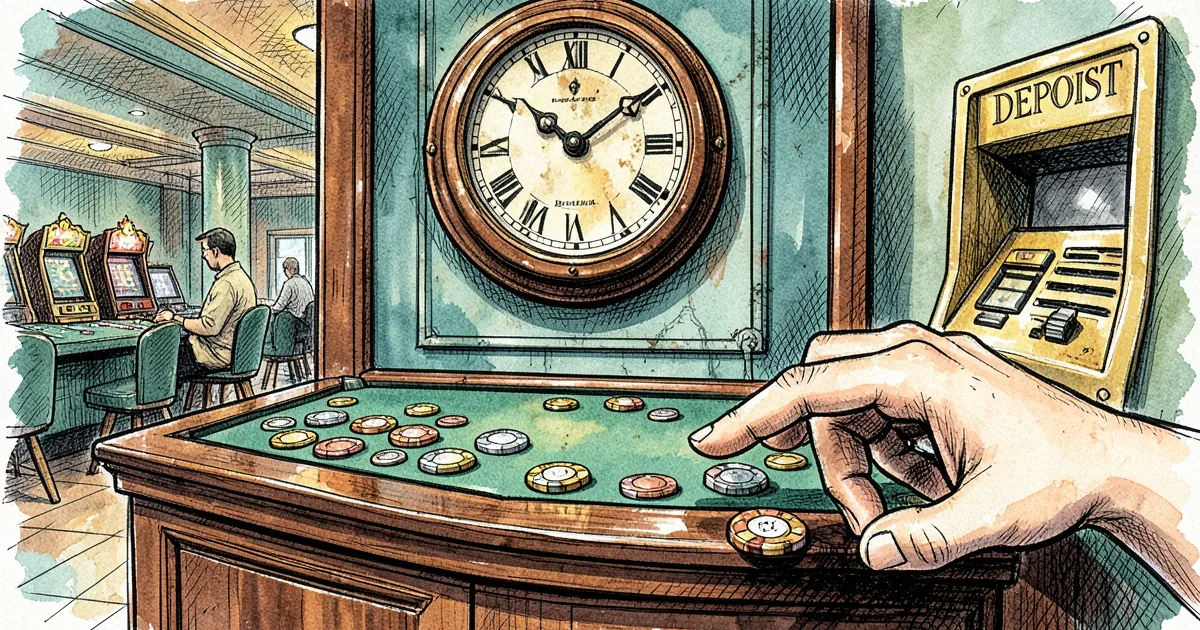
The bonus clock doesn't start when your deposit lands. It starts when you request it — or, on most platforms, the moment you click "deposit" and get routed to a payment page. The terms load after the confirmation screen, the wagering requirement attaches to a balance that hasn't settled yet, and the expiry timestamp is generated at the point of authorisation, not at the point the funds clear. By the time your bank app pings with a debit notification, you're already minutes or hours into a countdown you never saw begin.
That gap is small enough to ignore on a $20 casual top-up. It's not small on a matched bonus with a 7-day wagering window, because the clock you're racing started before you had a chance to read what you were racing against.
The authorisation timestamp is the real start line
Card and bank deposits move in two stages: authorisation, then settlement. Authorisation is the "yes, this card has room" check, usually instant. Settlement — the actual movement of money between institutions — can take anywhere from seconds to three business days depending on the rail. PayID and most instant bank transfers clear fast in Australia; international card transactions and some e-wallet routes are slower.
Casinos almost universally key bonus activation to the authorisation event, because that's the timestamp their payment processor hands back. The bonus balance appears, the terms attach, and the expiry clock begins ticking — even if the settled funds haven't arrived. If settlement later fails (insufficient funds, a bank block, a chargeback risk flag), the bonus is usually clawed back, but the clock rarely resets. You've spent part of your window on a deposit that never completed.
This is the same structural quirk that shows up elsewhere in bonus mechanics: deposit confirmations land before the bonus terms load, which means the first thing you see is a success screen, not the fine print governing what you just triggered.
What "instant" actually means
A payment page that says "instant" is describing the user experience, not the settlement. The processor returns an authorisation code in under a second; the money moves later. From the casino's ledger perspective, the bonus is live at authorisation. From your bank's perspective, nothing has happened yet. Two systems, two clocks, and only one of them is counting against you.
The wagering clock and the bonus clock are not the same clock
Here's where it gets genuinely confusing, and where most players lose value without noticing.
Most bonuses carry two separate timers. The bonus credit expiry is short — often 24 to 72 hours — and governs how long the bonus funds sit in your account before they're removed. The wagering window is longer, commonly 7 to 30 days, and governs how long you have to turn over the required amount. They start at roughly the same moment, but they end at very different times, and the shorter one binds first.
If you're holding bonus credit that vanishes in 24 hours while the wagering requirement runs for a week, the practical deadline is 24 hours. Anything you haven't staked by then is gone, and the wagering progress you made doesn't carry over as cash. The 24-hour credit expiry against a 7-day wagering clock is the clearest version of this trap, and it's standard rather than exceptional.
Free spins run on a third clock
Free spin packs usually expire faster than anything else — 7 days from credit is common, 48 hours isn't rare, and the wagering on winnings from those spins often starts at zero the moment the spins are credited, whether or not you've used them. Spins you never touch still burn their window. The day-7 expiry with wagering starting at zero is worth reading before you accept a pack you don't plan to use immediately.
The minimum-deposit threshold resets the maths
A detail that catches people on the first deposit of a welcome package: many bonuses only activate above a minimum deposit, and the wagering requirement is calculated against the bonus amount, not your deposit. Deposit below the threshold and you get no bonus — but the clock on any other active offer may still have started.
There's a related mechanic where the bonus meter only begins counting once your cumulative deposits cross a set figure. If you deposit $50 into an offer that only starts metering at $200, your first three deposits do nothing except consume calendar days. The bonus meter that starts counting at $200 explains the arithmetic; the point here is that the clock and the meter can start at different times, and the clock is the one that costs you.
What you can actually do about it
You can't stop a casino keying activation to authorisation — that's baked into how payment processors report events. But you can shrink the gap between the clock starting and you knowing the rules.
Read the terms before you deposit, not after. Bonus terms are usually reachable from the promotions page without an account. Look for three numbers: minimum qualifying deposit, bonus credit expiry, and wagering window. If the credit expiry is under 48 hours, treat the offer as a same-day commitment or skip it.
Deposit through the fastest rail available to you. In Australia that generally means PayID or an instant bank transfer over an international card. Faster settlement narrows the window where your bonus is live but your money isn't, and it reduces the chance of a failed settlement stranding a live bonus.
Screenshot the terms at activation. If a dispute arises over when a clock started, the terms as they appeared at the moment of activation are your evidence. Casinos do revise promotional terms, and the version you read last week may not be the version that applied.
Don't stack offers. Two active bonuses with overlapping clocks usually means the wagering from one blocks progress on the other, and the shorter expiry takes both down. One offer at a time, cleared or expired, is the cleaner approach.
The broader pattern — clocks starting earlier than the player expects, and terms attaching later — shows up across the whole bonus ecosystem, from loyalty points expiring before a deposit clears to tiered offers where the trap only springs at the fourth deposit. The mechanism is consistent: the operator's clock starts at the earliest defensible event, and the player's understanding arrives at the latest convenient one.
Which raises the question worth asking of any operator: if the bonus clock starts at authorisation, why does the terms page load after confirmation? The technical answer is that it's easier to build. The commercial answer is that a player who reads the expiry before depositing is a player who might deposit less. Until regulators take an interest in timestamp alignment — and so far, most haven't — the practical defence is to assume the clock started the second you clicked, and to have read the terms before that.