Why your casino’s autoplay feature trains players to lose focus
Discover how autoplay features in online casinos train players to lose focus, subtly increasing the house edge over time
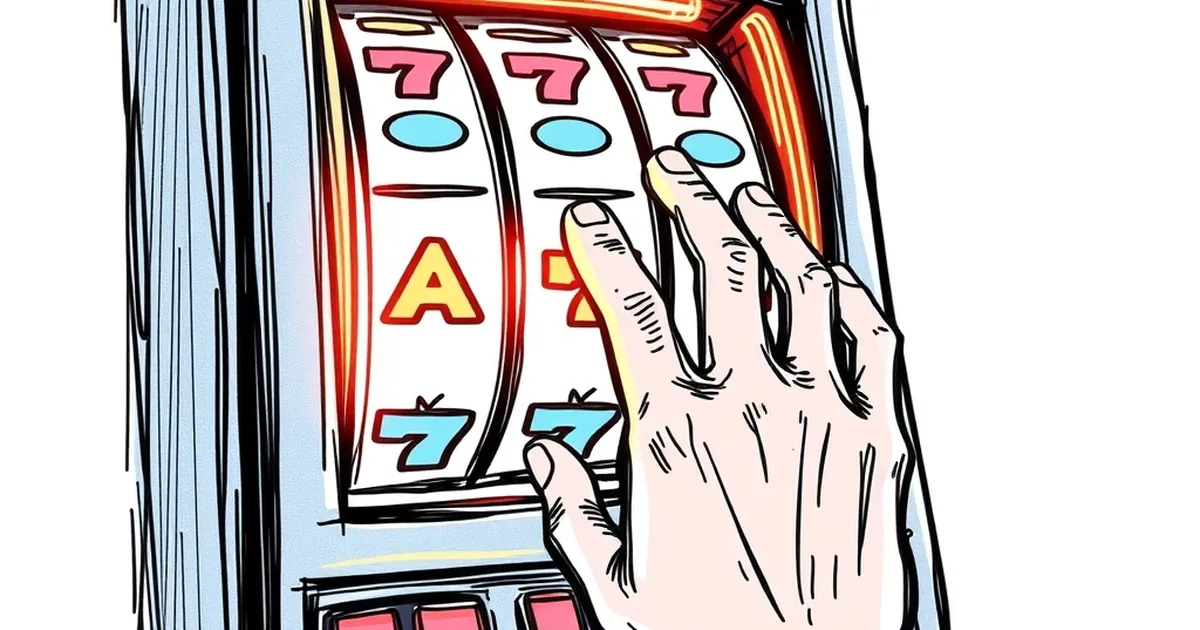
The lede on a pokies machine at your local says "autoplay for up to 100 spins". On a desktop browser, that same button sits right next to the bet size slider, often pre-set to 10 or 25 spins by default. The design isn't accidental. Autoplay doesn't just save your finger from tapping the button—it systematically trains you to stop paying attention to the game itself, and that loss of focus is exactly what the house edge needs to work its slow, quiet damage.
The attention tax: what autoplay costs you in real terms
Let's get the obvious out of the way: autoplay doesn't change the RTP of a slot. If a game pays 96.5% over a million spins, it pays 96.5% whether you click "spin" or let the software do it. The difference is in the rate of play and the quality of decisions you make during that session.
A study published in Addiction Research & Theory in 2019 tracked 2,400 online slot sessions and found that players who used autoplay spun an average of 47% more spins per session than those who clicked manually. That's not a small bump. Over a standard session of 500 manual spins, an autoplay user would hit roughly 735 spins in the same time frame. At a $1 bet per spin, that's an extra $235 in turnover per session—and against a 96.5% RTP, that extra turnover alone costs the player about $8.20 more in expected losses, every single session.
But here's the kicker: that number assumes the player would have stopped at 500 spins anyway. They usually don't. Autoplay's acceleration makes the session feel shorter, so players often let it run longer than they planned. The real cost compounds.
How autoplay rewires your attention loop
The "I'll just check my phone" trap
Autoplay's primary function is to remove the need for a physical action. That seems harmless, but it changes the psychological structure of the game. Manual play forces a rhythm: spin, see result, assess, spin again. Even if you're not consciously counting wins and losses, your brain is doing pattern-matching. You notice a bonus round building, you see a string of losses, you might adjust your bet or decide to cash out.
Autoplay breaks that loop. With no physical trigger, your brain disengages from the game's feedback. You open another tab, scroll Instagram, reply to a text. By the time you look back, the game has already processed 15 spins you weren't watching. You've missed the near-misses, the close calls, the small wins that might have influenced your next decision. You're no longer playing a game of chance with awareness—you're watching a slot machine drain your balance while you're mentally elsewhere.
The "just five more" escalation
Here's where it gets specific. Most autoplay settings let you set a stop-loss—a limit at which autoplay stops if your balance drops below a certain amount. On paper, that's a responsible feature. In practice, it's a psychological loophole.
Say you set autoplay for 50 spins with a $100 stop-loss. The game runs through 30 spins, you're down $40. You glance up from your phone, see you're still above the stop-loss, and think "well, it hasn't hit the limit yet, might as well let it finish." That's not a decision—it's a default. The stop-loss becomes a permission structure, not a safety net. You've outsourced the decision to a number you set earlier, when you were thinking more rationally, but now you're not even monitoring whether that number still makes sense.
The silent speed multiplier
How autoplay hides session velocity
Manual players have a natural ceiling on spin speed. Even a fast manual player rarely exceeds 12-15 spins per minute. Autoplay on most modern slots can hit 20-25 spins per minute, and some allow "turbo" modes that push toward 30. That's not just faster—it's a fundamentally different experience.
At 15 spins per minute, you have four seconds to register each result. Your brain can process that. At 25 spins per minute, you have 2.4 seconds per spin. You stop seeing individual outcomes. You start seeing a blur of reels. The game becomes a stream, not a sequence. That's exactly what the house wants: you stop noticing the individual losses and start feeling the momentum of "the game is running."
A 2021 study from the University of Sydney's Gambling Treatment and Research Clinic found that online slot players who used autoplay were 3.2 times more likely to exceed their pre-set time limit than manual players. The same study found that autoplay users reported significantly lower satisfaction with their session outcomes—they won less and felt worse about it. The speed didn't make the game more fun. It made the losses less noticeable until they were too big to ignore.
The "bonus buy" connection
This is where it gets interesting for Australian players, because our market has a particular relationship with bonus buy slots. A game like Sweet Bonanza or Gates of Olympus lets you pay 100x your bet to jump straight to the bonus round. Combine that with autoplay, and you've got a perfect storm.
With autoplay on, you can set the game to run 50 spins, then automatically buy the bonus when it triggers—or, in some games, automatically buy the bonus after a certain number of dead spins. You're no longer playing a slot. You're running a script that burns through your balance in a predetermined pattern. The game becomes a passive consumption experience, not an interactive one. Every decision—when to buy, when to stop, when to walk away—has been automated away.
The Australian context: why this matters more here
Australia has one of the highest per-capita gambling losses in the world, and online slots are a growing chunk of that. The interactive gambling landscape here is shaped by the Interactive Gambling Act 2001, which bans unlicensed operators but doesn't regulate the design features of offshore sites that Australians still access. Autoplay is legal on every major offshore platform targeting the Australian market. There's no regulatory push to limit spin speed or force manual play.
Compare that to the UK, where the Gambling Commission introduced a ban on autoplay in 2021. The stated reason was that autoplay "exacerbates the risk of harm" by removing player control. The UK regulator didn't ban autoplay because it thought players were having too much fun. They banned it because the data clearly showed it increased harm.
Australia doesn't have that protection. Every offshore casino you can access from Brisbane or Melbourne offers autoplay, and most set it as the default option. The game literally trains you, from the first spin, to stop paying attention.
What you can actually do about it
The obvious answer is "don't use autoplay." But that's like telling a smoker to just not buy cigarettes. The feature is designed to feel convenient, and convenience is a powerful driver. Instead, try these practical shifts:
- Set a hard spin cap before you start. Decide you'll play 200 manual spins, no more. Count them. When you hit 200, walk away. Autoplay erases that natural stopping point.
- Turn off turbo mode if you must use autoplay. Some platforms let you set spin speed independently. Keep it at the slowest setting. You want to see every spin.
- Use the "loss limit" feature backward. Instead of setting a stop-loss at a number you're comfortable losing, set it at a number that would genuinely annoy you to lose. If you'd be pissed to lose $50, set the stop-loss at $40. That way, autoplay stops before you hit your pain threshold, not after.
- Watch for "bonus buy" autoplay combos. If a game lets you automate bonus buys, treat that as a red flag. You're not playing the game anymore—you're feeding a machine that's designed to extract maximum value before you realise you've spent your session budget.
An open question
The UK banned autoplay in 2021. The Australian government hasn't shown any appetite to follow suit, despite the Productivity Commission's 2010 report noting that "the speed of play is a key factor in the harmfulness of gaming machines." That was 14 years ago. Since then, online slots have only gotten faster, more automated, and more detached from the player's attention.
So here's the question worth sitting with: if the feature exists solely to make you play faster and pay less attention, and if regulators in other countries have already decided that's dangerous enough to ban, why are you still using it?