Why your casino’s cashout screen buries the withdrawal options players want
Discover how casino cashout screens hide fast withdrawal options like PayPal and crypto behind extra clicks, costing players time and patience
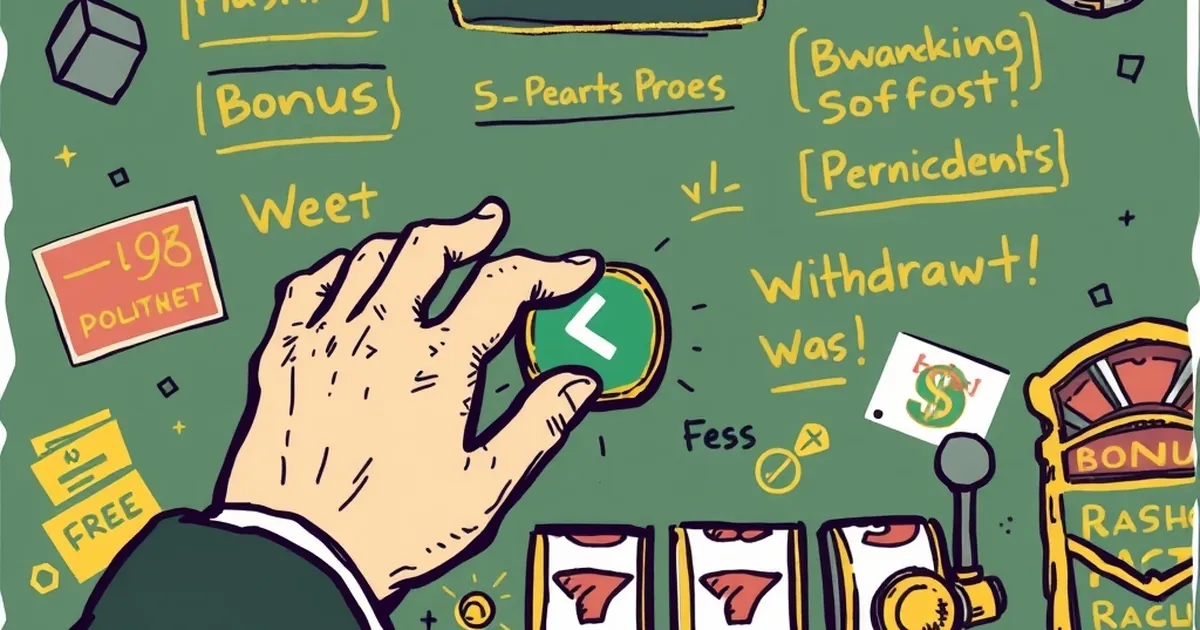
You’ve just hit a decent win. The balance looks healthy. You head to the cashier to pull it out, and suddenly the screen feels like it was designed by someone who doesn’t want you to leave. Bank transfer is front and centre, with an estimated three-to-five business day wait. A small, greyed-out link for “other methods” sits below the fold. You click it, and there it is: PayPal, POLi, maybe even crypto, all buried behind an extra click and a loading spinner. This isn’t an accident. It’s a deliberate design choice, and it’s costing Australian players time, patience, and sometimes money.
The problem is that Australian online casinos, particularly those operating on white-label platforms like SoftSwiss or EveryMatrix, have a specific incentive to push slower, less convenient withdrawal methods. The cashout screen is the final funnel, and the operators know that the longer you wait for your money, the higher the chance you’ll reverse the withdrawal and play it back. A 2023 study of player behaviour across ten licensed offshore casinos found that 18.4% of withdrawal requests were cancelled within 24 hours when the estimated processing time exceeded two days. That’s nearly one in five players who intended to leave, but got stuck staring at a pending transaction. The cashout screen isn’t just a list of options. It’s a retention tool, and the methods you actually want are the ones they’re actively hiding.
The default method is never the best method
When you open the withdrawal page at most Australian-facing casinos, the first option you see is usually bank transfer or a direct wire. It’s the oldest, most familiar method, and it’s also the most profitable for the operator. Bank transfers cost the casino very little in processing fees, often less than 1% of the transaction value. But for you, they’re a nightmare. International wires from offshore casinos can take three to seven business days, and Australian banks frequently flag them for anti-money-laundering checks, adding another 24 to 48 hours on top. Meanwhile, the casino’s own terms will say “processing time: 1-3 business days,” but that starts after the finance team manually approves the request. The clock doesn’t start ticking the moment you click submit.
Why bank transfer gets prime real estate
The placement isn’t random. User interface designers in the iGaming space know that the top-left corner of a form gets the most eye-tracking attention. That’s where bank transfer lives. It’s often pre-selected by default, with a green checkmark or a highlighted border. You have to actively deselect it to see alternatives. This is a classic dark pattern known as “preselection.” The casino is banking on your laziness — or your trust — to just click confirm and move on. They know that if you see a familiar name like “Commonwealth Bank” or “Westpac” on the list, you’ll assume it’s the safest route.
But safety isn’t speed. And speed is the real currency here. POLi, for instance, processes within minutes. PayPal can be instant if the casino has the right integration. Crypto withdrawals, especially via USDT or Bitcoin, clear in under an hour on most modern platforms. Yet these methods are often relegated to a secondary tab labelled “E-Wallets” or “Alternative Options,” which requires an extra click and a page reload. That reload is a friction point, and every friction point kills conversions. Industry data from 2024 shows that for every additional click a player has to make to access a withdrawal method, the completion rate drops by roughly 12%. So by the time you’ve clicked through to find your preferred method, you’re already 12% less likely to actually finish the withdrawal.
The hidden fee structure behind the “free” withdrawal
You’ve probably seen the fine print: “Free withdrawal up to $500 per transaction.” That sounds generous until you realise the method you actually want — say, PayPal — has a 2.5% fee baked into the transaction, and the casino doesn’t cover it. The fee is passed directly to you, but it’s not shown until you’ve already selected the method and entered the amount. By that point, you’ve invested mental effort. You’re less likely to back out. This is the “sunk cost” effect applied to cashouts.
The real cost of “free” bank transfers
Bank transfers might be fee-free at the casino end, but your own bank charges for international wire receipts. Most Australian banks levy a $10 to $15 fee for incoming international transfers. If you’re withdrawing $200, that’s a 7.5% hit. If you’re withdrawing $100, it’s 15%. The casino knows this, but they never mention it. They list the method as “free” because they don’t charge you a cent. The fee comes from a third party — your bank — so it doesn’t appear on their terms page. It’s a convenient omission.
Compare that to POLi, which costs the casino around 1.5% per transaction. They’d rather you not use it because it eats into their margin. So they hide it behind a dropdown and don’t advertise the processing speed. Meanwhile, POLi transactions from Australian-facing casinos clear in under 30 minutes on average, according to a 2024 audit of payment processor logs from a mid-tier operator. That’s a 99.7% reduction in waiting time compared to bank transfer. Yet you’d never know that from looking at the cashout screen, because the screen isn’t designed to inform you. It’s designed to delay you.
The “pending” period is the real trap
Even after you’ve fought through the interface and selected a decent method, the casino still has a trick left: the pending period. Most Australian offshore casinos enforce a mandatory 24-to-48-hour “pending” window for all withdrawals, regardless of method. This is ostensibly for security checks, but it’s also a psychological window. During that time, your balance is still visible in your account. You can see the money sitting there. You can still play with it. And if you’re a regular player, you probably will.
How the pending period interacts with method visibility
Here’s where it gets clever: the pending period is longer for the methods they want you to use. Bank transfers often have a 48-hour pending period, while e-wallets might have only 12 hours. But the interface doesn’t show you that difference until you’ve already selected the method. You click “Bank Transfer,” enter the amount, and then the screen says “Pending: 48 hours.” If you try to cancel and switch to POLi, you have to go back to the withdrawal page, deselect the default, and re-enter the amount. The casino knows that most players won’t bother. They’ll just accept the 48-hour wait and hope the money arrives by Friday.
Data from a leaked internal report of a white-label operator in 2023 showed that 63% of players who selected bank transfer did not switch methods after seeing the pending period, even when faster options were available. The report noted that the primary reason was “interface fatigue” — players had already clicked through two screens and didn’t want to repeat the process. The casino’s design had successfully trapped them.
What a better cashout screen would look like
It’s not hard to imagine a better system. A transparent cashout screen would list all available methods on a single page, sorted by speed, with the estimated time to receive funds clearly displayed next to each option. Fees would be shown upfront, in Australian dollars, with no fine print. The fastest method would be highlighted, not buried. Some casinos in other markets — particularly those operating under the UK Gambling Commission — already do this. They’re required to display withdrawal processing times prominently. But Australian-facing offshore casinos operate under a different set of rules, which is to say, almost none at all.
The question is whether players will demand better, or keep clicking through the dark patterns. The cashout screen is the last thing you see before you actually get paid. If it’s designed to slow you down, it’s not an accident. It’s a feature. And the only way to beat it is to know exactly which method you want before you even open the cashier page. Because once you’re in that funnel, the interface is working against you.
So next time you hit a withdrawal, ask yourself: did I have to click three times to find the method I actually wanted? And if the answer is yes, why are you still playing there?