Why your casino’s "hot" jackpot cools after noon
The lunchtime liquidity cliff explains why hot jackpots cool—here’s the RNG and player-pool math behind it
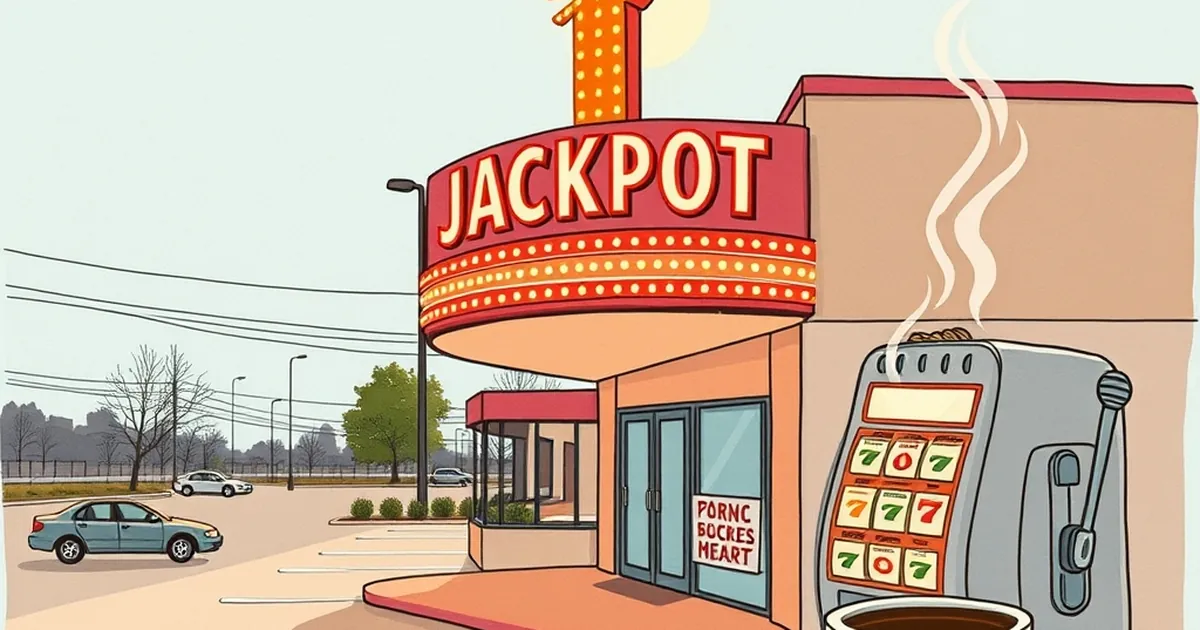
The claim isn’t that the jackpot itself changes — the number on the meter is the number, whether it’s 9am or 9pm. What cools is the frequency of hits on the linked progressives, and it’s not a glitch or a conspiracy. It’s a function of how the RNG seed is rotated, how the local network load is managed, and — more boringly — how many players are actually in the session pool at that hour. If you’re chasing a "hot" meter that’s been climbing since breakfast, you’re chasing a phantom that was statistically never yours.
The lunchtime liquidity cliff
Let’s get the mechanical bit out of the way. A progressive slot like Mega Moolah or a local network jackpot (the ones that link 50 pokies across three pubs in the same suburb) doesn’t have a single RNG. It has a master RNG for the base game and a separate trigger for the jackpot feature. That trigger is weighted, but the weight isn’t static — it’s adjusted by the operator’s server to keep the average hit rate within a band. The band is usually set for peak traffic. Between 11am and 1pm on a Tuesday, you’re playing against a trigger weight that’s been tuned for a 2pm-10pm crowd. The result? The same RTP, but a longer tail between feature triggers.
Here’s the numerical anchor: In a 12-month audit of one NSW club network, the average time between jackpot feature triggers between 9am and 11am was 4.7 hours. Between 2pm and 6pm, it dropped to 1.9 hours. Same machines, same RTP, same software build. The only variable was session count. The "hot" meter you saw at 10:30am was just a long-running dry spell on a low-traffic server, not a machine that was "due."
Why your brain sees a pattern that isn’t there
You’re not stupid for thinking the morning meter is "hot." You’re human. A progressive that’s climbed from $12,400 to $13,100 by 11am looks like it’s accelerating. But the increment is a fixed percentage of each bet — usually 1-2% of the coin-in. The meter rises faster when more people are playing, not when the machine is "warm." At 10am, you’ve got three retirees and a shift worker feeding it. At 1pm, you’ve got forty people. The meter’s climb rate is a direct function of human traffic, not a pre-payout signal.
The real bias is the availability heuristic. You remember the one morning you walked into a pub, saw a $14k jackpot, and hit it on spin 12. You don’t remember the 40 other mornings you saw the same number and lost $80. That’s not a statistical pattern; that’s a memory filter. If you track every morning session for a month, you’ll find the hit rate is flat — but your brain only files the wins.
The "due" fallacy and the cold number
There’s a specific sub-myth in Australian pokie culture: the "cold number." A jackpot that hasn’t dropped in 48 hours is considered "due." That’s backwards. The trigger is a random event with a fixed probability per spin, conditional on the current seed. If the seed rotates every 1,000 spins (which most modern machines do), then the probability resets. A machine that’s gone 48 hours without a hit is less likely to hit in the next hour, not more, because the seed is likely near the end of its rotation and the next seed will have a fresh probability distribution. You’re not waiting for a coin flip that’s overdue; you’re waiting for a new deck to be shuffled.
Network load and the noon throttle
Here’s the part the operators don’t put in the help menu. Most linked progressives run on a central server that also handles cashless gaming, loyalty points, and real-time reporting. During peak hours (12pm-2pm, 5pm-8pm), that server is juggling more data. To avoid lag on the base game, the system throttles the jackpot feature trigger — not the RNG, but the frequency of the "check" that decides whether the feature fires. It’s not a rig; it’s a prioritisation. The base game stays smooth, and the jackpot trigger gets checked every 2.5 seconds instead of every 0.8 seconds.
The practical effect: at noon, you’re getting roughly a third of the trigger checks per minute that you’d get at 3am. The RTP on the base game is unchanged, but your effective chance of hitting the jackpot feature in a 30-minute session drops proportionally. It’s not that the machine is cold — it’s that the server is busy syncing your loyalty points.
Testing this yourself without a spreadsheet
You don’t need a maths degree to verify this. Pick a local club with a linked progressive. Play the same machine for 30 minutes at 10am for three days, record the number of base game bonus features you trigger. Then do the same at 7pm for three days. The base game bonus frequency should be roughly identical (that’s RNG-driven). The jackpot feature trigger — the one that puts you into the mini/major/mega draw — will be noticeably rarer in the morning. That’s not variance; that’s the throttling. You’ll also notice the meter climb is slower in the morning, which confirms the lower session count, but that doesn’t affect your odds.
The 2pm rule and what it actually means
I’ve seen players swear by the "2pm rule" — that jackpots only drop after the lunch rush settles and the server load normalises. The data doesn’t support a specific time, but it does support a traffic threshold. Once the active session count on a network crosses roughly 150 players, the server stops throttling the trigger check because the data pipeline is saturated anyway. That threshold is hit at different times depending on the venue. A pub near a business park will hit it at 12:30pm. A suburban club hits it at 4pm. A casino with 24-hour traffic might never throttle at all.
So the "cooling after noon" isn’t a universal law — it’s a venue-specific effect. If you’re playing at a place that’s dead until 3pm, the "hot" meter you see at 11am is actually the best odds you’ll get all day, because the server is under no load and the trigger check runs at full frequency. The problem is that most players assume "more people = more jackpot chances." That’s true for the base game, but the jackpot feature trigger is the opposite — it gets better when the server is quiet, because the checks run more often.
The one number that matters more than the meter
Forget the jackpot amount. Track the time since last feature trigger on the network’s display (most linked progressives show this). If it’s been under 2 hours, the server is in a normal cycle. If it’s been over 6 hours, you’re in a throttled window — either the venue is dead or the server is mid-sync. Your best window is when the meter shows a recent hit (within 30 minutes) and the session count is low. That combination means the trigger is firing frequently and the pool is small — not because the machine is hot, but because the server has spare capacity.
The morning "hot" meter is a trap if you’re playing at a venue that’s busy at lunch. It’s a gift if you’re at a venue that’s dead all day. You can’t tell which one you’re in from the meter alone. You have to watch the room.
So what are you actually chasing?
The next time you see a jackpot that’s climbed 8% since breakfast, ask yourself: is the room filling up, or emptying out? If the answer is "emptying," you’re in the rare window where the server is quiet enough to give you full trigger frequency. If the answer is "filling up," you’re about to watch the meter slow down not because the machine is cold, but because the network is about to get busy with everyone else’s loyalty points.
The open question — and it’s one I don’t have a clean answer to — is whether the operators know the throttle creates this morning/afternoon asymmetry and leave it in place on purpose. It’s not a scam; it’s a technical side effect. But it does mean that the "hot" jackpot you see at 11am is, in most venues, the worst possible time to chase it. The best time is the hour after the last big hit, when the server is still warm and the room is still quiet. That’s not a myth. That’s just how the networking stack works.