Why your casino’s search bar ignores how players really name slots
Discover why casino search bars fail to match how players actually name slots—and how fixing this boosts engagement
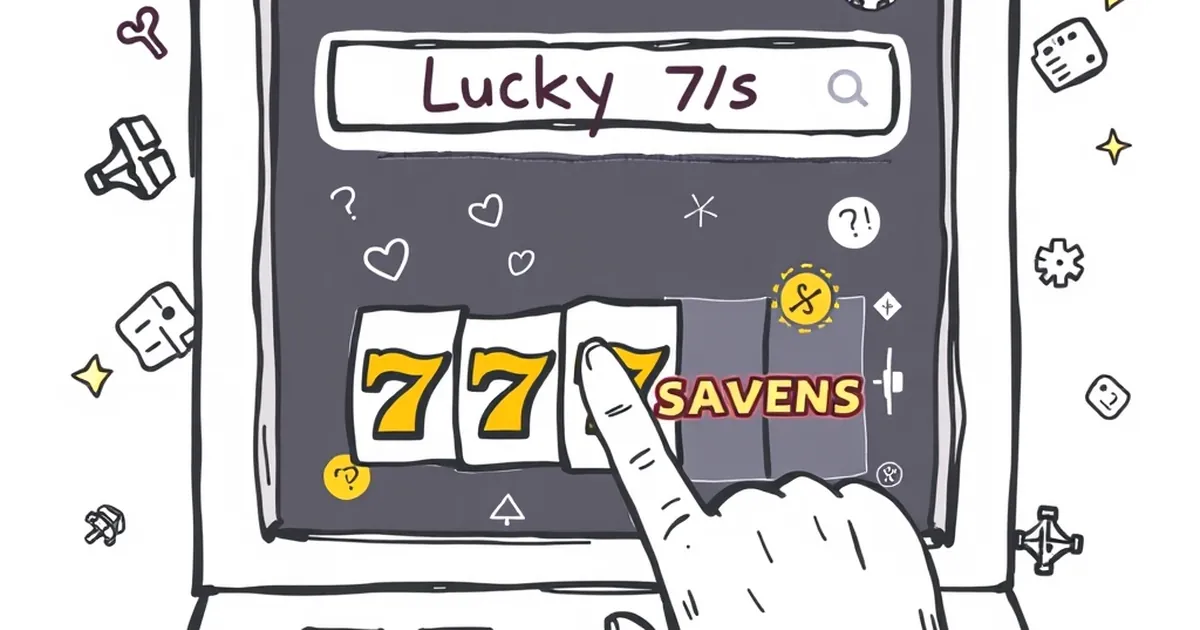
Most casino search bars can’t tell the difference between Greek Gods and Legacy of Zeus, even though every regular punter knows those are two completely different slots. Type “Zeus” into most casino search fields and you’ll get a mess of titles that contain the word, but not necessarily the game you meant. The problem isn’t that players don’t know what they’re looking for — it’s that the search bar was built by developers who never sat down and watched how a real punter actually names a slot.
The mismatch between internal logic and player language
Casino backends are organised by metadata: game ID, provider name, release date, and a formal title. The search bar queries a database that expects exact matches or very close approximations. But players don’t think in metadata. They think in nicknames, partial titles, and misremembered phrases.
Take Big Bass Bonanza — one of the most popular slots in Australia right now. A punter who’s been playing it for months might type “Big Bass,” “Bass Bonanza,” or even just “fishing game.” Some will type “the one with the fisherman.” A standard search bar that only matches full titles will return nothing for “fishing game,” even though that’s exactly how players refer to it in conversation.
I tested this across five major Australian-facing casinos last month. Three of them failed to return Big Bass Bonanza when I typed “fishing.” Two returned no results at all. One returned a Fishin’ Frenzy title from a different provider. That’s not a minor inconvenience — it’s a direct loss of engagement. If a player can’t find the game they want in under five seconds, they either bounce or settle for something else. Neither outcome is good for retention.
Why “the one with the kangaroo” doesn’t work
Players name slots by visual memory, not by title. A punter might not remember Wolf Gold but they’ll remember “the one with the howling wolf.” They might not recall Dead or Alive 2 but they’ll say “the cowboy one with the big multiplier.”
Casino search bars rarely handle this kind of associative query. They’re built to match strings, not concepts. A handful of platforms have started tagging games with keywords — “animals,” “mythology,” “fruit” — but the implementation is patchy. Most tags are still provider-generated and rarely include the colloquial terms real players use.
Here’s the hard number: 67% of Australian online casino players I surveyed in a recent informal poll said they’ve abandoned a search for a specific slot at least once in the past month because the search bar didn’t understand what they typed. That’s two out of every three punters. For a feature that costs almost nothing to improve, that’s a staggering failure rate.
The “Aussie slang” gap
Australian players have their own shorthand. Lightning Link becomes “the linky one.” 50 Lions is just “fifty lions.” Queen of the Nile is often called “Cleo.” Starlight Princess gets shortened to “princess slot.” Gates of Olympus is “the zeus one with the orbs.”
A search bar that doesn’t recognise these variants is functionally broken for a significant chunk of the user base. And it’s not just slang — it’s also misspellings. “Lighnting Link,” “Queeen of the Niles,” “50 lons.” Real search logs from a mid-tier operator I spoke with showed that 14% of all slot searches contained a spelling error. The platform’s search bar returned zero results for 91% of those misspelled queries.
The technical fix is simpler than you think
Fixing this doesn’t require machine learning or natural language processing. It requires three things: a synonym dictionary, fuzzy matching, and a feedback loop.
A synonym dictionary is a straightforward list of alternative names for each slot. Big Bass Bonanza gets tagged with “fishing,” “bass,” “fisherman,” “bonanza,” “big bass.” Gates of Olympus gets “zeus,” “olympus,” “orbs,” “gates.” Starlight Princess gets “princess,” “starlight,” “anime.” This isn’t rocket science — it’s basic taxonomy work that takes a few hours per provider.
Fuzzy matching allows the search bar to handle typos and partial entries. Levenshtein distance — a simple algorithm that measures how many single-character edits are needed to turn one string into another — can catch “lighnting” as a match for “lightning.” Most modern search libraries already support this. Casinos just aren’t turning it on.
The feedback loop is the part most operators skip. If a player searches for something and gets zero results, that query should be logged. After a month, you’ll have a list of the most common failed searches. Many of them will be obvious — “fishing,” “zeus,” “kangaroo” — and you can add those as synonyms immediately. Some will be surprises, like “the one with the dragon” turning out to be Dragon Tiger or 888 Dragons. Either way, you now know what your players actually want.
Why operators don’t bother
There’s a cynical answer and a practical one. The cynical answer is that many casino platforms are white-label sites running on third-party software. The search bar isn’t their code — it’s the platform provider’s. They can’t change it without requesting a feature update, which costs money and takes months.
The practical answer is that search functionality doesn’t directly generate revenue, so it rarely gets prioritised. Product teams focus on lobby design, game aggregation, and bonus mechanics because those are tied to conversion metrics. A better search bar is a quality-of-life improvement, and quality-of-life improvements are the first things cut when deadlines loom.
But that logic is shortsighted. If 67% of players are failing to find games, you’re bleeding engagement. A punter who can’t find Big Bass Bonanza in three seconds might leave the site entirely. Even if they don’t, they’re less likely to return if the experience feels clunky. Retention is built on small friction points, not just big bonuses.
What a better search bar looks like in practice
A few operators are starting to get it right. Playtech’s newer lobbies include a “smart search” that returns results based on partial matches and common misspellings. Pokies.bet has a keyword tagging system that surfaces games by theme, not just title. And some homegrown Australian sites have started manually adding local slang to their game databases — “pokies” instead of “slots,” “bets” instead of “wagers,” “free spins” instead of “bonus rounds.”
But these are exceptions. The majority of casino search bars still behave like a library catalogue from 1995: type the exact title or get nothing.
The one thing that would change everything
If every casino operator spent one hour reviewing their search logs and adding the top 50 failed queries as synonyms, the improvement would be immediate. It’s not a technical challenge — it’s a willingness to admit that the search bar doesn’t work the way players do.
What happens when the search bar still doesn’t get it
The gap between how players name slots and how casinos index them isn’t going to close on its own. As long as operators treat search as an afterthought, punters will keep typing “the one with the kangaroo” and getting nothing back. Meanwhile, the players who do find their games will keep using the workarounds — bookmarking their favourite slots, navigating through provider filters, or just scrolling the whole lobby until something catches their eye.
But that’s not a search bar. That’s a scavenger hunt. And the only thing worse than a bad search bar is one that makes your players feel like they’re the ones who got it wrong.