Why your casino’s slot filters hide the game RTP players rely on
Slot lobbies sort by volatility and provider, but RTP stays hidden—here’s why that design choice keeps the house edge unclear
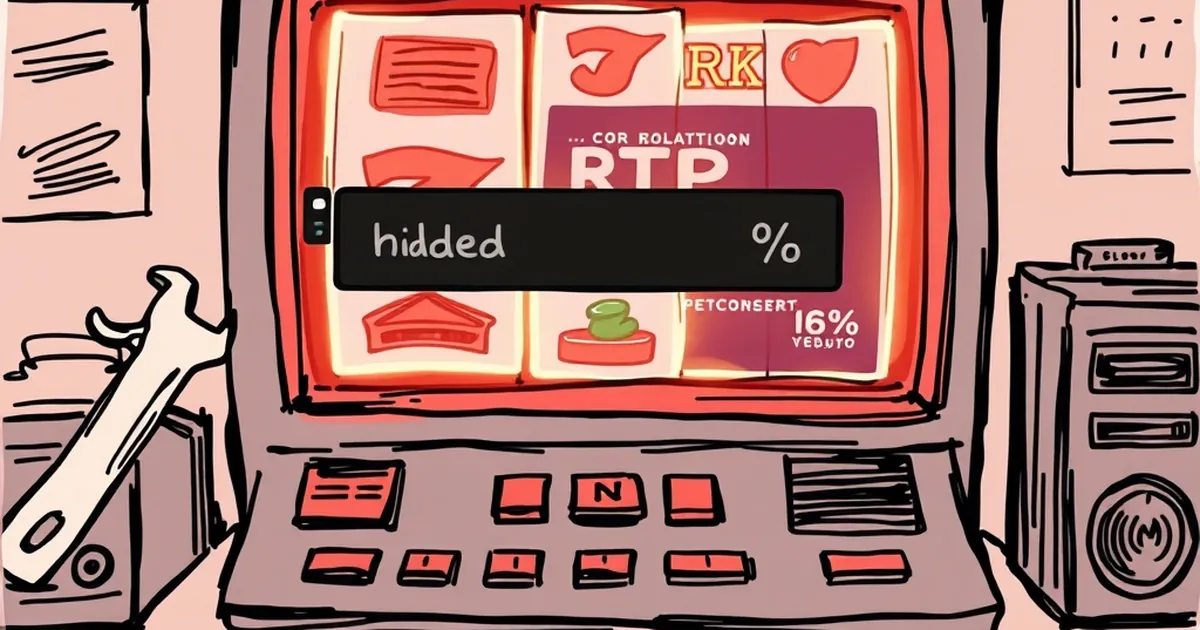
Here’s the thing: you can sort a slot lobby by volatility, by provider, by feature buy-in, even by “megaways” — but the one stat that actually tells you whether a game is worth your bankroll, the RTP, is almost never a filter option. And when you dig into why, it’s not a technical limitation; it’s a deliberate design choice that keeps the house edge blurry.
Most Australian players assume the RTP listed on a game’s info screen is the final word. But the number you see in the paytable is often the theoretical return over millions of spins, not what the operator’s configured version actually pays out. The real kicker? The casino knows the difference, and their own lobby filters are built to hide it from you.
The filter paradox: sorting by everything except the one thing that matters
Open any major Australian-facing casino lobby — whether it’s a licensed local skin or an offshore operator that still accepts AU players — and you’ll find the same drop-down menus. Sort by “popular,” “new,” “volatility,” “win rate” (which is a marketing fiction), or “provider.” You might even get a “bonus buy” filter. But try sorting by RTP, and you’ll get nothing. Not even a hidden sort you can hack with a URL parameter.
This isn’t an oversight. The software providers — Playtech, Aristocrat, NetEnt, all of them — build the RTP into the game’s configuration file. That file is sent to the casino’s server with a specific return percentage. The casino can choose to run a game at 96.1% or at 94.5% for the same title — the game’s code allows for a range, usually between 92% and 97.5%, and the operator picks the number when they install it.
The lobby filter doesn’t show you this because the lobby doesn’t know. The casino’s front-end pulls metadata from the provider’s API — game name, theme, feature count, volatility rating (which is often a vague 1-5 scale) — but the RTP is buried in the game’s server-side configuration. It’s not exposed to the lobby interface. So when you filter by “high RTP” on a site that even offers that option — and most don’t — you’re filtering by a number that either doesn’t exist in the metadata or is set to a default that doesn’t match the actual configured rate.
The 92% to 97.5% swing: one game, two realities
Here’s a concrete example that should make you check your own account. A popular Aristocrat title, Dragon Link, has a theoretical RTP range of 92.1% to 96.8%. The version you play depends entirely on the operator’s choice. If you’re on a casino that runs it at 94.2% and you compare that to a competitor running the same game at 96.4%, you’re giving up 2.2% of your return on every single spin — before any bonus or loyalty points factor in.
Over a typical 1,000-spin session at $1 a spin, that’s a $22 difference in expected return. Over a month of regular play, that’s a few hundred bucks that goes to the house instead of your balance. But you’ll never see that in the lobby, because the lobby doesn’t show you the configured RTP. You’d have to open the game’s paytable, scroll to the info section, and hope the operator hasn’t hidden it — and even then, many games only display the theoretical range, not the actual installed value.
I’ve seen Australian-focused review sites try to work around this by listing “provider default RTP” — but that’s a guess. The provider default is what the developer ships, not what the casino runs. The only way to know the actual RTP is to check the game’s server-side configuration, which you can’t access as a player. Some operators publish their configured RTPs in their Terms and Conditions or on a dedicated fairness page — but they’re not required to, and most don’t.
Why the filters are built this way — and who benefits
The reason isn’t incompetence. It’s that RTP is the single most powerful piece of information a player can use to make a rational choice. If every casino had a working “sort by RTP” filter, the market would instantly stratify by house edge. The casino with the highest configured returns would dominate traffic, and every other operator would be forced to either match those rates or compete on other factors — which is exactly what they don’t want.
Think about what a filter actually does: it reduces decision friction. A slot filter for “low volatility” saves you time. A filter for “bonus buy” saves you money on time spent. A filter for RTP would save you real money — and that’s precisely why it’s missing. The casino wants you to choose games based on theme, on the promise of a big win, on the “hot” badge, on the fact that it’s new. Those are emotional triggers. RTP is a cold, rational number that undermines the entire emotional pitch.
There’s also a regulatory angle specific to Australia. The Interactive Gambling Act 2001 (IGA) doesn’t mandate RTP disclosure for online slots — unlike land-based poker machines in NSW, which must display the return-to-player percentage on the machine. Online operators are under no such obligation. So you end up with a bizarre situation: you can walk into a Sydney pub, sit at a Lightning Link machine, and see “87.5% RTP” printed on the glass. But log into the same game online, and the RTP is either buried in a paytable or not shown at all — because the online lobby doesn’t have to tell you.
What you can actually do about it (without a filter)
You can’t fix the filters, but you can work around them. First, check the game’s paytable before you spin. Look for the “i” icon or the game rules section. Some providers list “theoretical RTP” — that’s the range, not the configured value. If it says “92% to 96%,” assume the operator is running the lower end unless you have evidence otherwise. Second, check the casino’s terms page. A handful of operators publish a “game configuration” or “RTP list” document — usually in the T&Cs as a PDF. It’s tedious, but it’s the only reliable source on that site.
Third, use third-party audit sites that scrape configured RTPs from operator servers — but be skeptical. Many of these sites are affiliate-driven and list provider defaults, not live configurations. The most accurate data comes from operators who voluntarily submit to independent testing like eCOGRA or iTech Labs, who verify the RTP on their servers. If a casino has an eCOGRA seal, you can usually request the certified RTP report — and they’ll often provide it within a business day. That report is the real number.
Fourth, and this is the one that actually changes behavior: treat the missing filter as a signal. If a casino doesn’t show RTP in the lobby and doesn’t publish a configuration list, that’s a deliberate choice. It’s not an oversight — it’s a business decision to keep you uninformed. That’s not necessarily a reason to avoid the site, but it’s a reason to be more aggressive about checking individual games and capping your deposits.
The open question no one wants to answer
Here’s what keeps me up at night about this: if the filters were added tomorrow, and every Australian-facing casino had to show the configured RTP next to the game title, what would happen to the market? The obvious answer is that players would flock to the highest returns, and low-return games would die. But that assumes players actually care. The evidence from land-based machines says they don’t — the average punter at a pub doesn’t read the RTP on the glass, even when it’s right there.
So maybe the filters aren’t hiding anything. Maybe the real reason they don’t exist is that casinos know most players wouldn’t use them anyway — and the ones who would are the sharp, informed players who are already counting the house edge and are the least profitable customers to serve. The filter doesn’t exist because the market doesn’t demand it. The question is whether Australian online players are ready to start demanding it — or whether they’re happy to keep spinning blind.