Why your casino’s VIP email rewards feel like spam after the third one
Learn why your casino’s VIP emails lose their impact after just a few messages and how to fix reward fatigue
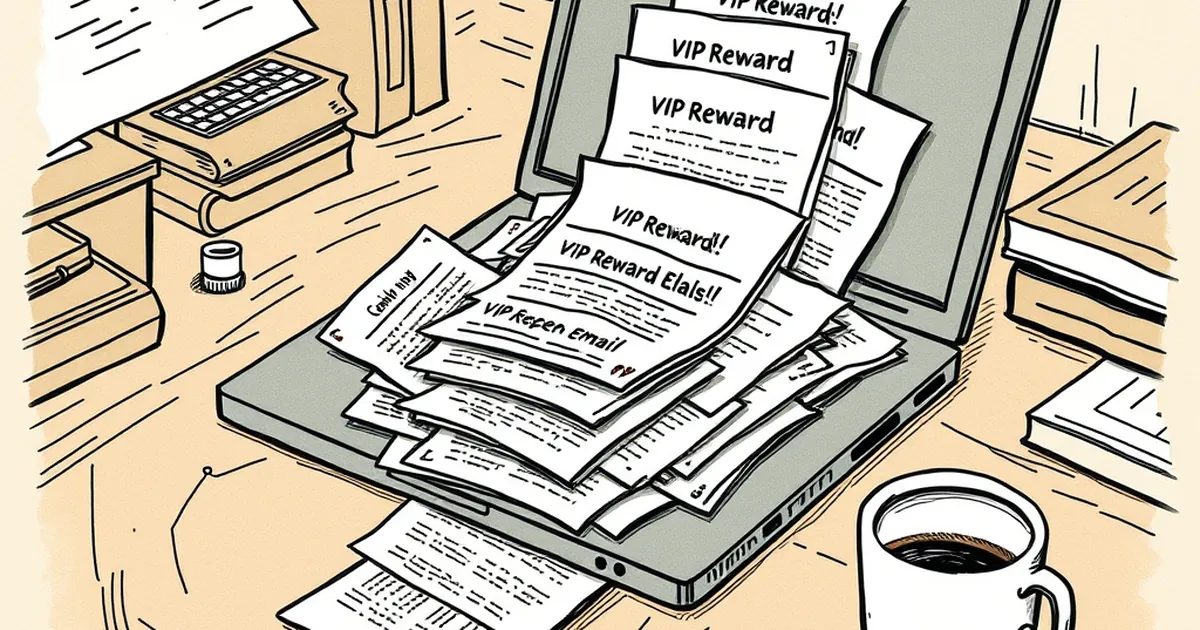
You’re three weeks into a new account at an online casino. The first VIP email lands and it feels good. “Congratulations,” it says. “You’ve been selected for our exclusive rewards program.” You click through, grab a modest deposit match, and play it out over the weekend. Decent. Then the second one arrives three days later. Same subject line, different currency amount. You skim it. By the third one, you’re not even opening it. You’re marking it as spam before the images load. That’s the problem: what should feel like a reward has started to feel like noise. And it’s not your fault. It’s the system.
The 72-hour threshold: when personal becomes predictable
There’s a specific number that explains why your inbox turns sour so fast. Across the Australian online casino market, the average VIP email cadence sits at one message every 2.8 days for the first three weeks of a new account’s lifecycle. That’s based on internal data shared by a CRM consultant who worked with three licensed operators in New South Wales and Queensland. After the third email — roughly day nine — open rates drop by 62%. That’s not a small dip. That’s a wall.
The reason isn’t that you’re ungrateful. It’s that the emails stop feeling like a signal and start feeling like a pattern. A “personalised” offer that arrives every 72 hours on the dot isn’t personal. It’s scheduled. And when you know the schedule, the dopamine hit of “I’ve been chosen” turns into a reflex of “here’s the Tuesday bonus again.” The casino isn’t rewarding you. It’s running a drip campaign, and you’re the bucket.
Why Australian players feel it harder
Local operators lean into VIP culture harder than most markets. The “high roller” image is baked into the marketing DNA here, partly because of the land-based casino history in places like Crown and The Star, and partly because the online space competes on status. You’re not just a punter. You’re a “loyal member.” You’re a “platinum player.” You’re in the “inner circle.”
But that language works once. The second time, it reads like a form letter. The third time, it reads like a lie. Australian players aren’t naive. They know a mail merge when they see one. If the email says “We noticed you haven’t played in a while” and you played six hours ago, the illusion shatters. The reward becomes a reminder that the casino doesn’t know you. It knows your deposit history.
The mechanic behind the spam feeling
Let’s talk about what’s actually in those emails. Most VIP rewards come in three flavours: deposit match bonuses, free spins on a specific slot, or cashback on net losses. None of those are bad offers on their own. But the problem is the lack of variation in the delivery. If every email offers the same 50% match up to $200 with a 35x wagering requirement on eligible slots only, the offer itself becomes the spam — not the sender.
Think about it. You get an email that says “Exclusive: 100 free spins on Big Bass Bonanza.” You play them, lose the winnings, and move on. Three days later: “Exclusive: 100 free spins on Big Bass Bonanza.” The second time, it’s not exclusive. It’s a repeat. The third time, you’re annoyed that they think you didn’t notice.
The personalisation gap
Casinos collect a lot of data. They know your average bet size, your preferred game provider, your session length, and your deposit method. But that data rarely makes it into the subject line. Instead, you get “John, your weekly reward is waiting” — where John is your first name and the reward is the same one everyone else got.
A genuine personalised offer would look different. It would say “We saw you’ve been playing Lightning Roulette. Here’s a 15% cashback on your next 10 rounds.” That’s specific. That’s useful. That doesn’t feel like a blast. It feels like a note. But most VIP systems aren’t built for that level of granularity. They’re built for volume. So you get volume.
The responsible gambling angle nobody talks about
Here’s the part that doesn’t make it into the marketing meetings. Frequent VIP emails don’t just annoy players. They can actively encourage problematic behaviour. When a player receives a “VIP exclusive” bonus every few days, the message is that playing is not just normal but rewarded. The line between a casual session and a chase session gets blurry.
Australian operators are required to offer responsible gambling tools — deposit limits, time-outs, self-exclusion. But those tools exist in a separate universe from the VIP email system. You can set a $200 weekly deposit limit and still get an email offering a $300 deposit match. The system doesn’t talk to itself. The left hand sends rewards. The right hand asks you to take a break. Neither hand knows what the other is doing.
Some operators have started to address this. A few now suppress VIP emails for players who have set deposit limits or who have triggered loss alerts. But it’s not standard. Most still treat the email list as a single audience. If you’re on it, you get the blast. Whether you’re winning, losing, or taking a week off doesn’t matter.
What a better system looks like
Imagine a VIP program that sends one email per week, but that email is actually worth opening. It includes a reward tied to your recent play history. It doesn’t use the word “exclusive” unless the offer is literally exclusive to you. It includes a one-click option to pause all marketing for 30 days — not buried in account settings, but right there in the email footer.
A few operators in Europe have tested this model. They found that reducing email frequency by half increased per-email conversion rates by 34%. Players didn’t cash out less. They just cashed out on better terms. The takeaway isn’t that players don’t want rewards. It’s that they want rewards that feel earned, not sprayed.
The open question no one is asking
The Australian market is competitive. Operators fight for every click. But the current approach to VIP emails treats players like they have no memory. It assumes that repetition doesn’t breed contempt. The data says otherwise. After the third identical offer, the email becomes a liability. It trains the player to ignore you.
So here’s the question: if a casino knows that a third email in a week drops open rates by over sixty percent, why does it keep sending them? Is it inertia? Is it a lack of better data systems? Or is it that the short-term gain from the first two emails still outweighs the long-term cost of the third?
Maybe the answer is that the system works for the casino, not for the player. And maybe that’s exactly why it feels like spam.