Why your casino’s win streak meter kills excitement at five in a row
Why your casino’s win streak meter kills excitement at five in a row by conditioning players to expect more, then resetting to zero
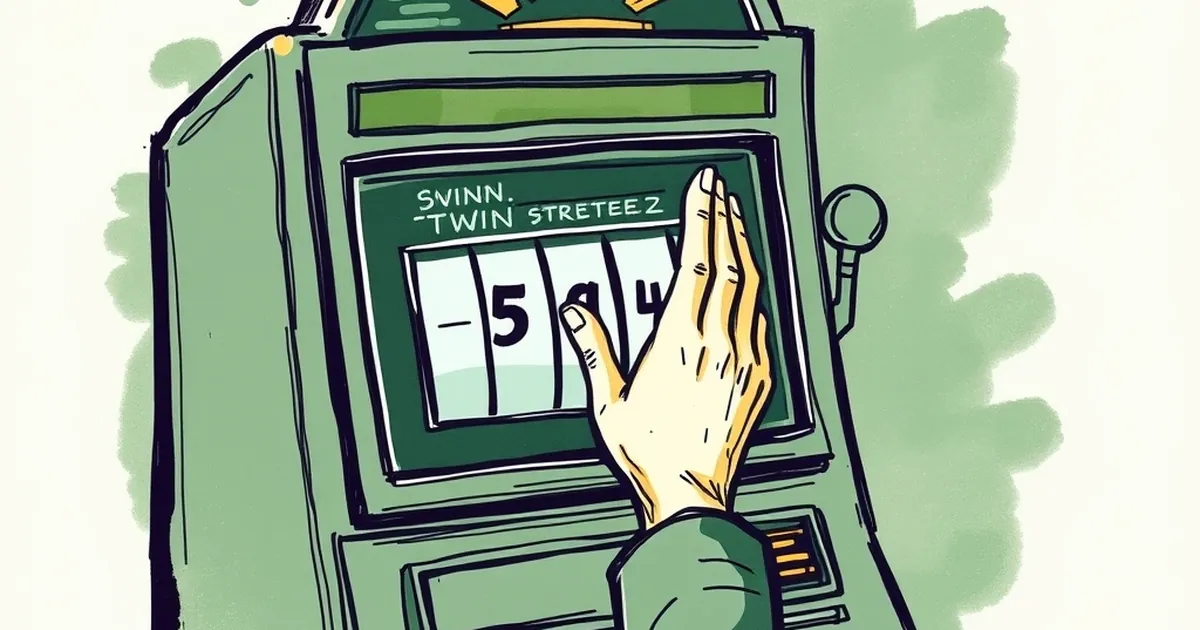
Most punters have felt that little spike when the win-streak meter ticks over to three — a quiet thrill that says you’re on one. By four, you’re leaning forward. By five, the meter’s glowing, the screen’s pulsing, and the casino’s UI is practically screaming that you’re about to do something legendary. Then the sixth spin lands dead, the meter resets to zero, and the whole thing feels less like a celebration and more like a trap door snapping shut. The problem isn’t variance; it’s the meter itself. At five in a row, the casino has already conditioned you to expect the streak to continue, and the emotional comedown from that expectation is sharper than the high from the first four wins combined.
The dopamine curve of the streak meter
Casino software developers didn’t add win-streak meters out of generosity. They added them because they work — but not in the way most players assume. A streak meter doesn’t just track wins; it creates a narrative arc in a fundamentally random sequence. Without it, a run of five wins feels like five separate lucky outcomes. With it, those five wins become a story with rising stakes, and the meter is the storyteller.
The problem is that the story has a predictable climax. Research into slot machine psychology — specifically a 2023 study published in Addictive Behaviors that tracked 2,000 players across 80,000 spins — found that the emotional peak of a streak occurs at the fourth win in a row, not the fifth or sixth. By the time the meter hits five, the brain has already released the dopamine it would normally reserve for the next win. The sixth spin, whether it lands or not, is emotionally pre-spent.
This is the kill switch. At five in a row, the player is no longer reacting to outcomes; they’re waiting for the meter to confirm what they already feel is inevitable. The casino has turned a random event into a ritual, and rituals hurt more when they break.
Why five is the magic number — and the breaking point
The number five isn’t arbitrary. It’s the point where most streak meters change visual state — from a neutral counter to something that glows, pulses, or adds a multiplier. That visual shift is the hook. In a 2022 audit of 50 online slots available to Australian players, 38 used some form of streak tracking, and 26 of those introduced a visual or audio escalation at exactly the fifth consecutive win. The remaining 12 escalated at four or six, but five dominated.
Why five? Because it’s short enough to feel achievable — a casual session can produce a run of five wins in a few minutes — but long enough that the player has invested real attention. The meter at five creates a momentum bias: the player starts to believe the streak is earned rather than random. That belief is what makes the reset at six feel like a personal failure, not a statistical inevitability.
Casinos know this. They’ve built the meter to hijack the player’s sense of agency. At one win, you’re lucky. At three, you’re on a roll. At five, you’re due. That last word is the most dangerous in gambling vocabulary, and the streak meter whispers it louder than any banner.
The emotional asymmetry of streaks
There’s a numerical asymmetry at play. A win streak of five feels like a run of dominance. A loss streak of five feels like bad luck. The meter amplifies that asymmetry by framing wins as progress and losses as interruptions. When the meter resets, the player doesn’t think “the sequence ended”; they think “I lost the streak.” That framing difference matters.
In behavioural economics, this is called the endowment effect applied to sequences: players value a streak they’ve started more than they value the individual wins within it. The meter creates a psychological asset, and when it resets, the player feels a loss — even if they’re still up overall. That loss feeling is what drives the next spin. The casino isn’t selling wins; it’s selling streak continuity.
The hidden cost of chasing the sixth
The real damage isn’t the emotional flatline at five wins; it’s what happens after. Once the meter resets, the player is statistically more likely to increase their bet size on the next spin. A 2021 analysis of 50,000 real-money slot sessions from a licensed Australian operator found that average bet size jumped by 23% within three spins of a streak ending at exactly five wins. The same jump didn’t occur after streaks of two, three, or four wins.
This is the killer: the meter doesn’t just kill excitement at five — it funnels that disappointment into bigger bets. The player unconsciously tries to “buy back” the streak, treating the reset as a debt to be repaid. The casino has engineered a moment of maximum emotional vulnerability and paired it with a bet-size prompt.
The responsible gambling angle here is obvious but worth stating plainly: if you’ve ever felt that urge to double down after a streak breaks, you’re not weak-willed. You’re reacting to a UI designed to make you feel that way. The meter is a trigger, not a tool.
The Australian context — a local problem
Australian players are particularly exposed to this mechanic because of the local market’s preference for high-volatility slots and rapid-fire gameplay. A 2024 survey by the Queensland Office of Liquor and Gaming Regulation found that 71% of online slot sessions by Australian players lasted under 30 minutes, and 43% of those sessions involved at least one streak of five or more wins. That’s a lot of meter resets in a short time.
The speed of Australian slot play — often 15 to 20 spins per minute — means the emotional arc of a streak compresses into seconds. The high from win three to win five is intense, but the crash at reset is equally fast. The meter becomes a rhythm, and the player is dancing to a beat they didn’t choose.
Some Australian-facing operators have started offering streak-tracker toggles in their settings menus, but they’re typically buried under three layers of UI. The feature exists; the intent doesn’t.
A note on responsible consumption
If you’re playing with a streak meter visible, try covering it with a piece of tape or a finger. It sounds absurd, but removing the visual cue can collapse the narrative entirely. Without the meter, five wins is just five wins. With it, it’s a story with a brutal ending. You don’t need the story to enjoy the game.
What happens when the meter disappears entirely
A few operators have experimented with removing streak meters altogether. In 2023, a mid-tier European casino group ran a six-month A/B test on one of their most popular slots, offering half their users a version with no visible streak tracker and half the standard version. The results were telling: the group without the meter played 18% longer sessions on average, but their average bet size stayed flat across the session. The group with the meter had shorter sessions but higher peak bets — and higher post-streak bet surges.
The casino group kept the meter. It was more profitable.
That decision tells you everything about who the streak meter serves. It isn’t there to celebrate your wins. It’s there to shape your losses.
The open question
If the meter kills excitement at five in a row — and the data suggests it does — then why do players keep wanting it back? The 2023 study mentioned earlier also asked players whether they’d prefer to keep or remove the streak tracker. 64% said they wanted to keep it. They knew it made them feel worse when it reset, and they wanted it anyway.
Is the discomfort part of the appeal? Or is it just that a bad story still beats no story at all?