Why your loyalty program feels pointless after five visits
Most casino loyalty programs reward top spenders while offering little to regular players after just a few visits
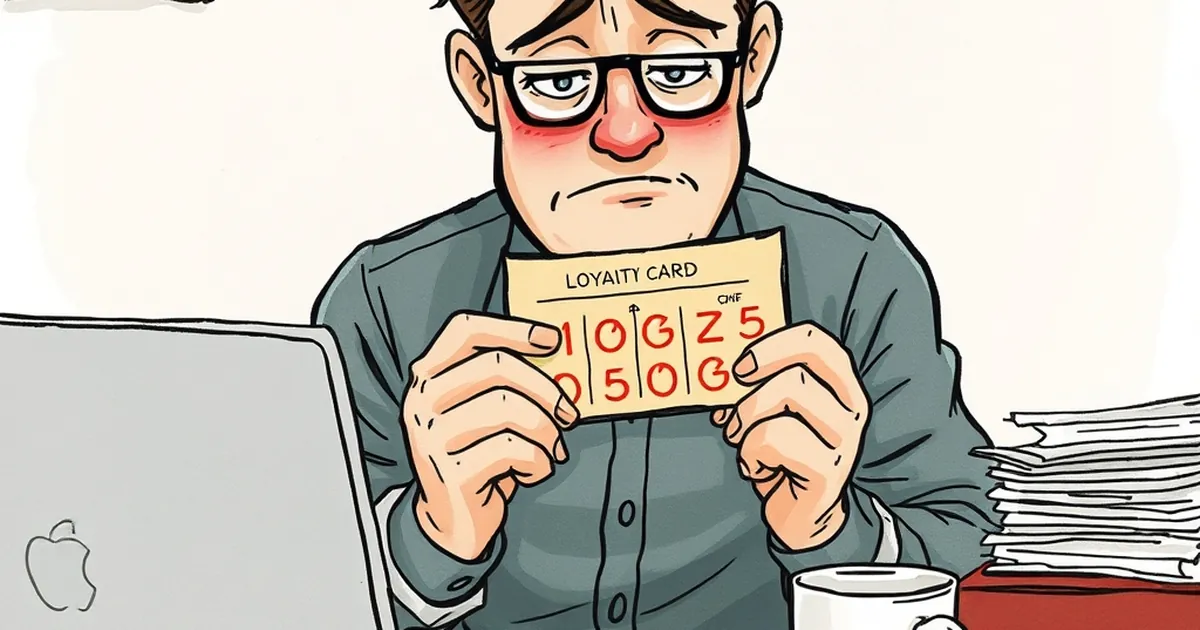
You sign up, make your first deposit, and suddenly you’re a “Gold” member. You’ve got a personal account manager you’ll never call, a birthday bonus that’s capped at $10, and a points multiplier that takes 47 hands of blackjack to earn a single dollar in comps. By visit five, that loyalty card feels about as valuable as a wet drink coaster. The problem isn’t that you’re ungrateful. The problem is that most casino loyalty programs are mathematically designed to look generous while delivering almost nothing to anyone who isn’t betting at the top 2% of the player pyramid.
The points-per-dollar disconnect
Here’s the core issue: loyalty points in most Australian online casinos are pegged to turnover, not to profit. That sounds fair on paper, but the conversion rates are where the sting lives. A typical program gives you 1 point per $10 wagered on pokies, and 1 point per $20 on table games. You need 100 points to redeem $1 in bonus credit. Do the math: you’re effectively getting 0.1% back on pokies and 0.05% back on blackjack. That’s not a loyalty program. That’s a 0.1% cashback scheme dressed up with tiers.
The kicker is the wagering requirement attached to those points. Many casinos require you to play through your redeemed bonus credit 15x or 20x before you can withdraw it. So that $1 you earned from $1,000 in pokies spins now needs another $15 in action before it’s yours. You’re not earning rewards. You’re earning the right to earn rewards.
How the tiers actually work
The real trap is the tier progression. Most programs use a status-based system where you earn “status points” separate from redeemable points. Status points reset every three or six months. If you don’t hit the next tier within that window, you drop back to the bottom. This creates a treadmill effect where players chase status just to maintain the same mediocre earn rate they had before.
Take a mid-tier program from a major operator: “Silver” status requires 5,000 status points per quarter. You earn 10 status points per $1 wagered on pokies. That’s $500 in wagers per quarter just to stay Silver. If you slow down or take a break, you’re back to “Bronze,” where the earn rate is half as good. The house isn’t rewarding loyalty. It’s punishing inconsistency.
The VIP trap: private tables and public losses
The high-roller programs are a different beast, but not a better one. If you’re betting $5,000+ a month, you might get invited to a “VIP” program with a dedicated host, cashback on net losses, and invitations to events. Sounds great until you realise the cashback is typically 5-10% of your net losses, paid as bonus credit with 25x wagering. If you lose $10,000 in a month, you get $1,000 in bonus credit that requires $25,000 in turnover to unlock. Statistically, you’ll lose most of that too.
The real value in VIP programs isn’t the cashback. It’s the deposit limits. High rollers often get negotiated deposit limits that are higher than the standard $5,000 daily cap. For someone betting $2,000 a hand, that’s actually useful. But for the average punter? The VIP program is a mirage. You see the private tables and the branded merchandise, but the actual financial benefit is smaller than a standard 10% deposit bonus you can claim without any loyalty status.
The birthday bonus that isn’t
Let’s talk about the birthday bonus. Almost every loyalty program offers one. In most cases, it’s a $10 free chip or 50 free spins on a specific slot with an RTP of 94.2% — well below the industry average of 96.5%. The wagering requirement is usually 40x. So your $10 birthday gift requires $400 in turnover to withdraw. The expected value of that bonus is roughly $1.20. That’s not a gift. That’s a marketing expense designed to get you to log in and play on a day you might otherwise spend with family.
Why the math doesn’t work for you
The fundamental problem is that loyalty programs are funded by the house edge. The casino sets aside a percentage of its theoretical win — usually 5-10% — to fund the program. That sounds reasonable until you realise the house edge on pokies averages 3-4%. So the casino is giving back a fraction of a fraction of what it expects to win from you. The rest goes to overhead, marketing, and profit.
For the player, the expected return from a loyalty program is roughly 0.1% to 0.3% of total wagered. Compare that to a standard deposit bonus, which can offer 100% match up to $500 with 30x wagering. That bonus has an expected value of roughly 3-5% of your deposit. The loyalty program is offering one-tenth of that value, spread across months of play.
The one stat that matters
Here’s the number that should make you rethink every loyalty card you hold: 0.18%. That’s the average effective cashback rate of the top five Australian online casino loyalty programs when you factor in wagering requirements and tier reset penalties, based on a player wagering $10,000 per month over six months. For context, a standard 1% cashback program with no strings attached would give you $100 on that same volume. The loyalty program gives you $18 in real, withdrawable value. The rest is smoke.
What actually works
Some programs are better than others, and a few are genuinely decent. The ones worth your time share three traits:
- No wagering on cashback. If a program offers cashback on net losses with 1x wagering, that’s real value. It’s rare, but it exists.
- Flat earn rates. Programs that don’t reset your tier every quarter are better for casual players. You earn at the same rate regardless of how often you play.
- Direct comps. Some land-based casinos in Australia still offer comp dollars that can be spent on food, drinks, or accommodation without any playthrough. Those are worth more than bonus credit by a wide margin.
The online-only programs are almost universally worse than their land-based counterparts because they have no physical goods to offer. Your points can only be converted into more play, which means the casino is effectively lending you your own losses back with a tax attached.
So why do we keep chasing status?
The psychology is the same as the game itself. The tier progress bar fills up, the email says “You’re just 200 points away from Gold,” and you feel like you’re leaving value on the table if you don’t push for it. But that value is an illusion. The marginal benefit of moving from Silver to Gold is usually a 0.05% increase in earn rate. You’d have to wager $200,000 to get an extra $100 in value. That’s not a reward. That’s a job with a terrible hourly rate.
The next time you log in and see that loyalty points balance, ask yourself: if the casino offered you 0.18% cashback with no tiers, no resets, no wagering, would you take it? Because that’s what you’re getting now, just with extra steps and a fake sense of progression. The real question isn’t whether the program is worth it. It’s whether the program is designed to make you feel like you’re winning while you’re actually just playing longer for the same outcome.