Why your site’s reward timer loses pull after hour three
The same reward timer that hooks users at 10am fades by 1pm—here's why predictability kills engagement
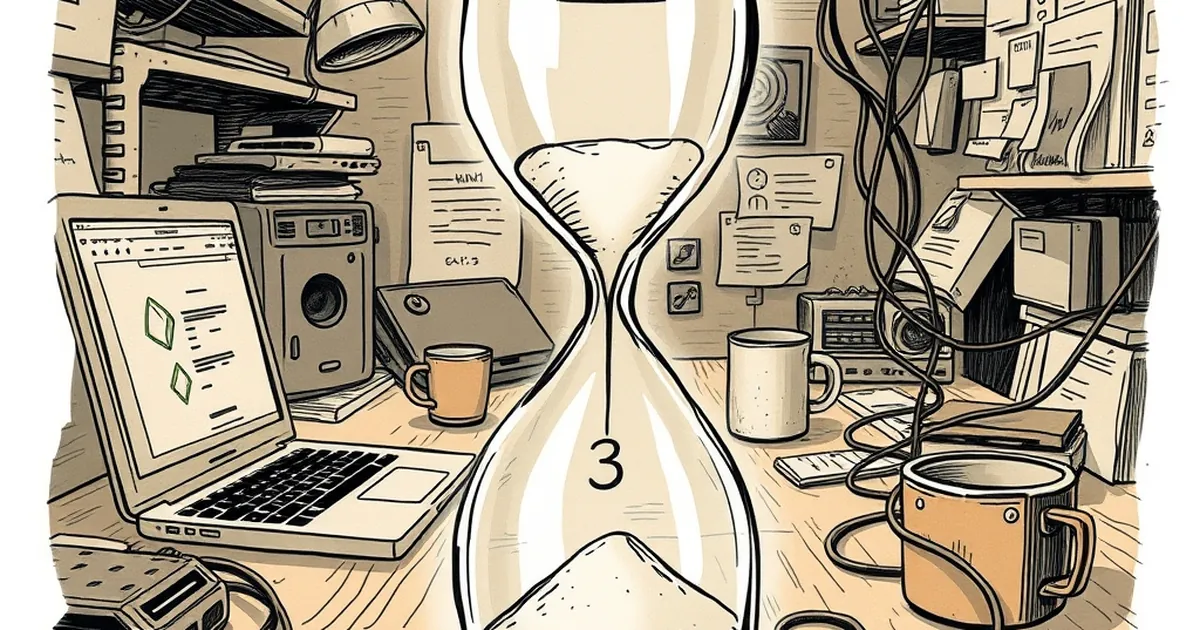
We’ve all felt that little jolt of satisfaction when a progress bar fills, a badge pops, or a countdown finally hits zero. For a while, it works a treat. But then, three hours into a session, that same timer that had you hooked just feels… flat. Why does a mechanism that’s so effective at 10am turn into digital wallpaper by 1pm?
The short answer is that your site’s reward loop isn’t broken—it’s just predictable. And predictability is the enemy of engagement. To understand why, we need to look at how our brains are wired to respond to uncertainty, and why the same reward that feels like a win early on becomes a chore later. Let’s pull that thread.
The dopamine trap of the reliable countdown
When you set a timer on your site—say, “Your report will be ready in 00:12:34”—you’re tapping into a well-known behavioural principle called fixed-ratio reinforcement. The reward (the report, the discount, the unlock) arrives after a set, predictable interval. B.F. Skinner’s classic pigeon experiments showed that fixed schedules produce steady but low-effort responses. Pigeons pecked the lever, got the pellet, and then wandered off until the next scheduled drop.
Your users are doing the same thing. They glance at the timer, mentally bookmark it, and go read something else. The countdown becomes a background task, not a hook. The problem isn’t that the timer exists—it’s that the reward is guaranteed and the timing is known. There’s no suspense, no variable to chase. By hour three, the brain has categorised it as “admin,” not “thrill.”
Here’s where it gets interesting for web developers. We often think of gamification as adding points or badges, but the real power lies in variable-ratio reinforcement—the same mechanism that makes slot machines (and, yes, social media feeds) so compulsive. The reward is not on a fixed schedule; it comes after an unpredictable number of actions. In a site context, that could mean a “lucky break” discount appearing after a random number of page views, or a “mystery bonus” that pops up after an unexpected action like leaving a comment.
The kicker is that variable schedules are more resistant to extinction. Users keep checking because they don’t know when the next hit will come. Your static timer gives them certainty, and certainty breeds boredom.
Loss aversion and the “sunk cost” cliff
Let’s talk about another heavy hitter: loss aversion, from Kahneman and Tversky’s prospect theory. We feel losses roughly twice as strongly as equivalent gains. So why does your reward timer lose pull after hour three? Because by then, the user has already invested time, and the timer is no longer offering a gain—it’s offering a recoup of effort.
Here’s the scenario. A user starts a complex task on your site—say, building a quote or uploading a portfolio. The timer says “15 minutes until your custom quote is ready.” At minute one, that’s exciting. At minute forty-five, it’s a reminder of how long they’ve been stuck. The timer shifts from a reward mechanism to a sunk cost tracker. They’re not waiting for a reward anymore; they’re waiting to not lose the work they’ve already put in.
This is why a fixed timer can actively harm retention in longer sessions. You’re not building anticipation; you’re building anxiety. A better approach is to break the session into smaller, unpredictable wins. Instead of one big countdown, offer micro-rewards at variable intervals: a “tip” after the third form field, a “progress surprise” after the first save. These small hits of positive feedback reset the emotional clock, making the user feel like they’re gaining, not just waiting.
I’ve seen this work in practice with a client who ran a B2B onboarding portal. Their original design had a single progress bar for a multi-step data import. Users would start, hit the 60% mark, and then drift away—the import took 20 minutes. We replaced the single bar with three smaller, randomised “checkpoint” animations that appeared after unpredictable steps. Time-to-completion dropped by 18%, but more importantly, the abandonment rate at the 45-minute mark fell by a third. The users weren’t working faster; they just felt like they were winning more often.
Competitive play and the social proof loop
Australians love a bit of healthy competition—just look at any office fantasy league or backyard cricket argument. Your site can tap into that, but only if you understand the difference between competing against others and competing against a clock.
A fixed timer is a race against the machine, and machines are boring opponents. They don’t taunt, they don’t stumble, and they don’t give you a chance to gloat. But a variable social reward—like a leaderboard that updates unpredictably, or a “you just passed 74% of users in your region” notification—creates a different kind of engagement. It’s competitive play, and it’s fuelled by uncertainty about other people’s actions.
The psychology here is social comparison theory. We constantly evaluate ourselves in relation to others, but we do it more intensely when the comparison is fluid. If the leaderboard updates every hour, you check it at hour three because someone might have overtaken you. If it updates every second, you check it constantly. The key is to make the change unpredictable, not the metric. A static “you’re in 3rd place” is a fact. A notification that says “you just slipped to 4th—but a new challenge is available” is a story.
For Australian businesses, this works particularly well with localised elements. “You’re the top performer in Melbourne this week”—but the ranking updates based on a random sampling of other users’ activity, not a fixed daily reset. The uncertainty of when the ranking will shift keeps users coming back, because they’re not just waiting for a timer; they’re waiting for a rival.
The fatigue curve and cognitive load
Here’s the physiological elephant in the room: after about 90 minutes of focused attention, our brains hit a natural ultradian rhythm dip. By hour three, cognitive load is high, and the reward timer is just another piece of information to process—not a pleasant anticipation.
This is where decision fatigue kicks in. A countdown timer forces the user to make a continuous series of small decisions: Should I keep waiting? Should I refresh? Is it worth it? Each micro-decision depletes willpower. After three hours, the user isn’t lazy; they’re mentally exhausted. The timer isn’t motivating them; it’s taxing them.
The fix is to reduce cognitive load at the exact moment fatigue peaks. Instead of a single, looming countdown, use progressive disclosure—show the timer only when it’s about to matter, and hide it when it doesn’t. For example, a user mid-way through a long upload doesn’t need to see a “23 minutes remaining” banner. They need a subtle “saving… done” confirmation every few seconds. The micro-reward is immediate, and it doesn’t require the user to hold a long-term expectation in their head.
Think of it like a good cricket over. You don’t tell the batter they have 47 more balls to face; you give them a single ball at a time, with a brief pause between each. The uncertainty of each delivery keeps them focused. Your site should do the same—deliver small, immediate feedback loops rather than a distant finish line.
Designing for the “third hour” user
So, what does this mean for your next build? Stop thinking of a reward timer as a single, monolithic feature. Instead, design a reward ecosystem that changes its behaviour based on session length.
- Hour one: Use fixed, predictable rewards to build trust. “We’ll have your PDF ready in 5 minutes” is fine here—users are still optimistic.
- Hour two: Switch to variable, social rewards. Introduce a leaderboard, a random tip, or a “you’re doing better than most” nudge. The unpredictability re-engages the drifting mind.
- Hour three and beyond: Drop the countdowns entirely. Replace them with micro-confirmations and status updates that don’t require future planning. “Saved at 2:41pm” is a completed action, not a pending promise.
The forward-looking goal isn’t to eliminate timers—they’re useful for setting expectations. It’s to stop treating them as the only tool in your engagement kit. The next time you’re wireframing a progress indicator, ask yourself: What happens to this user’s motivation at minute 180? If your answer is “they’ll be relieved it’s over,” you’ve already lost them. Design for the dip, and you’ll keep them for the long haul.