Why your slot's bonus buy hides the real gamble behind it
Bonus buys promise fast action, but the math reveals a hidden house edge spike you’re accepting with every purchase
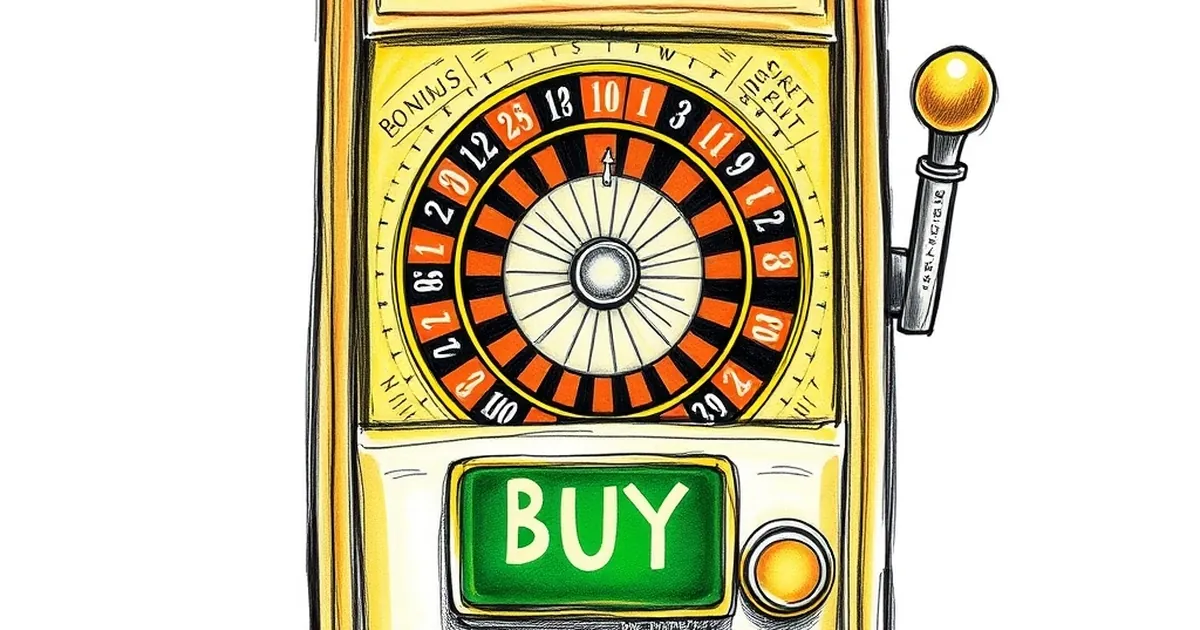
Bonus buys promise a shortcut to the action. Skip the base game grind, pay 100x your stake, and land straight in free spins where the multipliers live. But the math behind those buttons reveals a different story: you’re not buying a feature, you’re buying a volatility spike that the casino has already priced in—and in most cases, that price is a house edge jump of 2% to 4% compared to playing the same slot organically. The real gamble isn’t whether the bonus hits; it’s whether you’ll recognise the odds you just accepted.
The Priced-In Paradox: Why Bonus Buys Cost More Than They Pay
Every slot with a bonus buy has two RTP figures: the base game RTP and the bonus buy RTP. They’re rarely the same. Take a popular title like Sweet Bonanza—its standard RTP sits at 96.48%, but the bonus buy RTP drops to 96.42%. That’s a tiny gap, sure, but it’s a deliberate one. The provider isn’t trying to rip you off; they’re trying to balance the extreme variance of a bought feature against the casino’s need to stay profitable.
Here’s the kicker: the buy price isn’t a flat multiplier. It’s calculated based on the average win from that feature, adjusted for the house edge. If a slot’s free spins average 35x your stake, the buy might cost 100x. That gap—the 65x difference—is pure margin for the operator. Over 1,000 bonus buys, that margin compounds into a guaranteed profit stream that no amount of lucky spins can beat.
The Australian market has seen this play out with local favourites like Big Bass Bonanza and Gates of Olympus. Both offer buys at 100x, but their average feature returns hover around 40-50x. The casino isn’t hiding this; it’s just that most players never check the paytable’s fine print where the buy RTP is listed separately.
The Variance Trap: When a “Guaranteed” Feature Isn’t
Here’s where the psychology gets nasty. A bonus buy feels like a sure thing—you’ve paid for the feature, so you expect it to pay. But variance doesn’t care about your expectations. A bought bonus can still return 0x. In fact, with many high-volatility slots, the probability of a losing buy is higher than a winning one.
Consider this numerical anchor: in Gates of Olympus, the probability of a bonus buy returning less than your stake is roughly 68%. That means nearly seven out of ten times, you’ll lose money on the buy itself, even if the feature triggers. The other 32% of the time, you’re hoping for a win big enough to cover the previous losses. That’s not a gamble—that’s a subscription to a losing streak with extra steps.
The trap deepens with “feature buy” options that let you choose volatility levels. Some slots now offer “low,” “medium,” and “high” variance buys, each with different RTP. The low variance option might cost 50x but return an average of 30x—a 40% loss rate. The high variance option costs 200x but has a 10% chance of a 500x+ payout. Both are terrible value compared to natural play, but the high variance one feels more exciting. That feeling is the product.
The “One More Buy” Spiral
Australian players are particularly susceptible to this because our gambling culture rewards persistence. “She’ll come good” is a common mantra at the pokies, and bonus buys amplify that mindset. After a losing buy, the natural response isn’t to stop—it’s to buy again to “chase” the feature that should have hit. But each buy is an independent event with the same negative expectation. The house edge doesn’t reset; it compounds.
The Hidden Cost of Convenience: Playtime Compression
Here’s a stat that should make you pause: a typical bonus buy session compresses your playtime by 80% compared to manual spins. If you’d normally spin 200 times in 20 minutes, you’ll instead make 5-10 buys in that same window. That sounds efficient, but it’s actually a disaster for bankroll management.
Why? Because the base game isn’t just filler—it’s a slow bleed that lets you experience small wins and near-misses, which psychologically justify continued play. A bonus buy skips that entire phase. You go straight to the climax, and if it fails, you’re left with nothing but the urge to try again. The result is that a $500 bankroll that might last an hour of manual play gets vaporised in four or five buys, each lasting under thirty seconds.
This isn’t just anecdotal. In 2023, the Victorian Responsible Gambling Foundation reported that players using bonus buy features had a 40% higher average loss per session than those who didn’t, despite spending the same amount of time online. The convenience of the buy button doesn’t just cost more—it costs faster.
The Regulatory Grey Zone: What Aussie Casinos Aren’t Telling You
Here’s where it gets genuinely murky. Bonus buy features are legal in most Australian online casinos, but they sit in a regulatory grey area. The Interactive Gambling Act 2001 doesn’t explicitly address them, which means operators can set buy prices and RTPs with little oversight. Some offshore casinos targeting Aussies have been caught adjusting bonus buy RTP after launch, reducing it from 96.5% to 94.8% once a slot gains popularity.
The worst part? There’s no mandatory disclosure. A casino can list a slot’s overall RTP as 96.5% but never mention that the bonus buy RTP is 93.1%. You’d have to dig into the provider’s technical documentation, which isn’t always public, to find the real numbers. In Australia, where we have some of the strictest gambling advertising laws in the world, this lack of transparency feels like a deliberate oversight.
The “Fairness” Illusion
Some providers try to offset this by offering a “bonus buy guarantee”—if your bought feature returns less than 20% of your stake, you get a free rebuy. Sounds generous, right? But the maths still favours the house. A rebuy costs the casino nothing if the underlying RTP is already low enough. You’re essentially paying for a chance to lose twice, with a small consolation prize that doesn’t cover your original outlay.
What the Buy Button Actually Buys You
Let’s be blunt: a bonus buy is a tool for players who understand they’re paying a premium for excitement, not for value. If you’re chasing the thrill of a 500x win and you have the bankroll to absorb the losses, it’s a legitimate choice. The problem is when it becomes a default strategy, because the maths is unforgiving.
Compare it to sports betting. Would you ever pay a bookmaker a 5% premium on a bet just to skip the first half of the match? No. But that’s exactly what a bonus buy does—it charges you a premium to skip the base game, which is where the slot’s actual RTP is designed to be realised.
So here’s the open question: if the base game is where the value lives, and the bonus buy exists purely to extract that value faster, what are you actually paying for? The answer isn’t a better chance of winning—it’s a faster chance of losing. The only question left is whether that’s a trade you’re willing to make with your eyes open.
And if you do make it, remember: the house doesn’t need you to win. It just needs you to keep buying.