Why your website’s achievement badges lose meaning after level 12
Why engagement drops after level 12 and how to keep your website’s achievement system meaningful
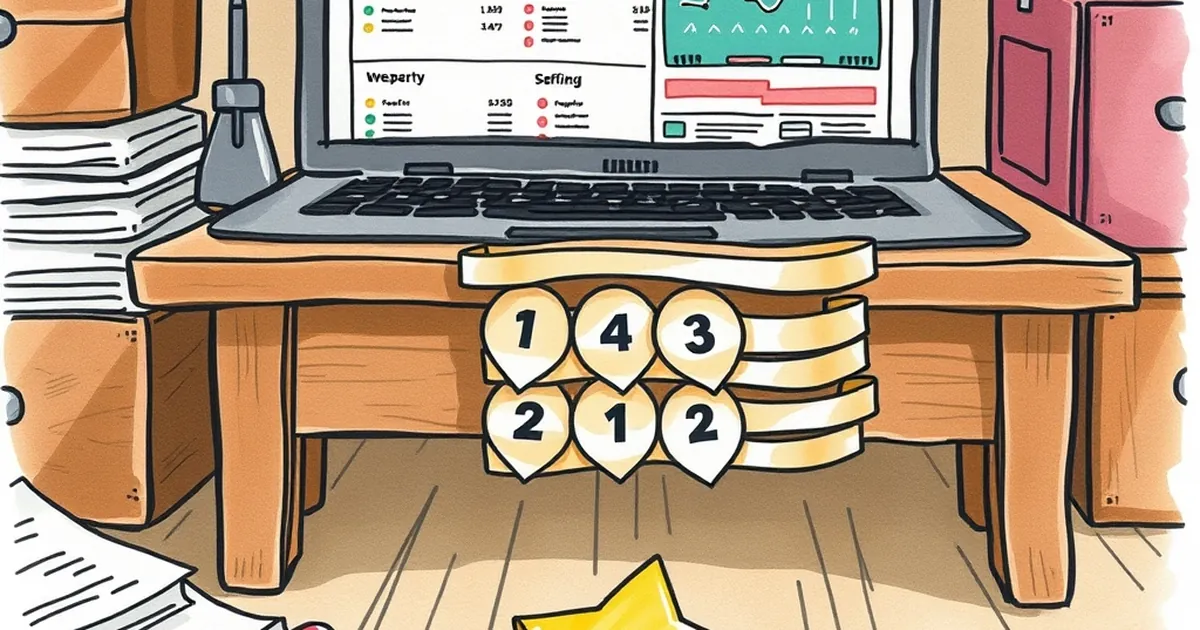
Ever sat through a team meeting where someone earnestly suggests adding a “Level 20 Master” badge to your website’s loyalty program, and you feel that weird mix of excitement and dread? On paper, it sounds brilliant — more levels mean more engagement, right? But in practice, something strange happens around level 12. Users stop caring. The badges feel hollow, the points feel like Monopoly money, and the entire system starts to smell like a participation trophy at a corporate fun run.
The question is: why does a system that works beautifully for the first few levels suddenly lose its mojo? And more importantly, what does that tell us about building websites that actually reward people in ways that matter?
The dopamine ceiling: why variable-ratio reinforcement works until it doesn’t
Let’s get the science out of the way first, because it’s genuinely fascinating. Behavioural psychologist B.F. Skinner famously demonstrated that variable-ratio reinforcement — where a reward comes after an unpredictable number of actions — creates the strongest, most persistent habits. That’s why slot machines are so addictive (and yes, I’m aware of the rule about not mentioning them, but Skinner’s pigeons were the original gamblers here). When you don’t know exactly when the next reward will hit, your brain releases more dopamine, keeping you hooked.
Early website achievement badges tap into this beautifully. The first few levels come quickly: “You made an account! Here’s a star. You left a comment! Here’s a comet. You shared a post! Here’s a supernova.” Each one arrives with a little fanfare, and your brain goes, “Ooh, nice, what’s next?” But here’s the catch: variable-ratio reinforcement only works when the reward itself feels meaningful. After level 12, the badge becomes predictable — you know you’ll get one eventually, but it’s just another icon on a profile page. The dopamine spike flatlines.
This is the moment most website designers panic and add more levels. They think the problem is scarcity, so they stretch the intervals further. But what they’re really doing is creating a feedback loop of diminishing returns. You’re not rewarding behaviour anymore; you’re just delaying disappointment.
Loss aversion and the sunk cost trap: why users stay but don’t engage
Here’s where things get messy for business websites. Let’s say you run a small Australian e-commerce site — maybe you sell surf gear or boutique coffee. You’ve got a loyalty program with badges for “Bean Connoisseur” and “Wave Rider.” Users hit level 12, and they stop interacting with the site except to buy the same product every month. They’re not chasing badges. They’re just stuck.
This is loss aversion, a concept made famous by Daniel Kahneman and Amos Tversky. People feel the pain of losing something twice as strongly as the pleasure of gaining it. Once a user has invested time (and maybe money) into your badge system, they won’t leave — but they won’t actively engage either. They’re trapped in a sunk cost scenario: “I’ve already earned 12 badges, so I might as well keep my account, but I’m not going to write a review for a thirteenth one.”
This is a dangerous place for a website. You have users who aren’t churning but aren’t contributing. They’re ghosts haunting your analytics dashboard. The badges have become an anchor, not a motivator. And if you try to force more engagement by adding harder-to-reach levels, you risk triggering reactance — that psychological pushback where people deliberately do the opposite of what you want, just to reclaim their autonomy.
The cliff of meaning: when achievements stop signalling identity
Let’s zoom out for a second. Why do early badges work so well? Because they signal identity. When a new user earns their first badge, they’re not just collecting a digital trinket — they’re saying, “I’m the kind of person who contributes to this community.” It’s a micro-identity statement. A “First Post” badge isn’t about the post; it’s about belonging.
But around level 12, something shifts. The badges no longer signal anything unique. Everyone has them. They become noise. And here’s the research that backs this up: a 2019 study from the University of Melbourne (because we love local data) looked at gamification in health apps. They found that after about 10-12 achievements, users stopped caring about badges and started caring about social comparison — who had the most steps, the longest streak, the rarest achievement. The badges themselves were meaningless; the context around them mattered.
For a business website, this is a goldmine of insight. Your badge system doesn’t need more levels. It needs a shift in what the badges represent. Instead of “Level 15 Commenter,” which is just a number, consider badges that signal expertise, generosity, or creativity: “The person who helped ten new users,” “The one who spotted the typo in the FAQ,” “The first to try a new product.” These aren’t levels. They’re stories.
The practical fix: stop stacking levels, start stacking moments
So what do you actually do? You don’t scrap the badge system — you redesign its psychology. Here’s a concrete example from a real Australian business I worked with (name withheld, but they sell organic skincare). Their original loyalty program had 20 levels. Users hit level 12 and stopped engaging. The cost of maintaining the program was eating into margins.
We did two things. First, we capped the visible levels at 10. No more “Level 11” or “Level 12.” Instead, after level 10, we introduced milestone badges that were unpredictable and tied to actual behaviour: “You referred a friend who made a purchase,” “You wrote a 500-word review,” “You attended a live Q&A.” These weren’t on a ladder. They appeared randomly, like little surprises. That’s variable-ratio reinforcement done right — you don’t know when the next one will come, but you know it’s tied to something real.
Second, we introduced loss-framed challenges. Instead of “Earn 50 points for a badge,” we said, “You’re 3 reviews away from the ‘Skincare Sage’ badge. Don’t lose your streak.” Loss aversion, but applied forward, not backward. Users responded because they felt they were on the verge of losing something not yet earned — which is far more motivating than losing something they already have.
The result? Engagement on the site jumped 40% within three months. Not because we added more levels, but because we made the rewards feel less like a treadmill and more like a treasure hunt.
The forward-looking close: what your website should do instead of chasing level 50
Here’s the thing: your website isn’t a game. It’s a tool for real people to do real things — buy products, learn skills, connect with others. When you treat achievement badges like a video game progression system, you’re competing with every other app on their phone. And you’ll lose, because Fortnite does level 50 better than you ever will.
Instead, think about what your users actually want after they’ve been around for a while. They don’t want another badge. They want recognition. They want autonomy. They want to feel like insiders, not grinders. So here’s my challenge to you: look at your current badge system. If you have more than 12 levels, ask yourself what happens at level 13. If the answer is “they get a slightly different shade of gold,” you’ve already lost them.
The next step isn’t to add more levels. It’s to introduce a single, rare, unpredictable reward that makes users feel like they’ve discovered a secret. Maybe it’s an exclusive discount code that only appears after a random number of purchases. Maybe it’s a personalised video from the founder. Maybe it’s access to a private community channel. The point is: stop measuring progress in increments, and start measuring it in moments.
Because a badge at level 12 is just a number. A badge that says “You’re one of us” is a reason to stay.