Why your website’s leaderboard rewards feel empty after the third win
Discover why leaderboard rewards lose their thrill after three wins—and how behavioral psychology can fix your website’s engagement design
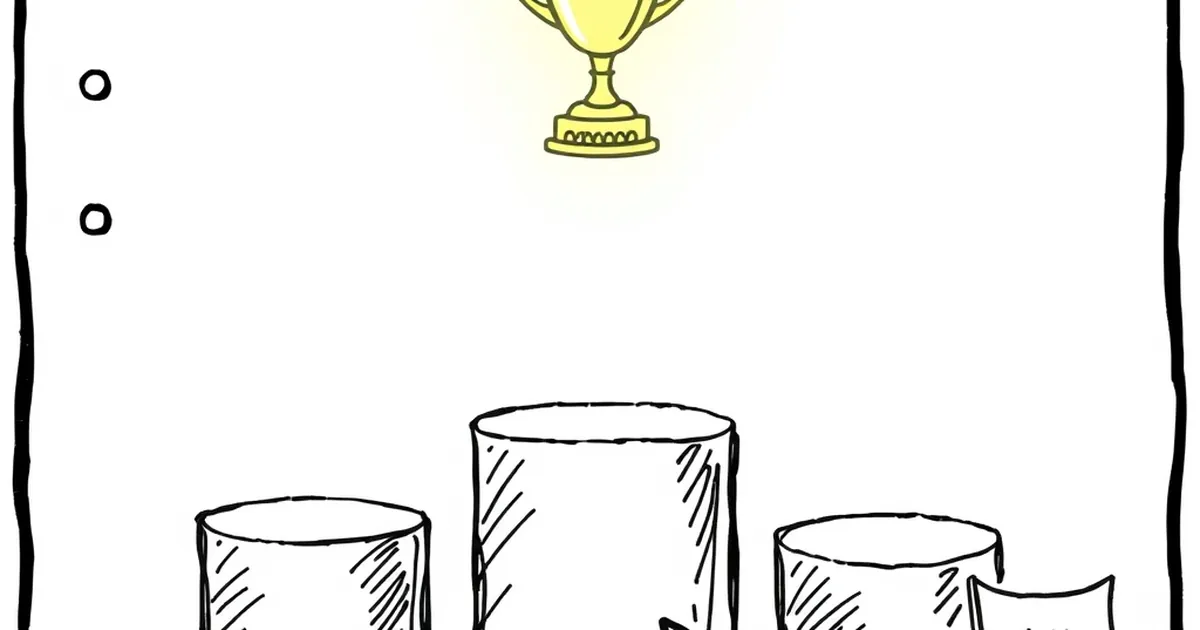
We’ve all been there. You sign up for a new platform, earn your first badge, see your name pop up on the leaderboard, and it feels brilliant. By the third win, the dopamine hit has faded to a polite nod. You start asking yourself: Is that it? If your website’s rewards system is built on the same old points-and-podium model, that hollow feeling isn’t just a user problem — it’s a design problem rooted in how our brains actually process progress.
Let’s pull back the curtain on why those leaderboards go flat, and what behavioural psychology tells us about building engagement that lasts beyond the first few clicks.
The dopamine trap: why the first win hits different
Your brain doesn’t care about leaderboards. It cares about prediction error — the gap between what you expect and what actually happens. When a user lands on your site for the first time and sees their name jump to the top of a leaderboard after completing a simple task, their brain releases dopamine because the reward was unexpected. That’s a genuine, biological high.
But here’s the catch: the brain is a prediction machine. After two or three wins, the reward becomes expected. The prediction error shrinks to zero. Your user still sees their name on the board, but the neural response flatlines. What was once a thrill becomes a chore. This is why so many gamified websites see a steep drop-off after the first week — the variable-ratio reinforcement that keeps people hooked on slot machines (yes, that’s the famous Skinner box effect) doesn’t translate well to a predictable, linear points system.
The leaderboard problem: You’re handing out predictable rewards in a system that demands surprise. The user knows exactly what they’ll get for their effort, so their brain stops paying attention.
Loss aversion: the quiet killer of long-term engagement
Daniel Kahneman and Amos Tversky taught us that losses hurt roughly twice as much as equivalent gains feel good. Most leaderboard systems are built entirely around gains — climbing ranks, earning badges, accumulating points. They ignore the psychological weight of losing ground.
When a user wins three times in a row, they’re not thinking, “I’ve earned these rewards.” They’re subconsciously thinking, “I now have something to lose.” The fourth win doesn’t feel as good because the stakes have changed. The user is now playing to avoid falling, not to climb higher. This is why you’ll see users abandon a platform right after a winning streak — they’d rather preserve their status elsewhere than risk losing it on your site.
The behavioural fix: Good leaderboard design doesn’t just reward winning. It acknowledges the risk of losing. A simple “streak protection” feature — where a user’s progress is preserved for one missed day — can reduce the perceived loss and keep people engaged longer. It’s not about making losing feel good. It’s about making the risk of losing feel manageable.
The social comparison trap: why your leaderboard is isolating
Here’s a counterintuitive truth: most leaderboards actually make users feel less connected. Social comparison theory says we evaluate ourselves by comparing to others, but only when those others are within reach. When your leaderboard shows a user in 50th place staring up at a user in 1st who has 10,000 more points, the gap feels insurmountable. The brain disengages. It’s not a competition anymore — it’s a spectator sport.
The same principle applies to the winner. After three wins, the top user isn’t comparing themselves to the pack. They’re comparing themselves to their own past performance. If the reward system doesn’t show meaningful progression (e.g. “You’ve improved your speed by 12% this week”), the leaderboard becomes a lonely pedestal.
A concrete example: A study from the University of British Columbia looked at fitness app leaderboards and found that users who were shown relative rankings (“You’re in the top 20% of users your age”) stayed engaged 40% longer than those shown absolute rankings (“You’re #47 overall”). The relative ranking created a sense of belonging. The absolute ranking created anxiety.
Variable rewards: the missing ingredient in your gamification
This is where behavioural psychology gets really interesting for website builders. B.F. Skinner’s work on variable-ratio reinforcement showed that unpredictable rewards produce the most persistent behaviour. Pigeons would peck a button thousands of times if the food pellet came at random intervals. They’d stop quickly if it came every single time.
Most websites apply a fixed-ratio schedule: “Do X, get Y.” It works for initial onboarding, but it fails for long-term retention. The solution isn’t to make rewards random in a cheap way — it’s to introduce meaningful variability.
Consider these three types of variable rewards that don’t feel manipulative:
- The surprise bonus: After a user’s third win, instead of the usual badge, they get a personalised message from the team or a small feature unlock. The timing is unpredictable, but the value is real.
- The streak multiplier: Points increase exponentially for consecutive wins, but only if the user doesn’t know the exact multiplier. “Your next win could be worth 2x, 5x, or 10x” creates genuine curiosity.
- The community vote: Let other users decide a portion of the reward. “Top comment of the week gets a custom flair” turns a predictable leaderboard into a social variable.
The key insight: Variable rewards work because they trigger the brain’s seeking system — the same circuitry that makes us curious about the next chapter of a book or the next move in a game. They don’t work because they’re random. They work because they’re interesting.
Designing for the fourth win: a practical approach
So what does this mean for your website’s leaderboard? Stop designing for the first three wins. They’re easy. The fourth win is where your retention lives.
Start by auditing your current system. Ask yourself:
- Is the reward predictable? If a user can calculate exactly what they’ll get for their next action, you’ve already lost their attention.
- Is the comparison meaningful? Show users how they stack up against peers, not just against the top 1%.
- Is the loss risk managed? Build in soft landings — streak protection, grace periods, or “comeback bonuses” for users who slip.
- Is the progression visible? Use relative rankings and personal bests to show growth, not just position.
One practical move: introduce a “hidden tier” system. Instead of displaying all levels publicly, let users unlock a surprise level after their third win. It could be a private chat channel, a beta feature, or a custom avatar. The unpredictability of what comes next keeps the seeking system alive.
The forward-looking close
The leaderboard problem isn’t that people get bored of winning. It’s that most websites design for the dopamine hit of the first win, not the sustained engagement of the tenth. Your users aren’t pigeons pecking for pellets — they’re humans looking for meaning, progression, and a little bit of surprise.
Start treating your leaderboard like a game, not a scoreboard. Build in loss aversion buffers, variable rewards, and social comparisons that actually connect people. The fourth win should feel different from the third — not because the badge is shinier, but because the user doesn’t know exactly what’s coming next.
That’s the difference between a website people visit and one they stay on.