Why your website’s reward system triggers the wrong kind of competition
Discover why common website reward systems backfire, encouraging gaming over genuine engagement, and how to fix this
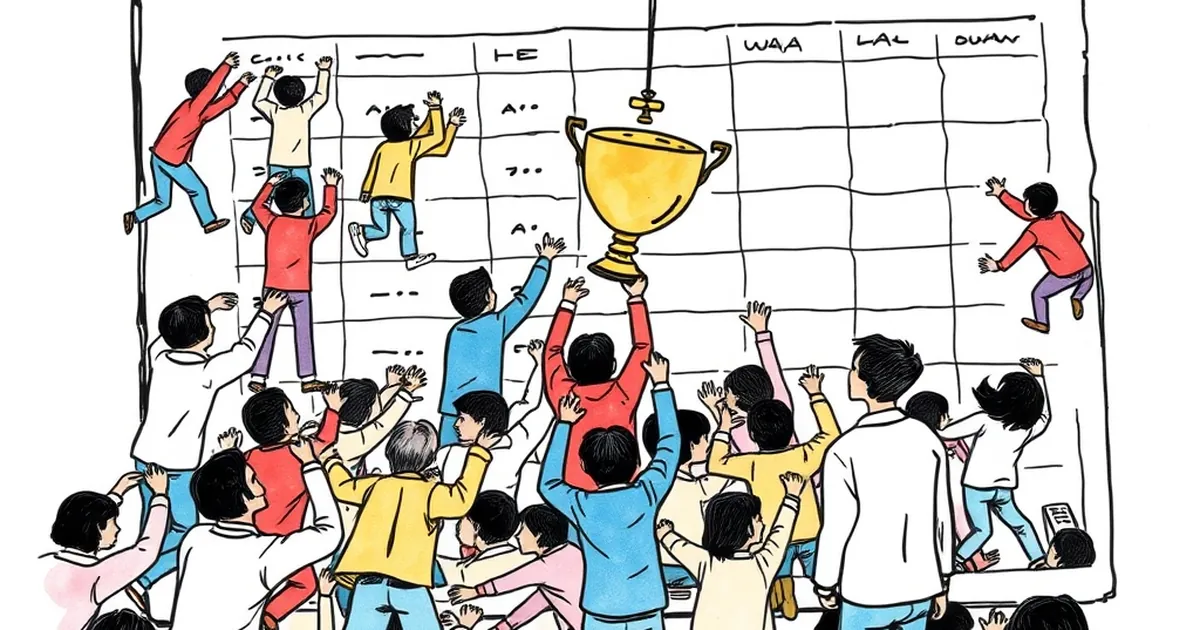
Why your website’s reward system triggers the wrong kind of competition
Every business owner wants a website that keeps people coming back. You throw in a loyalty points counter, a progress bar toward a discount, maybe a “badge” for completing a profile. And for a while, it works. But then something strange happens: users start gaming the system. They click without reading, create fake accounts, or abandon their cart the moment the reward feels too far away.
The problem isn’t that rewards don’t work. It’s that most website reward systems accidentally borrow from the wrong playbook. They’re designed to exploit the same neural circuits that drive compulsive risk-taking, not genuine customer loyalty. And in doing so, they trigger a kind of competition that hurts both you and your users.
The behavioural psychology you’re probably misusing
Let’s get one thing straight: humans love uncertainty. That’s not a value judgment, it’s a biological fact. When the outcome of an action is unpredictable, your brain releases more dopamine than it does for a guaranteed result. This is called the variable-ratio reinforcement schedule, and it’s one of the most powerful tools in behavioural psychology.
The problem is that most websites apply it backwards. A classic example is the “spin to win” pop-up, where the prize is randomised. It feels exciting, but it trains the user to associate your brand with the emotional rollercoaster of chance. You’re not building loyalty; you’re building a slot-machine reflex. The moment the reward stops feeling “lucky,” the user leaves.
Daniel Kahneman’s work on loss aversion is another one that gets mangled. The theory says people feel losses about twice as powerfully as equivalent gains. So many websites create urgency with countdown timers or “only 3 left” warnings. But when the timer resets or the stock magically replenishes, users learn that the threat was fake. You’ve trained them to ignore your signals entirely.
The real kicker is that these tactics create a competitive dynamic—but not the kind you want. Users start competing against the system rather than engaging with your product. They’re trying to “beat” the pop-up, find the loophole, or time the discount. That’s not loyalty. That’s adversarial play.
The study that changed how I think about progress
There’s a famous experiment from 2006 by Ran Kivetz, Oleg Urminsky, and Yuhuang Zheng that demonstrates something called the goal-gradient effect. They gave coffee shop customers a loyalty card. For one group, the card required 10 stamps for a free coffee, and they started with a blank card. For the other group, the card required 12 stamps, but the researchers gave them 2 stamps upfront.
The second group completed their cards significantly faster. Why? Because they felt closer to the goal, even though both groups needed the same number of purchases to earn the reward.
This is the right way to use progress. Notice what’s missing: no randomness, no surprise penalties, no fake scarcity. Just a clear, predictable path with a head start that makes the goal feel achievable.
Now imagine you apply that to a website. Instead of a confusing points system where users don’t know what anything is worth, you give them a visible, linear progress bar. And instead of starting at zero, you give them a small credit for signing up—say, 20% toward their first reward. The user now feels like they’re already in motion. They’re not competing against you; they’re cooperating with you to reach a shared finish line.
How to design rewards that build, not break
Most reward systems fail because they treat all user behaviour as equal. A click on a blog post shouldn’t earn the same as a purchase. But a lot of gamified systems flatten everything into a single “points” bucket. This creates perverse incentives: users learn to chase cheap, high-volume actions instead of meaningful ones.
Here’s a better approach, grounded in what we know about motivation and decision-making under uncertainty.
Make the primary reward predictable, the secondary reward surprising
This is the big one. Your core value proposition—the product, the service, the content—should be delivered reliably. No gambling on whether the user gets what they expect. The surprise should only come in the form of extra value, not the basic transaction.
For example, a SaaS website might offer a clear, fixed discount for annual plans. That’s predictable. But then, once a month, a random user who logs in on a Tuesday gets a free feature upgrade for a week. That’s a delightful surprise that doesn’t undermine trust. The user knows the standard deal is solid, and the bonus is just a cherry on top.
Use competition against the user’s past self, not against others
Leaderboards are tempting, but they’re a double-edged sword. For every user who’s motivated by climbing the ranks, there are ten who feel demoralised when they see they’ll never catch up. This is especially true in a business context, where your users aren’t athletes—they’re busy people trying to solve a problem.
Instead, surface personal progress. “You’re 30% more engaged this month than last month” is a powerful message. It triggers a sense of mastery and growth, which is a far more sustainable motivator than beating a stranger. This taps into what psychologist Albert Bandura called self-efficacy: the belief that you can improve through your own efforts.
Remove the fear of losing progress
Loss aversion is real, but you can use it constructively. Instead of threatening to take away points if the user doesn’t act, frame it as protecting a benefit they’ve already earned. For instance, “Your loyalty status expires in 30 days unless you make one more purchase” sounds like a threat. But “You’ve earned Gold status, and we’ll keep it active as long as you visit once every three months” sounds like a partnership.
The difference is subtle but crucial. In the first version, the user feels they’re about to lose something. In the second, they feel they’re being given a fair condition to maintain a reward they already have. The second approach builds trust; the first builds resentment.
A practical close: design for the long game
If you take one thing from this, let it be this: your website’s reward system is a relationship, not a game. The best relationships are built on predictability, mutual respect, and occasional pleasant surprises. They’re not built on tricking the other person into staying.
So before you add another points counter or another “bonus spin,” ask yourself: Would I want to be on the receiving end of this system? If the answer feels uncomfortable, you’re probably triggering the wrong kind of competition.
Instead, start small. Pick one behaviour you genuinely want to reward—say, leaving a thoughtful review or referring a friend. Make the path to that reward clear and linear. Give users a head start. And then, once in a while, throw in a random bonus that feels like a gift, not a trap.
Your users will notice the difference. They’ll stop trying to game the system and start actually engaging with what you offer. And that’s a competition everyone wins.