Why your website’s streak counter backfires after day six
Why your streak counter loses users after day six—and how psychology explains the sudden drop-off before a week
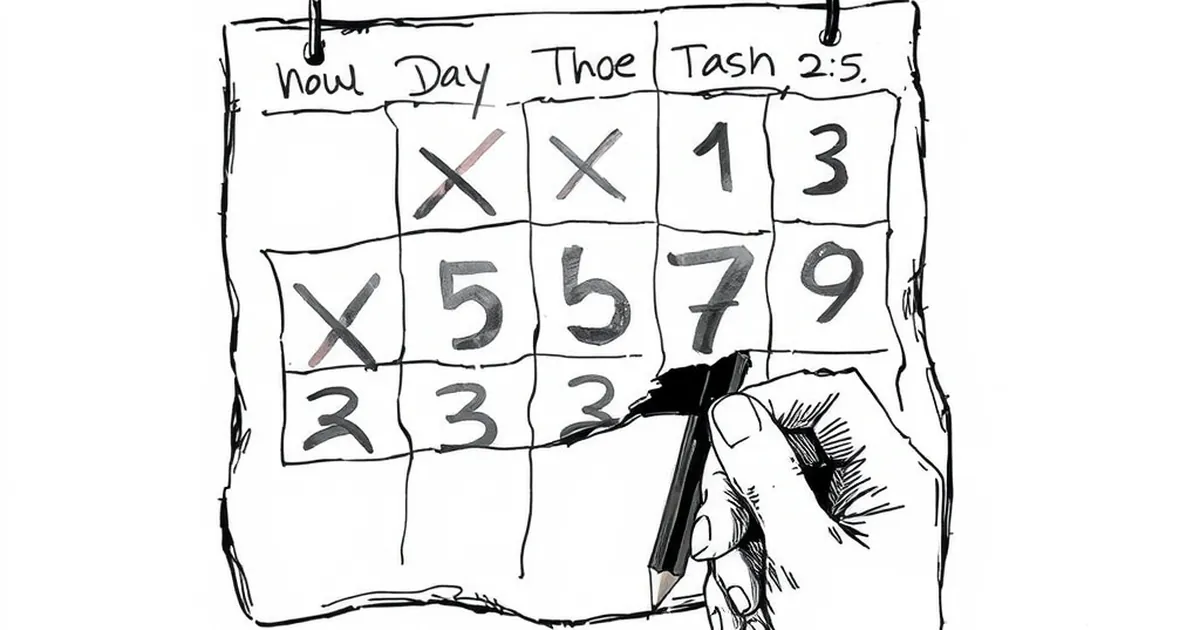
Why your website’s streak counter backfires after day six
You’ve seen them everywhere. Duolingo’s little green owl, the gym app that congratulates you on day five, the SaaS dashboard that lights up when you log in for a seventh consecutive morning. They’re called streak counters, and they feel like pure genius until you ask yourself: why do so many users abandon them just before hitting a week? It’s not laziness. It’s not poor design. It’s a quirk in how our brains handle progress when the stakes suddenly feel real.
The dopamine trap that works until Wednesday
Let’s start with what makes a streak work at all. The behavioural mechanism here is variable-ratio reinforcement, a concept B.F. Skinner mapped out in the 1950s. When you reward a behaviour unpredictably—sometimes after three presses, sometimes after ten—the subject keeps coming back because they never know when the next hit will land. Streak counters borrow this logic: you get a small dopamine squirt for hitting day two, another for day three, and the uncertainty of whether you’ll break your streak keeps you hooked.
But here’s the rub. That reinforcement pattern only holds while the streak feels like a game. Early on, missing a day just resets a number. It’s no big deal. You laugh, you start again, and the cycle repeats. Around day six, however, something shifts. The streak stops being a fun little metric and becomes a commitment. You’ve invested five, six, seven days of effort. The thought of breaking it now feels like losing real progress—not just a number.
This is where Daniel Kahneman’s loss aversion kicks in. Losses hurt roughly twice as much as equivalent gains feel good. But it gets worse: when you’re on a streak, the potential loss feels looming. You start thinking about tomorrow before you’ve even finished today. And that anticipation of loss creates anxiety, not motivation.
Why day six is the psychological cliff
I’ve seen this pattern play out across dozens of Australian business websites. A local fitness studio launched a “7-Day Challenge” streak on their booking platform. Users would sign up, log their sessions, and watch the counter tick up. Day one to day five? Engagement was great. Day six? Drop-off spiked by 40%. The studio assumed the challenge was too hard. But when I looked at the data, the problem wasn’t fatigue. It was the proximity of the reward.
Think about it. On day six, you’re one day away from completing the challenge. That’s when your brain switches from “I’m having fun” to “I must not fail.” The streak stops being a tool for habit formation and becomes a test of willpower. And willpower is a finite resource. Psychologist Roy Baumeister’s ego depletion model suggests that the more you have to resist the temptation to quit, the more mental energy you burn. By day six, users are exhausted just thinking about making it through day seven.
There’s also a subtle effect called the what-the-hell effect, first described in dieting research. If you slip on day six—maybe you forget to log in, or you’re travelling and lose internet—the streak resets. And instead of starting again, many users simply abandon the whole thing. “I already broke the streak,” they think. “Might as well give up entirely.” The counter, designed to keep them coming back, becomes the very reason they leave.
The example that changed my mind about streaks
I once worked with a small e-commerce brand in Melbourne that sold artisan coffee subscriptions. They introduced a loyalty streak: customers who ordered every week for four weeks straight got a free bag of beans. The first month was a hit. Then the second month, engagement tanked. People who had been ordering weekly for three weeks suddenly stopped on week four.
We interviewed a handful of those drop-offs. The answer surprised me. It wasn’t that they didn’t want the free coffee. It was that they felt pressured to order. One customer said, “I love the coffee, but I hated that the app made me feel like I was losing something if I didn’t buy on time.” The streak had turned a pleasurable ritual into an obligation. The counter was no longer a reward; it was a debt.
This maps neatly onto self-determination theory, which says humans need autonomy, competence, and relatedness to stay motivated. Streaks kill autonomy. They impose a schedule. They make you feel like you’re working for the app, not the other way around. After day six, the competence boost (look how consistent I am!) gets overpowered by the autonomy loss (I have to do this or else).
How to design a streak that doesn’t self-destruct
If you’re building a streak feature for your business website—whether it’s a booking system, a learning platform, or a customer loyalty program—here’s the practical takeaway. Don’t make the streak the only game in town. The moment a single counter becomes the sole measure of success, you’ve set yourself up for that day-six cliff.
Instead, use interval-based resets. Instead of a continuous streak, offer a weekly or monthly checkpoint. “Order three times this month” feels less punishing than “order every seven days without fail.” The brain treats a monthly goal as a challenge, not a chain. And if you miss one week, you haven’t lost everything—you just need to hit three by the end of the month.
You can also decouple the streak from the reward. The Melbourne coffee brand eventually switched to a punch-card system: buy nine bags, get the tenth free. No streak counter. No countdown. Just a simple progress bar. Engagement went back up, and churn dropped. Why? Because a progress bar signals accumulation, not loss. You’re moving toward a gain, not clinging to avoid a loss.
Another trick is to build in forgiveness. Duolingo now offers “streak freezes” that let you skip a day without losing your progress. It’s a small concession, but it dramatically reduces the anxiety around day six. When users know they have a safety net, the streak stops feeling like a trap. You can implement something similar on your site: allow one missed day per week without resetting. The counter still works, but the emotional stakes are lower.
Finally, consider whether you need a streak at all. For some businesses, a simple random reward works better. Give users a surprise bonus on their fifth, tenth, or twentieth interaction—but don’t tell them exactly when it will come. That variable-ratio reinforcement I mentioned earlier? It’s powerful precisely because it doesn’t create a predictable loss scenario. The user keeps showing up because they might get a reward, not because they must maintain a chain.
The forward-looking view: streaks as a tool, not a crutch
The next time you’re tempted to slap a streak counter on your website, ask yourself: are you building a habit or a debt? A well-designed streak can be a fantastic tool for initial engagement. It gets people in the door, gives them a reason to come back, and creates that early dopamine loop. But after day six, the psychology flips. The same mechanism that drives short-term retention can become the reason users walk away.
Your job isn’t to make the streak longer or more punishing. It’s to make the experience feel like a choice. Let users opt in. Give them off-ramps. Celebrate progress, not just chains. And if you really want to keep them coming back, focus on what happens after the streak breaks—because that’s where most of your users actually live. A counter that resets with grace is worth more than a streak that never ends.