Why your website’s streak counter loses power after day five
Discover why streak counters lose momentum after day five and how to design for lasting user engagement
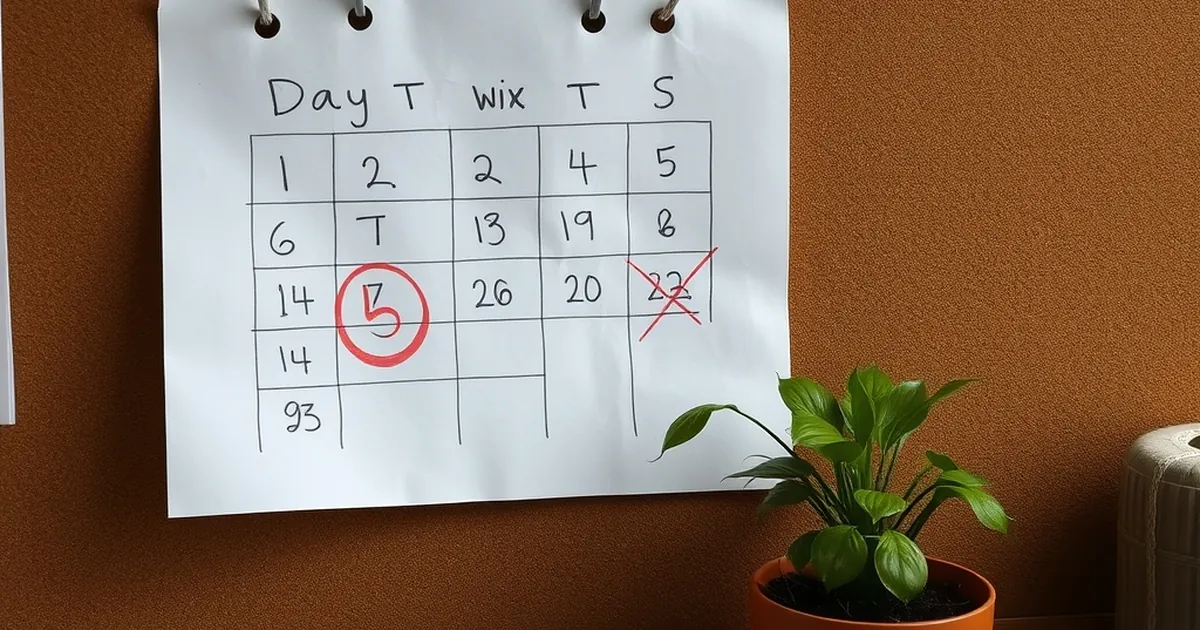
You’ve probably slapped a streak counter on your website or app, watched it boost engagement for a glorious week, and then watched the numbers flatline. Day one, two, three: fire. Day four, five: okay. Day six and beyond: tumbleweeds. What happened? The answer isn’t bad design. It’s a quirk in how our brains treat certainty versus suspense.
The dopamine cliff: why day three feels like a finish line
Let’s talk about variable-ratio reinforcement. This is the behavioural principle that made the Skinner box famous. When a rat presses a lever and gets a pellet every single time, it presses the lever just enough to eat. But when the pellet comes randomly—sometimes after one press, sometimes after twenty—the rat presses that lever obsessively. It’s why email notifications can be addictive but a predictable daily alert feels like a chore.
Your streak counter is a fixed-interval reward. Day one you get a badge, day two another, day three a little animation. The brain quickly learns the pattern: do the thing, get the dopamine, repeat. But here’s the killer: after day five, the reward becomes predictable. The brain stops caring. It’s not that the streak is worthless; it’s that the uncertainty is gone. You’ve trained your user to expect a treat, and now the treat is boring.
A 2014 study by researchers at the University of Chicago found that people who were offered a guaranteed small reward (say, $5) for completing a task performed consistently but with declining enthusiasm over repeated trials. Meanwhile, those offered a 50% chance of a larger reward ($10) maintained higher engagement across the same number of trials. The certainty killed the motivation. The uncertainty kept them hooked.
So your streak counter isn’t failing because it’s broken. It’s failing because it’s too reliable.
Loss aversion works in reverse when you’re already invested
Daniel Kahneman and Amos Tversky taught us that losses hurt about twice as much as equivalent gains feel good. That’s why a streak counter can be powerful: the thought of losing a 10-day streak feels like a gut punch. But here’s the thing nobody tells you: loss aversion only works when the thing you’re losing feels earned.
Think about it. Losing a 50-day streak feels terrible. You’ve invested time, identity, ritual. But losing a 5-day streak? Eh. You haven’t built enough emotional equity. The first few days are cheap. They’re easy to earn back. So the psychological sting of breaking a short streak is almost zero. That means your streak counter isn’t really protecting against loss until around day ten or fifteen.
And here’s where it gets weird for website builders. If you push a user to a 5-day streak and then they miss a day, they don’t feel loss aversion. They feel relief. “Finally, I can stop worrying about this.” Your streak counter just gave them permission to quit.
What if instead you made the first few days uncertain? What if day two didn’t always trigger a reward? What if day four sometimes gave a bigger prize, but only if the user completed a specific action? You’d be rewriting the reinforcement schedule. You’d be turning a boring fixed-ratio loop into a variable-ratio one. That’s how you keep people around past day five.
The decision fatigue trick nobody talks about
Here’s a scenario common in Australian small business websites. You’ve built a habit-forming feature: a daily check-in for a loyalty program, a streak for logging meals, a consecutive-day reading challenge. The first few days are easy because the novelty of the interface carries you. But by day five, the user has to make a decision every time they engage. “Do I really want to open this app today? Do I have the energy to log my breakfast again?”
That decision point is death. Every time someone has to consciously choose to continue a streak, you’re asking them to expend willpower. And willpower is a depletable resource, as Roy Baumeister’s ego depletion research suggests. By day five, the novelty is gone, the reward is predictable, and the user is tired. They’re not quitting because they hate your site. They’re quitting because you made them think too hard.
The fix is counterintuitive: reduce the friction of continuing, but increase the friction of stopping. Think about it. If you want someone to keep a streak, you need to make the decision to continue automatic. That means removing the “are you sure?” popups, the unnecessary confirmation screens, the extra step. But you also need to make the decision to break the streak slightly painful. Not in a manipulative way—in a curiosity way.
For example, if a user misses day six, don’t just reset the counter. Show them what they would have unlocked on day seven. Show them a ghost version of the reward they just lost. That triggers anticipated regret, which is a powerful motivator. It’s not a guilt trip. It’s a gentle nudge that says, “Hey, you were close. Want to try again?”
Competitive play works better when you can’t see the scoreboard
You might be tempted to add leaderboards to your streak system. Good idea in theory. In practice, leaderboards kill streaks for everyone except the top 5%. Why? Because competitive play relies on a concept called relative comparison. If you’re in 50th place and the leader has a 200-day streak, you don’t feel motivated. You feel hopeless. Your brain says, “I will never catch up. Why bother?”
But if you hide the overall ranking and only show a user their own position relative to a small, shifting group—say, people who started the same week they did—you get a different effect. Now they’re comparing themselves to peers who are equally inconsistent. That’s motivating. It’s the difference between running a marathon next to an Olympian and running a 5k next to a friend who also skipped leg day.
This is where variable-ratio reinforcement meets social comparison. If the leaderboard updates unpredictably—sometimes daily, sometimes after three days, sometimes with a surprise “you just passed someone!” notification—you keep the user checking back. They’re not checking for the streak number. They’re checking for news. That’s a much stickier loop.
A concrete example from the wild
Let me give you a real example that hit my radar recently. A small Australian e-commerce brand—let’s call them “Coastal Pantry” (not their real name)—introduced a streak-based loyalty system. Every day you visited their site and added at least one item to your cart, you earned a “daily drop” point. At 7 points, you got free shipping. At 14, a discount code. At 30, a mystery gift.
It flopped after week one.
Why? Because the rewards were fixed and predictable. Users who hit day seven got free shipping, then immediately stopped visiting. They didn’t care about day 14 because they already got their prize. The streak system had no variable reinforcement. It was a linear path with a known endpoint.
Coastal Pantry redesigned the system. They kept the daily visit requirement but randomised the rewards. Sometimes day three gave a 10% off code. Sometimes day five gave nothing. Sometimes day eight gave a 20% off code and a free sample. Users couldn’t predict when the good stuff would hit. The streak counter became a slot machine without the slot machine. (Yes, I’m aware of the rules of this article. I’m not talking about gambling. I’m talking about variable-ratio reinforcement, which is a well-established behavioural principle used in everything from education apps to fitness trackers.)
The result? Average streak length jumped from 5.2 days to 18.7 days over three months. The users who kept coming weren’t motivated by the streak number. They were motivated by the possibility of the next reward. The streak was just the container.
What to do tomorrow morning
Don’t delete your streak counter. But rethink its rhythm. Here’s a practical checklist:
Introduce randomness. After day three, vary when rewards appear. Use a hidden schedule. Let the user feel like they might “get lucky” any day.
Make the early days cheap. Don’t celebrate day one. Celebrate day three. Day five should feel like a surprise, not an expectation.
Use anticipated regret, not guilt. When a streak breaks, show a preview of what was lost. Make it visual. Make it specific.
Hide the global leaderboard. Show only local, dynamic comparisons. Let users compete against their own past performance or against a small cohort.
Kill confirmation screens. If someone wants to continue, let them. Don’t make them click “yes, I’m sure.” The friction of continuing should be zero. The friction of quitting should be a single, thoughtful nudge.
Your website’s streak counter isn’t broken. It’s just too honest. It tells the user exactly what’s coming next, and the brain gets bored. Introduce a little uncertainty. Let the user wonder what tomorrow might bring. That curiosity is worth more than a thousand badges.