Wallet top-up clears in 4s — the balance shows at 40
Why a casino wallet balance lags behind a cleared payment, and what the gap between confirmation and updated funds really means
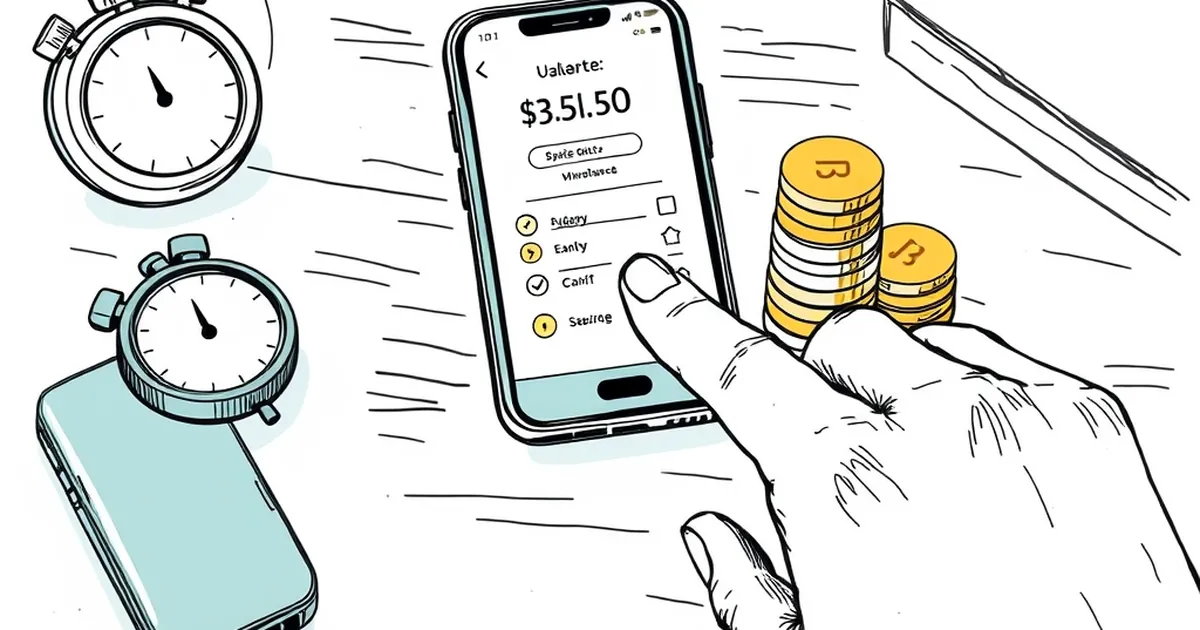
The payment processor's confirmation screen said 4.1 seconds. The casino wallet said the money was there. What the player saw on the balance was a number that hadn't moved — and wouldn't, for another 36 seconds or so. That gap between "the payment cleared" and "the balance updated" is the single most common source of angry live-chat transcripts in Australian online casino support queues, and it has almost nothing to do with how fast the money actually moved.
Two clocks, one wallet
When you hit deposit, at least four systems start doing things, and they do them on different schedules.
The first is your bank or payment provider — PayID, a card, a bank transfer, whatever you've loaded. That system returns a success or failure code. For PayID in Australia, that's usually under five seconds during business hours. For a card deposit, the authorisation can come back in two to four seconds. This is the number the payment screen shows you, and it's the number that gets screenshotted and posted when something goes wrong.
The second system is the casino's payment gateway, which receives that success code and writes a transaction record. That's fast. Sub-second, generally.
The third is the wallet ledger — the actual database that holds your balance. This is where the delay usually lives, and it's not a bug. Most operators run what's called an eventually consistent ledger for deposits: the gateway writes the transaction, a queue picks it up, and a reconciliation job applies it to your balance. That job might run every 15 seconds, every 30, or on a batch schedule. If you deposit at the wrong point in the cycle, you wait for the next tick.
The fourth is the front end — the app or browser tab you're staring at. It's polling the wallet, or holding a websocket, and it won't show a new number until the wallet tells it there's one.
So "clears in 4s, shows at 40" is really: bank said yes at 4s, gateway wrote it at 5s, ledger applied it at 38s, front end rendered it at 40s. Nothing is broken. It just looks broken, because you're watching a screen that's telling you two different truths.
Why the ledger isn't instant
Instant ledgers exist, and some operators run them. The trade-off is cost and risk. An immediately consistent ledger means every deposit writes to the same record in real time, which is expensive at scale and creates a single point of contention when volumes spike — say, during a Saturday night AFL game or a big pokies session. Batch reconciliation is cheaper, more resilient, and easier to audit. Regulators, including state-based ones here, generally want a clean audit trail more than they want sub-second balance updates.
That's the honest answer to "why is my money taking 40 seconds." It's not that they're holding it. It's that the system is designed to be boring.
The 40-second figure is a median, not a rule
If you've seen "40 seconds" thrown around, treat it as a rough middle of the road. In practice, the number moves a lot.
On a weekday afternoon with low load, a well-built operator can show a balance in under 10 seconds. On a Friday night during peak traffic, 60 to 90 seconds isn't unusual. If the deposit triggers a manual review — which happens on first deposits, unusual amounts, or anything matching a fraud pattern — you're not waiting 40 seconds, you're waiting minutes to hours, and that's a different process entirely.
The number also depends on the method. PayID and card deposits tend to reconcile fastest because the confirmation is near-instant and the operator has a clear signal. Bank transfers via traditional rails can take longer to confirm, which pushes the whole chain out. Crypto deposits, where offered, sit somewhere in between — fast on-chain confirmation, but the operator still has to credit the ledger, and some run extra confirmations for larger amounts.
A useful rule of thumb: if the payment screen says "success" but the balance hasn't moved after two minutes, you've probably crossed from "normal reconciliation lag" into "something is queued for review." That's when a live chat message is worth sending, and it's worth sending with the transaction reference, not just "my deposit didn't show."
What actually goes wrong
The 4-second-to-40-second gap is normal. What isn't normal is the set of failures that look identical from the player's side.
Duplicate credits. If the gateway writes the transaction but the ledger job fails and retries, you can occasionally see a double credit. Most operators auto-reverse these, but if you withdraw before the reversal lands, you can end up with a negative balance or a flagged account. This is rare, but it happens — and it's a reason to not immediately fire the whole balance onto a table the second it appears.
Orphaned transactions. The bank confirms, the gateway times out before writing the record, and the money leaves your account without landing in the wallet. This is the genuinely bad case. It's also the one where the 40-second figure is irrelevant, because no amount of waiting fixes it. You need the payment reference and a support ticket, and resolution can take days.
Stale front end. The money is in the wallet. The app just hasn't refreshed. Force-closing and reopening the app, or logging out and back in, resolves this more often than people expect. Before you panic, refresh.
Wagering that starts before the balance shows. This is the sneaky one. If you deposit to claim a bonus, the wagering clock can start from the moment the deposit is recorded in the ledger — not from the moment you see it. If you're waiting 40 seconds and the bonus terms have a tight window, you've technically lost a bit of time. It's usually immaterial, but on a 24-hour wagering window it's a rounding error, not a problem.
The practical takeaway
Watch the payment screen for the reference number, not the balance. That reference is what support needs if anything goes sideways, and it's the only thing that proves the bank side of the transaction. The balance catching up 40 seconds later is the system working as designed, not a sign you've been had.
Where this is heading
The interesting question isn't why 40 seconds happens — it's whether it should keep happening. Open banking in Australia has been rolling out since 2020, and real-time payment confirmation is now standard for a lot of transactions. The technical case for batch-reconciled casino ledgers is getting weaker every year, and the operators who move to instant crediting will have a genuine, if small, edge on first-deposit conversion.
The counter-argument is that instant crediting makes fraud and chargeback exposure harder to manage, and regulators here have been steadily tightening around exactly that. So the 40-second gap might not close because operators can't close it. It might stay because the compliance cost of closing it is higher than the annoyance of leaving it open.
Which leaves a question worth asking next time you're staring at an unmoved balance: is the operator slow, or is the operator choosing a speed that keeps its licence? Those are very different things, and from the player's side they look exactly the same.