Live dealer latency hits 400ms — the bet timer still shows 8s
400ms of live dealer latency meets an 8-second bet timer that assumes instant play, exposing the gap between the clock on screen and the connection behind it
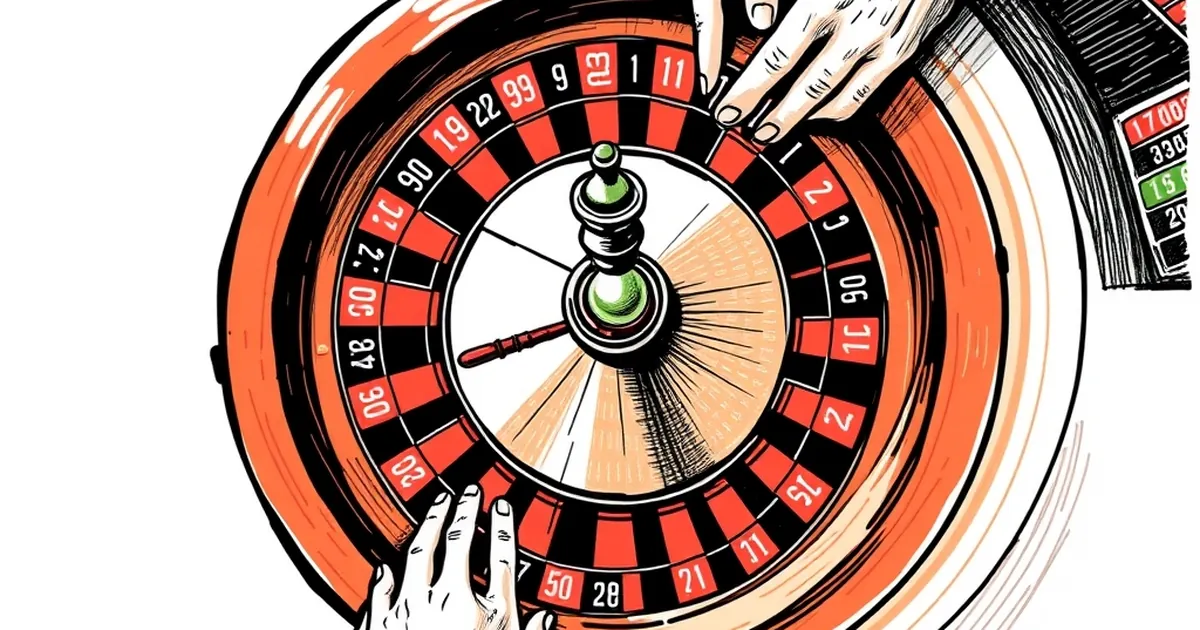
Live dealer tables have been running at roughly 400ms of round-trip latency for a chunk of Australian players during peak evening hours, and the on-screen bet timer still counts down from eight seconds like nothing has changed. That gap — a fifth of a second of dead air on every action, against a clock that assumes instant feedback — is where the interesting arguments live. It's not that 400ms is unplayable. It's that the number on the timer is a promise the connection can't always keep.
What 400ms actually costs you at the table
Latency is the time between you tapping "confirm" and the server registering it, plus the time for the reply to come back. On a clean fibre connection to a Sydney edge node, a live blackjack hand can sit around 90–140ms. On mobile data during the 7–10pm window, or routed through a European studio, that figure climbs. A 400ms round trip is common enough that it's worth treating as a realistic ceiling rather than a worst case.
Here's the part that matters: the bet timer is server-side. The eight-second countdown you see is generated by the game server and streamed to you. But the stream itself is delayed by your latency. So when the timer reads "3," the server may already be at 2.6. When it reads "0," you've already been locked out for a fraction of a second you never saw.
At 400ms, that's roughly 5% of an eight-second window gone before you've seen a single frame. It doesn't sound like much until you're the player who taps at 0.4 seconds and gets "bet not accepted."
The asymmetry nobody advertises
Studios publish RTP figures and table limits. They don't publish the effective response window, because it varies by player and it's not a number that flatters anyone. But the practical effect is that two players at the same table, seeing the same timer, have different real deadlines. The one on a 120ms connection has about 7.9 seconds. The one on 400ms has about 7.6. Over a session, that difference shows up in the hands you miss.
Why the timer hasn't moved
You'd think the obvious fix is to extend the countdown. Push it to ten seconds and the latency tax shrinks. The reason it hasn't happened is that live dealer economics run on hands per hour.
A live blackjack table with a seven-seat configuration and an eight-second betting window can deal somewhere in the range of 55–70 hands per hour depending on how brisk the dealer is. Stretch the window to twelve seconds and you're looking at closer to 45–50. That's a 15–20% drop in throughput, and throughput is what the studio's revenue model is built on. The house edge per hand doesn't change, but the number of hands does.
So the timer stays at eight. What studios have done instead is tinker at the edges: auto-stand rules, pre-decision options on some games, "bet behind" features that let you ride another player's hand without needing your own action in the window. None of these solve the latency problem. They route around it.
The pre-decision workaround
Some providers now let you set your blackjack action before the cards are dealt — hit, stand, or a simple strategy — so the only thing you're doing inside the timer is confirming. That cuts the required response time down to a single tap. It's a genuine improvement, but it changes the game. You're no longer reacting to the dealer's upcard. You're committing blind.
For players who use basic strategy anyway, that's fine. For anyone who plays with a bit of feel, it's a different product wearing the same skin.
What the 400ms figure does to game selection
If you're on a connection that regularly sits above 300ms, the sensible move is to avoid tables where the decision window is tight and the penalty for missing it is real.
Live blackjack and live baccarat are the forgiving ones. Baccarat in particular has a bet window that's usually generous and the decisions are binary — player, banker, tie. Latency costs you less because there's less to do.
Live game shows are a mixed bag. Money Wheel variants often have longer windows because the pacing is part of the entertainment. But the multiplier-based ones with rapid rounds can punish a slow connection hard.
Live poker against other players is the worst case. If you're timing out on hands because your action didn't land inside the clock, you're bleeding blinds to a technical problem, not a strategic one. At 400ms with a 15-second clock, you've got about 14.6 real seconds. That's usually survivable. At a 10-second clock, you're down to 9.6, and if you're multi-tabling it compounds.
The general rule: the more decisions per round, the more latency hurts. If a game asks you to do one thing inside the timer, you're fine. If it asks you to do three, you're gambling on your ISP as much as on the cards.
The thing the timer is really telling you
An eight-second countdown is a UI element, not a measurement. It's the server's clock rendered for your benefit, and it's accurate to the server, not to you. Treating it as a precise deadline is a mistake, in the same way that treating a published RTP as a guarantee for your session is a mistake. Both are long-run numbers applied to a short-run situation.
What's changed is that 400ms is no longer an outlier. It's a normal Tuesday night for a lot of people, particularly outside the capital cities, particularly on mobile. The studios know this. The timers haven't moved. The question worth asking isn't whether 400ms is acceptable — it's whether an eight-second window that's really 7.6 seconds for a meaningful slice of the player base is a design choice or an oversight.
If it's a choice, someone has run the numbers and decided the throughput is worth more than the missed bets. If it's an oversight, it's a strange one to leave standing for this long.
And if you're the player tapping at 0.4 seconds and getting rejected, the honest answer is that the table isn't slow. Your connection is, and the game was built for someone else's. Play within that, set your limits before you sit down, and don't chase a hand you missed because the clock lied to you.