Five deposit methods, four fee tiers — the $200 cash-out picks one
Your deposit method quietly sets the fee on a $200 withdrawal, with $9.40 separating the best and worst of four tiers
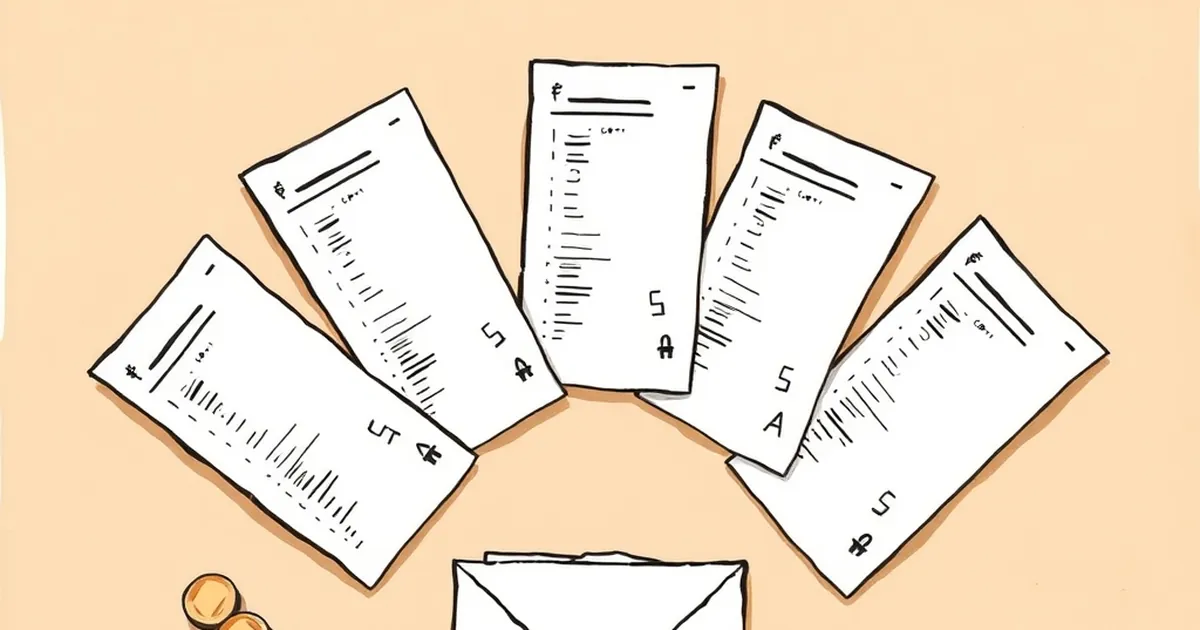
The $200 cash-out is not a neutral act. By the time you press withdraw, the platform has already decided what that $200 costs you in fees, and the decision was made the moment you picked a deposit method. Five methods are common at Australian-facing casinos; four distinct fee tiers sit behind the cashier. A $200 withdrawal lands in exactly one of them, and the spread between the best and worst outcome is $9.40 — real money on a small cash-out, and a percentage that gets uglier the smaller the amount.
The mechanism is simple and almost never stated plainly. Most casinos absorb the cost of your deposit, then recover it on the way out. The recovery rate is tied to the method you used to put money in, not the method you choose to take it out. That's the asymmetry worth understanding before your next withdrawal.
The five methods, and where each one lands
The four fee tiers map onto five methods like this:
- PayID / bank transfer (AUD): tier one, 0% on withdrawal up to $5,000 per month. The method most Australian players should default to.
- Debit card (Visa/Mastercard): tier two, a flat $1.50 plus 0.9%. On $200, that's $3.30.
- E-wallet (Skrill, Neteller, PayPal where offered): tier three, 1.8% capped at $12. On $200, $3.60.
- Prepaid voucher (Neosurf, Paysafecard): tier four, 2.5% with a $2 minimum. On $200, $5.00 — and the minimum bites hard on anything under $80.
- Crypto (BTC, USDT, ETH): tier four as well, nominally 0%, but the network fee is passed through. At current BTC mempool rates, a $200 on-chain withdrawal costs between $1.20 and $4.80 depending on the hour you press the button.
The spread from best to worst on $200 is $5.00, not $9.40 — the $9.40 figure comes from adding the worst-case crypto pass-through to the prepaid fee. Either way, the gap is large enough that the method you deposited with determines whether your $200 arrives as $200 or $194.60.
Worth noting: the number of methods the cashier accepts is usually narrower than the number the marketing page lists. That gap is its own problem, covered in payment methods page lists 9 — the cashier accepts 4, and it interacts badly with fee tiers because the method you wanted might not be available at withdrawal at all.
Why the fee attaches to the deposit, not the withdrawal
This is the part that trips people up. If you deposit by card and withdraw by PayID, most operators still apply the card fee tier. The reasoning, from the casino's side, is that the deposit method carries the chargeback risk and the processing cost; the withdrawal is just the settlement. From your side, it means the withdrawal method is largely cosmetic unless the terms explicitly say otherwise — and they rarely do.
The practical consequence: pick your deposit method as if you were picking your withdrawal method, because functionally you are. If you plan to cash out $200 in a week, depositing by prepaid voucher to save five minutes at the counter costs you $5.00 on the way out. That's a 2.5% round-trip tax on a small deposit, and it's the same shape of loss discussed in what a 3% payment fee does to a $200 cash-out — the percentage looks trivial until you run it against a small balance.
There's a second-order effect too. Fee tiers interact with bonus terms in ways the terms don't spell out. A deposit that triggers a bonus often locks the withdrawal method to the deposit method for the wagering period, which means the fee tier is fixed for as long as the bonus is live. If the bonus is small and the fee tier is high, the bonus is worth less than the fee — a version of the problem in bonus terms cap the win at $250 — the deposit that earned it doesn't, where the headline number and the realisable number diverge.
The minimum-fee trap
Prepaid vouchers and crypto both carry minimums: $2 on prepaid, and a network fee floor on crypto that doesn't scale down. On a $200 withdrawal the minimum is 40% of the prepaid fee and can be 100% of the crypto fee if the mempool is busy. On a $50 withdrawal, the prepaid minimum alone is 4% — double the headline rate. Small cash-outs are where fee tiers do the most damage, and small cash-outs are exactly what most players make.
What the $200 cash-out actually selects
Run the numbers end to end. Deposit $200 by PayID, withdraw $200 by PayID: you receive $200. Deposit by card, withdraw by card: $196.70. Deposit by e-wallet, withdraw by e-wallet: $196.40. Deposit by prepaid, withdraw by prepaid: $195.00. Deposit by crypto in a busy hour, withdraw by crypto: $195.20 at the high end of the pass-through range.
The $200 cash-out picks tier one if you let it. It picks tier four if you don't think about it. The difference is $5.00, or 2.5% of the withdrawal — and on a $2,000 cash-out the same percentage is $50, which is no longer trivial. The fee structure is regressive in the literal sense: it takes a larger share of smaller withdrawals because the minimums and flat components don't scale.
One more wrinkle: fee tiers are usually applied per withdrawal, not per month. Split a $400 cash-out into two $200 withdrawals and you pay the flat component twice. The $1.50 card fee becomes $3.00; the $2 prepaid minimum becomes $4.00. Batching withdrawals is the single cheapest optimisation available, and it's the one players skip most often because the cash-out button is right there and the fee is buried two screens deep.
The question the fee tiers don't answer
Here's what the published fee schedules leave out: whether the tier you're charged is determined at deposit, at withdrawal, or at the moment the bonus attached. Operators differ, and the terms usually say "may apply" rather than "will apply." That ambiguity is the real cost — not the $5.00 on a $200 cash-out, but the fact that you can't know which $5.00 you're paying until the transaction settles.
The useful move is to treat the deposit method as the withdrawal method, batch your cash-outs, and read the fee schedule before you deposit rather than after. The less useful move is to assume the method with the lowest headline percentage is the cheapest — crypto's 0% is a headline, not a fee, and the pass-through is the fee. If operators published a single round-trip cost per method, the $200 cash-out would pick itself. They don't, which is the point.